

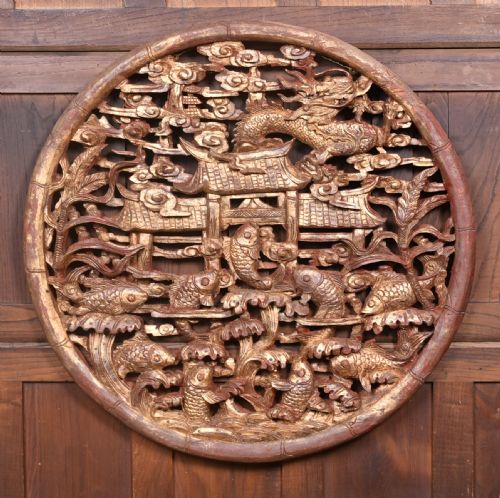


Carved Wooden Dragon Relief
A carved wooden dragon relief brings vigorous movement and centuries-old symbolism directly onto your wall.
Carved Wooden Dragon Relief
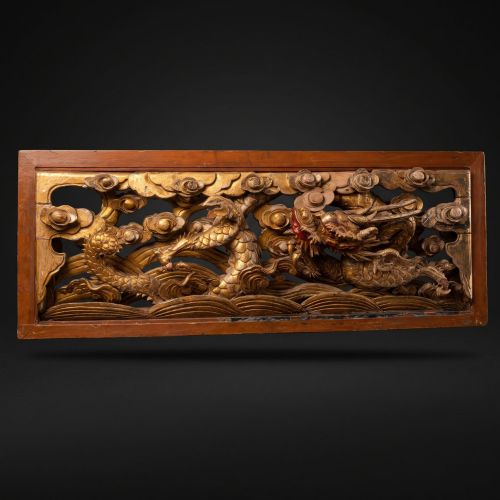
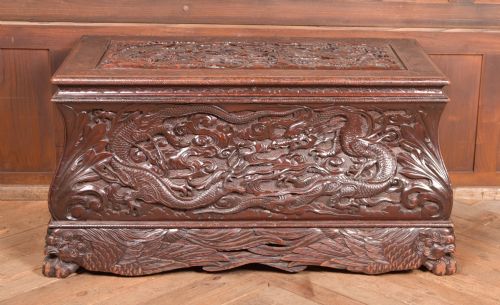
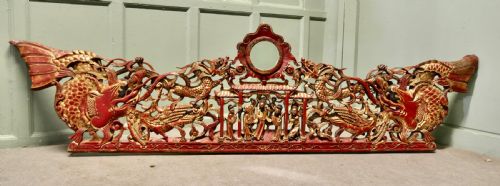
When you search for a carved wooden dragon relief, you encounter dynamic panels, temple pediments, and architectural fragments that capture mythical beasts in deep relief. These pieces originate predominantly from the nineteenth century, reflecting rich Asian export and Chinoiserie traditions alongside occasional European Gothic or fairground contexts.
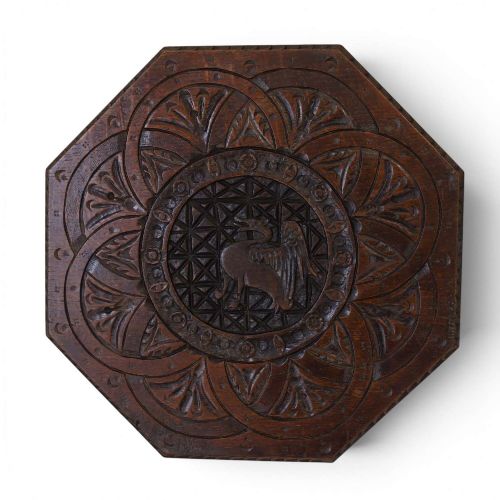
While many items emerge from Chinese export workshops, the selection also includes British or European armorial panels and fairground rides. This blend offers a distinct range of expressions, from intricate temple iconography to robust vernacular carving.
How they were made
Carvers worked primarily in dense hardwoods such as oak, elm, camphor wood, and walnut, selecting timbers capable of holding microscopic detail under sharp chisels. The deep undercutting seen in temple panels and pediments required immense patience, allowing scales, claws, and swirling clouds to stand free from the background.
Surface treatments vary from the natural grain of unpolished timber to rich applications of lacquer and gilded wood. Artisans sometimes combined high-relief sculptural elements with flat panels, utilising framing techniques that protected the central dragon motif during centuries of use.
Carved Wooden Dragon Relief Retail Price Guide 2026
Typical asking prices for carved wooden dragon relief among the pieces listed under this phrase on Sellingantiques today, from the lower quarter to the upper quarter. They describe what is for sale here now, not the wider market.
Listings feature items spanning the nineteenth and early twentieth centuries, constructed from hardwoods, camphor wood, and walnut.
What varies in quality
Material selection also dictates quality, with dense, heavy hardwoods retaining crisp edges far better than softer timbers. Furthermore, the integration of the carving into its architectural or furniture context shows whether the maker treated the dragon as a primary artistic statement or a hurried secondary decoration.
The Carved Wooden Dragon Relief Glossary
- Chinoiserie
- European interpretation and imitation of Chinese and other East Asian artistic traditions, prominent in decorative arts and furniture design. This style heavily influences many nineteenth-century panels and tables.
- Pediment
- The triangular or decorative architectural gable surmounting a portico, door, or window. In these listings, large temple pediments often showcase sprawling dragon carvings.
- Armorial
- Relating to heraldry or armorial bearings, such as family crests and coats of arms. Several listed panels feature these alongside traditional woodcarving.
- Relief
- Sculptural technique where the sculpted elements remain attached to a solid background of the same material. High relief means the figures stand out boldly from the plane.
- Export
- Goods produced in one country, often Asia, specifically for sale to Western markets. Chinese export items frequently blend traditional motifs with formats suited to European homes.
Carved Wooden Dragon Relief: Frequently Asked Questions
How do I hang a heavy wooden panel?
Heavy panels require secure fixings anchored directly into wall studs or masonry using appropriate brackets. Distribute the weight evenly to protect the historic timber from undue stress.
Consult a professional installer if the plaque lacks integrated hanging hardware, ensuring the mounting method respects the structural integrity of the antique.
What is the best way to clean carved wood?
Dust the intricate crevices regularly with a soft, dry natural bristle brush or a feather duster. Avoid using water, household detergents, or silicone sprays, which can damage aged finishes.
If grime accumulates, wipe gently with a barely damp cloth and dry immediately with a clean microfiber cloth to preserve the original patina.
How can I tell nineteenth-century carvings apart?
Examine the tool marks, timber shrinkage, and wear patterns visible on the reverse and edges of the piece. Nineteenth-century items typically exhibit hand-chiseled surfaces and genuine oxidation.
Compare the stylistic conventions of Chinese export pieces with European Gothic revival or fairground fragments to understand their distinct regional origins.
Where should I place a dragon relief?
Mount wall plaques and architectural panels at eye level in living rooms, hallways, or libraries where their dynamic detail can be fully appreciated. Keep them away from direct sunlight and heat sources.
For functional items like storage boxes or nest of tables, position them in stable indoor environments with consistent humidity to prevent timber splitting.