

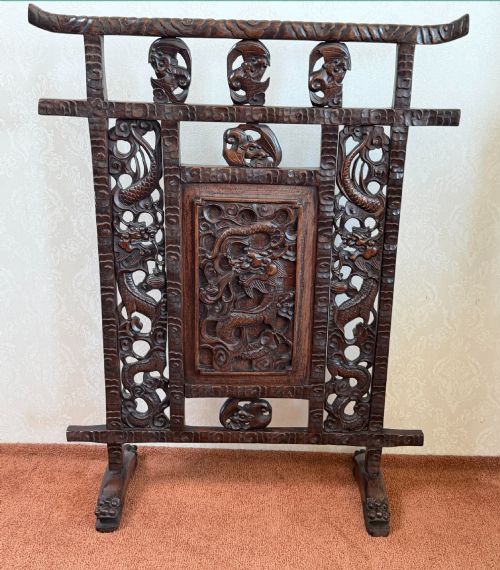
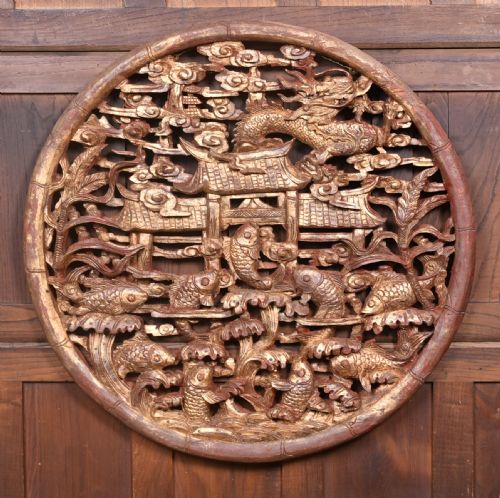


Antique Wood Dragon Relief
These carved pieces bearing an antique wood dragon relief bring powerful mythical energy and intricate historic craftsmanship straight into a room.
Antique Wood Dragon Relief
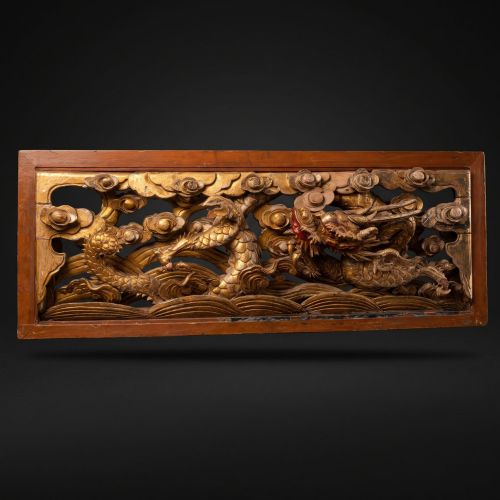
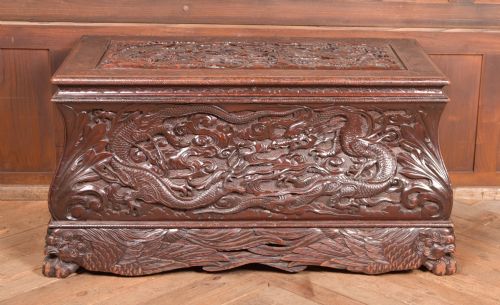
An antique wood dragon relief takes several distinct forms, ranging from architectural temple panels and wall plaques to furniture components like chair backs and cabinet doors. These sculptural carvings depict mythical dragons through deep, expressive chiselling that catches the light across the grain.
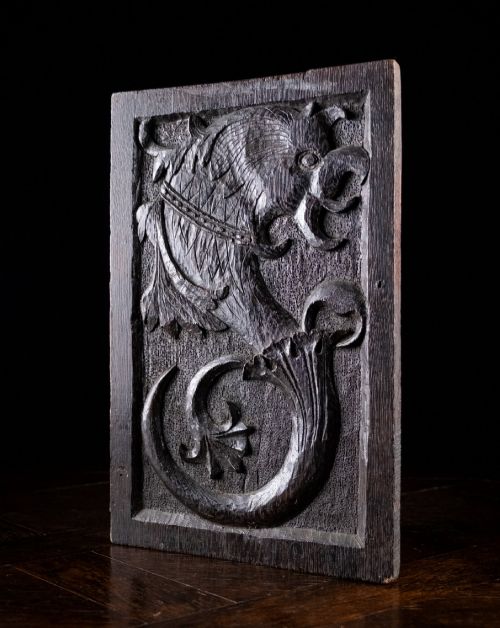
Most examples found here originate from the nineteenth and early twentieth centuries, encompassing styles from Chinese Export and Qing Dynasty traditions to Victorian Gothic Revival and fairground art. Buyers frequently encounter panels salvaged from larger structures alongside occasional tables and screens bearing the same fierce motif.
Materials and construction methods
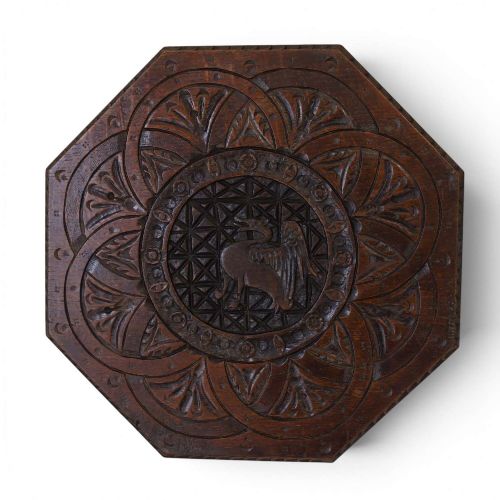
Carvers utilised dense timbers such as oak, elm, walnut, and exotic hardwoods like zitan, allowing for crisp edges and deep undercutting that brings the dragon motifs into high relief. These materials were chosen for their stability and grain structure, which supported intricate detailing without splintering.
Antique Wood Dragon Relief Retail Price Guide 2026
Typical asking prices for wood dragon relief among the pieces listed under this phrase on Sellingantiques today, from the lower quarter to the upper quarter. They describe what is for sale here now, not the wider market.
Objects range widely in function, covering wall panels, nested tables, screens, cabinets, and a spirited fairground ride fragment.
Understanding quality differences
Quality rests primarily on the depth and animation of the carving itself, where superior pieces exhibit confident, fluid chisel work that gives the dragon a sense of muscular movement and life. Lesser examples tend to show stiff, shallow incisions with uniform depths and a lack of anatomical expression.
The choice of timber and the preservation of the original surface finish also dictate the standing of a piece, with dense hardwoods and undisturbed patination commanding greater respect than softer, heavily restored timbers.
The Antique Wood Dragon Relief Glossary
- Relief
- A sculptural technique where figures project from a flat background surface. High relief brings the subject out substantially, creating strong shadows.
- Chinoiserie
- European artistic style reflecting Chinese motifs and techniques, popular in decorative arts. It often reinterprets traditional East Asian imagery.
- Zitan
- A dense, heavy East Asian hardwood prized for dark tones and fine grain. It accepts intricate carving exceptionally well.
- Gothic Revival
- Nineteenth-century architectural and decorative style drawing inspiration from medieval forms. Pieces often incorporate dark woods and heraldic or mythical motifs.
Antique Wood Dragon Relief: Frequently Asked Questions
How were temple panels used originally?
These carved panels formed part of larger religious or secular architectural structures, often mounted within halls or above doorways as protective symbols.
Over time, many were salvaged from buildings and adapted into wall plaques or tabletops for Western collectors.
How should I clean carved wood?
Dust the intricate crevices gently with a soft, dry brush to prevent dirt accumulation without disturbing the historic wax or polish.
Avoid liquid cleaners and harsh polishes that can soften the timber or strip away surface patination.
Are fairground carvings different?
Fairground dragon fragments display bolder, more vigorous styling and brighter paint layers intended for public spectacle rather than domestic contemplation.
They carry the physical wear of outdoor use alongside the spirited execution typical of vernacular amusement art.