
Carved Wooden Desk Armchair
A carved wooden desk armchair brings traditional craft and solid seating to a workspace, offering sturdy arms and sturdy timber frames.
Carved Wooden Desk Armchair
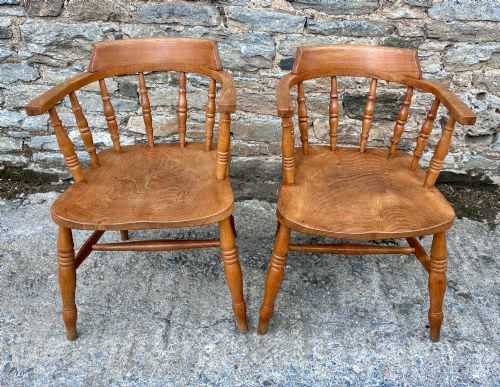
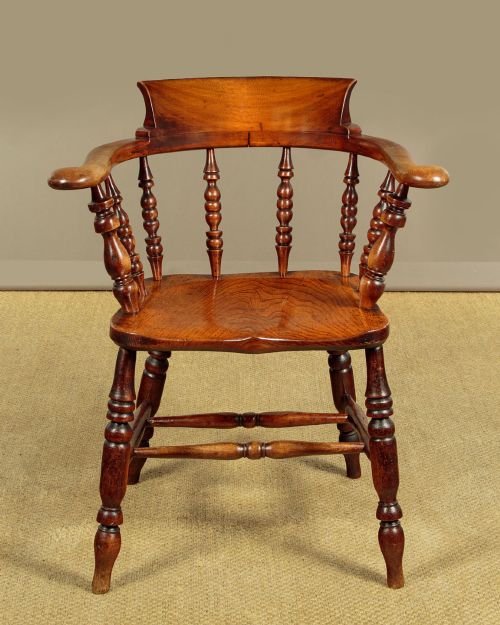
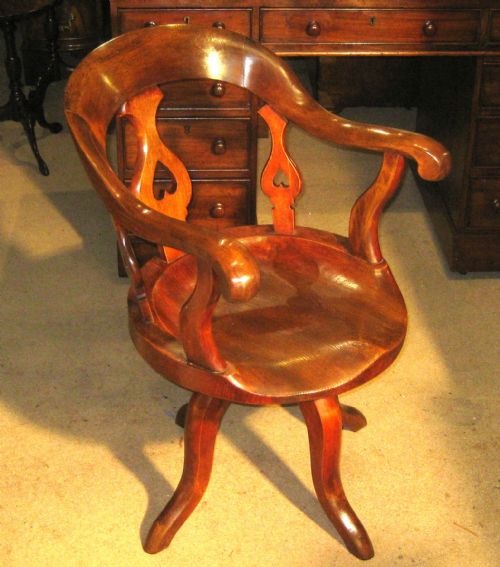
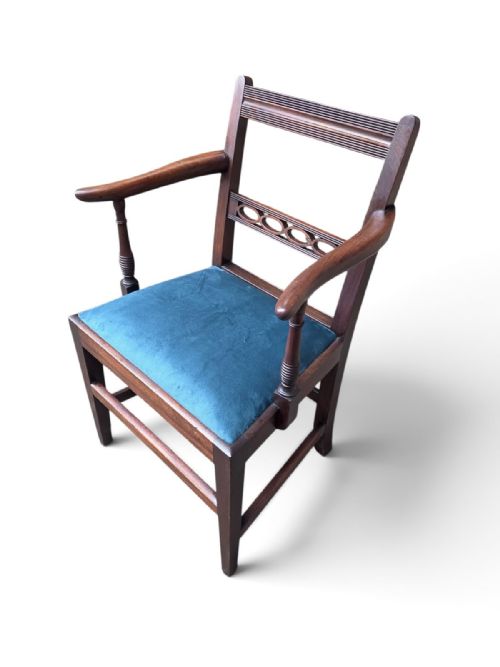
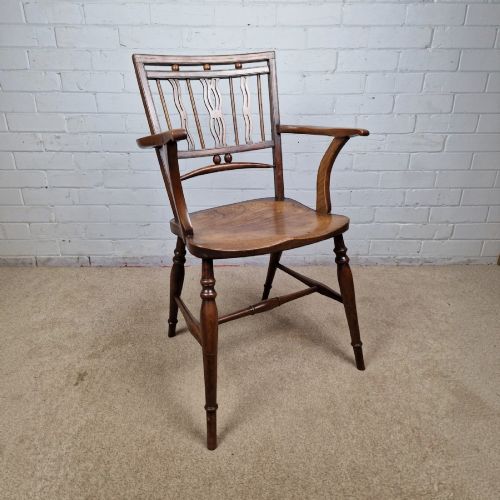
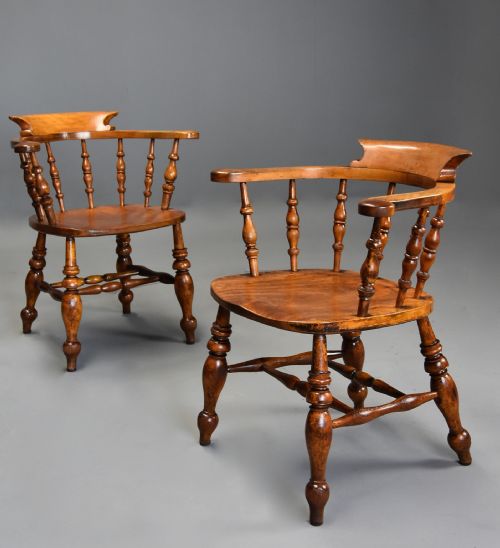
A carved wooden desk armchair is a sturdy seating option found across the eighteenth and nineteenth centuries, often appearing in forms such as captain's chairs, smokers' bows, and revolving desk chairs. These seats bridge formal library furniture and vernacular country styles, providing supportive arms and robust timber construction.
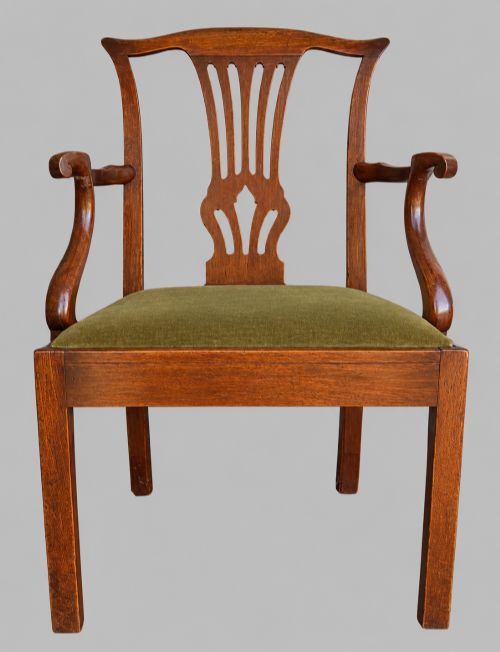
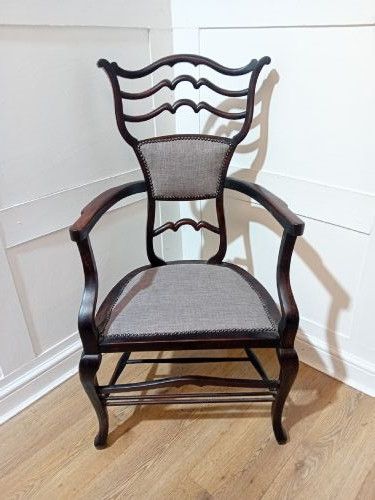
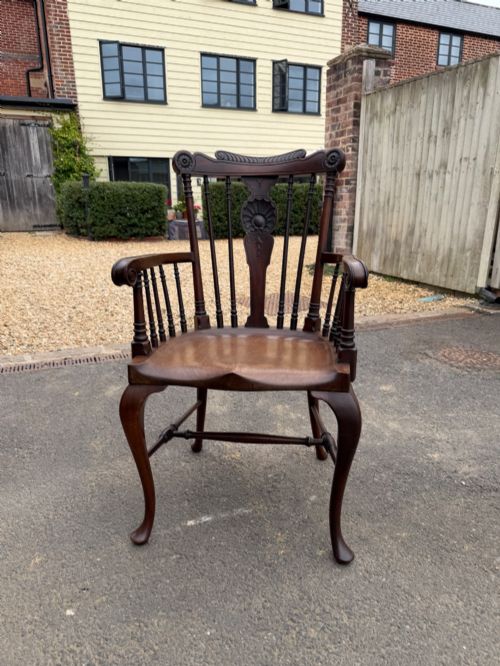
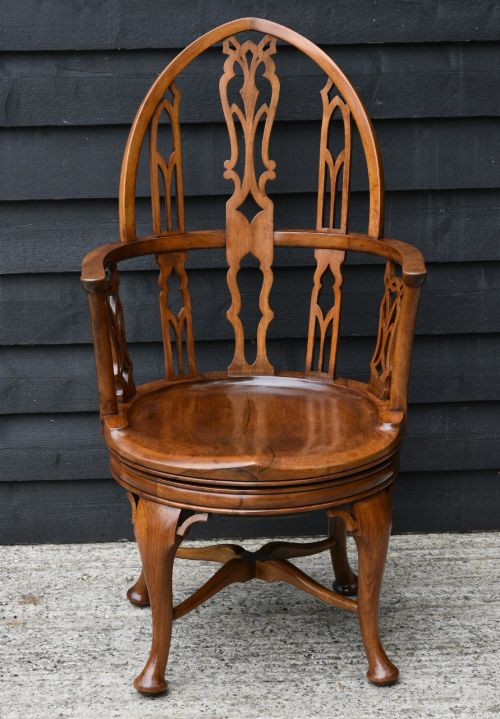
The options span Georgian and Victorian periods alongside Edwardian and earlier designs, incorporating styles like Chippendale, Gothic Revival, and Windsor. Elm and mahogany examples dominate, often featuring spindle backs, solid plank seats, or upholstered pads designed for prolonged daily use at a writing table.
Materials and construction
Cabinet makers and country joiners built these chairs using dense native and imported timbers, notably mahogany, elm, walnut, and oak, supplemented by beech and ash in curved members. Steam-bending techniques shaped the continuous arm-bows of smokers' chairs, while mortise and tenon joints secured the legs and spindles.
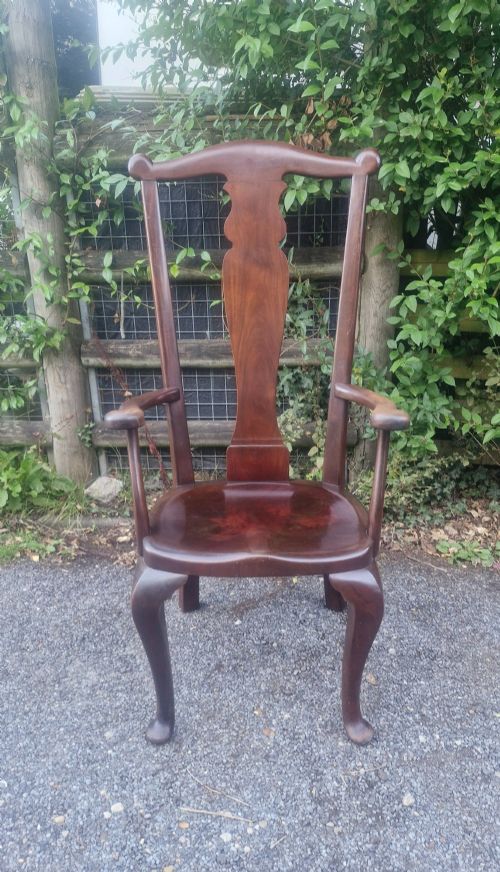
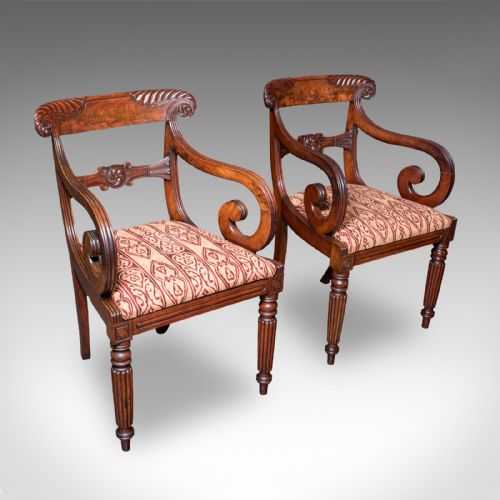
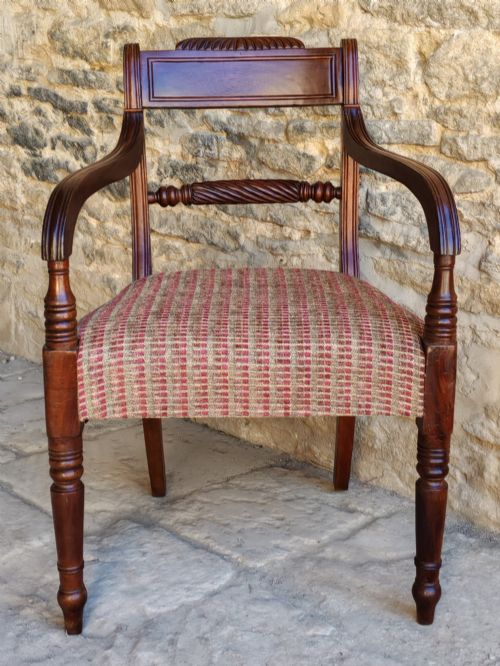
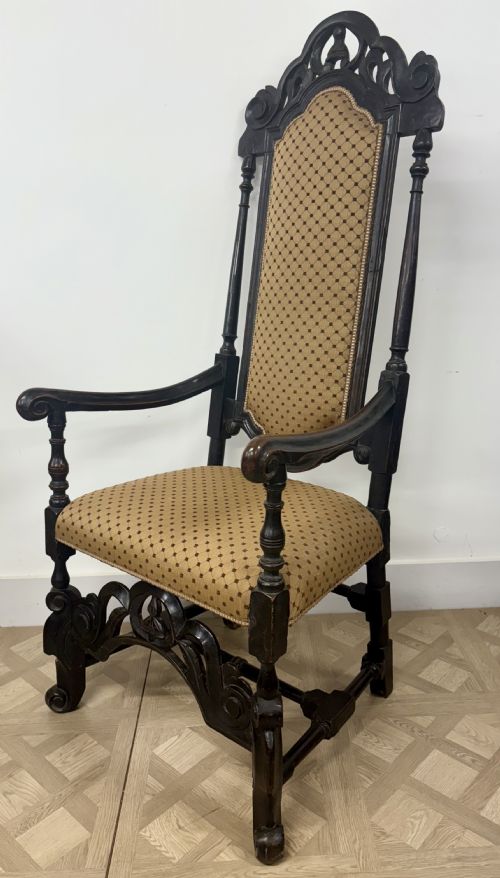
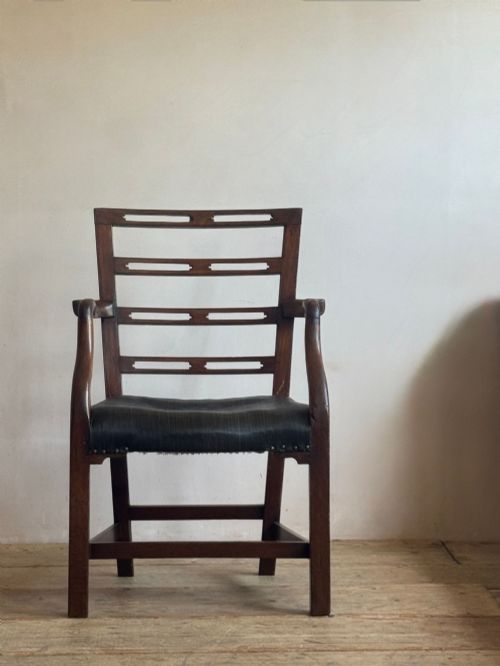
Carved details appear on splats, crest rails, and arm terminals, ranging from simple ropebacks and ladder-backs to elaborate Gothic tracery and Chippendale motifs. Seats were frequently carved from solid timber blocks or fitted with brass castors and revolving mechanisms on later nineteenth-century office variants.
Periods represented range from late seventeenth-century walnut pieces to Edwardian office chairs, with strong Victorian representation.
Standards of craftsmanship
The calibre of a carved wooden desk armchair depends on the selection of timber and the crispness of the hand-carving on the splats and arms. Superior pieces exhibit well-figured grain, tight joinery that resists movement, and original swivel or castor hardware where applicable.
Proportion and comfort also dictate quality, as finer examples maintain balanced arm heights and supportive rake to the backrests. Wear consistent with age should enhance the patina of the wood rather than compromise the structural integrity of the frame.
Hindley & Sons
The Carved Wooden Desk Armchair Glossary
- Carver chair
- An armchair designed in the style of matching dining chairs, often placed at the head of a table or utilised at a desk. These pieces share stylistic details with the smaller chairs in a set.
- Smoker's bow
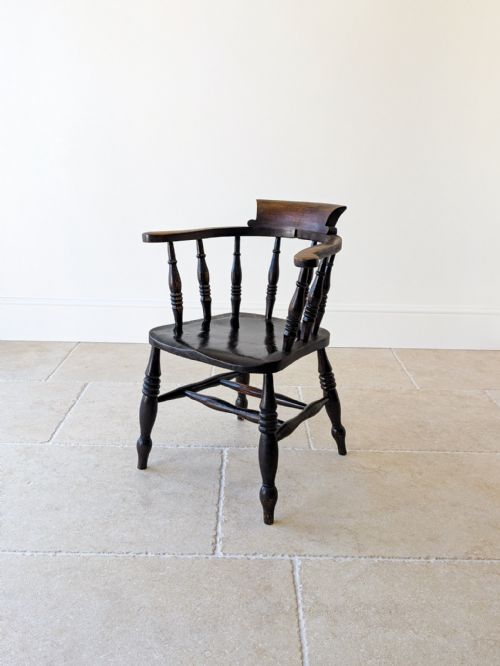
- A low-backed Windsor variant featuring a rounded, steam-bent arm rail supported by turned spindles. This form is common in nineteenth-century country houses and offices.
- Captain's chair
- A sturdy timber armchair with a low, curved back rail supported by numerous spindles, designed for stability and comfort. They frequently appear in elm or mahogany.
- Spindle back
- A chair back constructed from vertical turned wooden rods connecting the seat to the top rail. This method provides lightweight strength without sacrificing support.
- Revolving desk chair
- A swivelling office seat mounted on a central wooden or iron pillar, frequently fitted with brass castors. These items emerge during the Victorian period for functional workspace use.
Carved Wooden Desk Armchair: Frequently Asked Questions
What is a smoker's bow?
A smoker's bow is a sturdy vernacular armchair featuring a continuous steam-bent wooden rail that forms the arms and low back. They are typically constructed from elm, ash, or birch.
These chairs were common in nineteenth-century offices, smoke rooms, and farmhouses, prized for their comfortable curved arms and robust, practical build.
How do I date an antique desk chair?
Dating relies on identifying timber choices, construction methods, and stylistic cues such as Gothic tracery or Chippendale splats. Eighteenth-century versions often show simpler joinery and dense mahogany or walnut.
Later nineteenth-century examples may incorporate swivel mechanisms, iron screw posts, and brass castors for office use. Comparing the turnings and arm profiles helps narrow the decade.
Are Windsor chairs comfortable for working?
Windsor desk armchairs provide ergonomic support through sculpted wooden seats and steam-bent back rails that follow the contours of the body. Many people use them daily with a simple wool or leather pad.
Their solid construction ensures they remain stable and supportive during long hours at a writing table.
What woods were used for these chairs?
Cabinet makers utilised mahogany and walnut for formal library and Georgian pieces, while country joiners preferred native timbers like elm, oak, ash, and beech. Each wood offered specific bending or carving qualities.
Mahogany provides fine grain for crisp carving, whereas elm delivers tough, interlocking fibres ideal for solid shaped seats.