
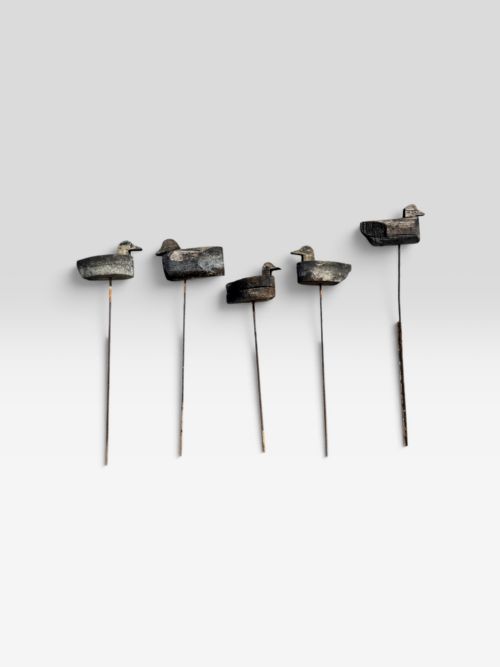
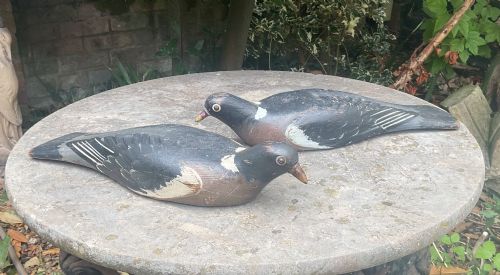
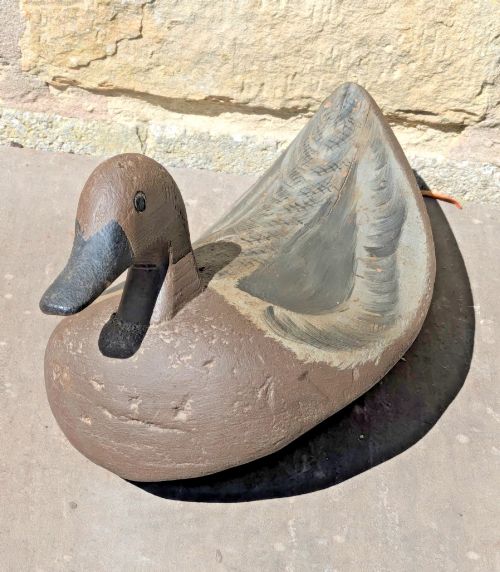
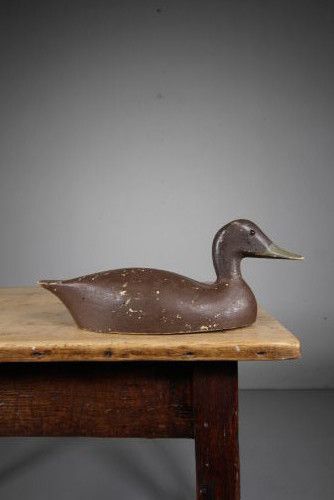


Carved Wooden Decoys
These carved wooden decoys bring raw rustic utility into a room, shaped for the water and fields by hands that worked closely with timber.
Carved Wooden Decoys
Carved wooden decoys are working water bird and land bird sculptures created to lure fowl during shooting expeditions. When you search for carved wooden decoys, you encounter working waterfowl and pigeons shaped from timber for practical field use.
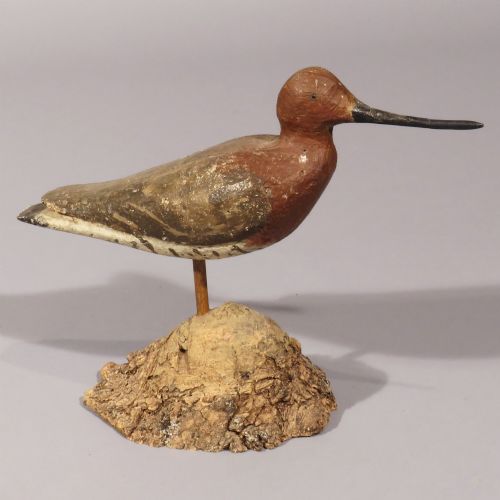
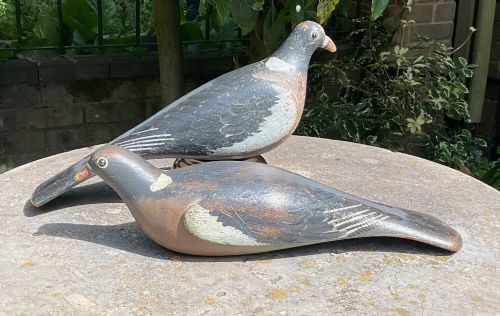
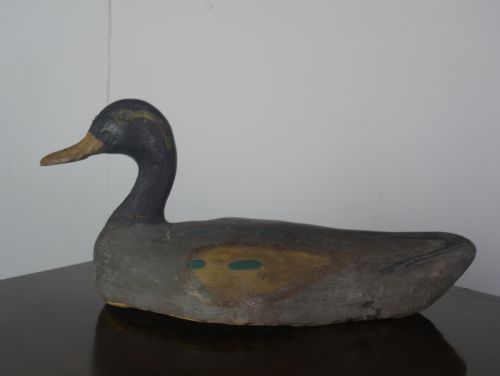
The pieces on this page span the nineteenth century, the Edwardian era, and the nineteen-twenties and thirties. Duck decoys dominate the selection, alongside pigeons, doves, geese, and a black-tailed godwit.
Origins stretch across English country workshops, English folk art traditions, and continental pieces like French rustic water birds. They appear singly, in pairs, and in sets of three, showing the varied scale of old shooting spreads.
How they were made
Carved wooden decoys take shape from solid timber and bark, worked with hand tools to establish the rounded bodies and heads of birds. Makers then apply thick coats of paint to replicate the plumage and natural colours of ducks, pigeons, and geese.
Some examples incorporate simple metal and iron fixings or glass elements to accent the form and function of the decoy. This combination of carved wood and layered paint defines the physical presence of these folk art objects.
Listings feature wood, paint, iron, glass, and bark across pieces spanning the nineteenth and early twentieth centuries.
What varies in quality
The distinction between ordinary and superior decoy carvings lies in the liveliness of the silhouette and the character of the surface. Stronger examples display bold, expressive shaping of the head and body that captures the alert posture of a living bird.
Surface preservation plays a major role in quality, particularly the depth and patina of original layered paint. Surviving working wear and genuine weathering tell the history of the object without masking the initial craftsmanship.
The Carved Wooden Decoys Glossary
- Decoy
- A carved or moulded figure used to attract wildfowl or pigeons within range of a shooter. These objects were working implements before entering the realm of decorative folk art.
- Folk art
- Utilitarian and decorative objects made by self-taught or traditional craftsmen outside academic artistic circles. This term describes the regional English and continental character of the pieces.
- Dovecote
- A structure or enclosure for housing pigeons or doves, connected to larger country houses. Decoys associated with these settings served specific estate management needs.
- Patina
- The surface texture and coloration developed through age, handling, and exposure to the elements. On these carvings, original paint layers create a distinct visual depth.
Carved Wooden Decoys: Frequently Asked Questions
How were wooden decoys used?
Shooters placed these carved birds on the water or in fields to draw wildfowl and pigeons close during hunting expeditions. They functioned as practical tools designed to deceive birds into landing.
Over decades, their purpose shifted from working field equipment to decorative objects displayed in homes and country interiors.
How do I identify an Edwardian decoy?
Edwardian pieces often display softer painted details and specific stylistic traits tied to early twentieth-century folk art traditions. Makers during this period continued traditional regional carving methods.
Comparing the paint layers and wood types against nineteenth-century examples helps distinguish the manufacturing eras represented on the page.
Are these decoys English or foreign?
The selection includes items rooted in English country folk art alongside pieces from continental origins like France. Regional carving styles and timber choices often point to the workshop's geographic source.
Examining the specific form of birds, such as a black-tailed godwit or a loon with a chick, also hints at local species familiarity.
How should I clean a painted decoy?
Painted wooden surfaces require gentle dusting with a soft, dry cloth to protect the fragile historic layers of paint. Avoid liquid cleaners or harsh chemicals that can strip the aged finish.
Preserving the original patina ensures the piece retains its authentic folk art character and historic integrity.