


Carved Wooden Bear Figures
Carved wooden bear figures bring animal life into a room through regional skill.
Carved Wooden Bear Figures
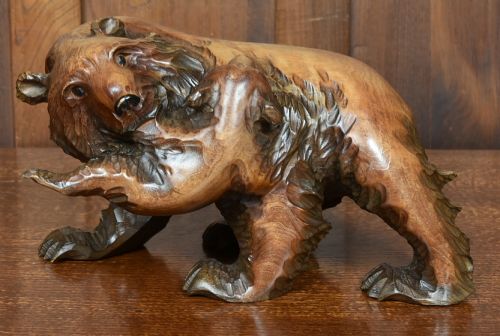
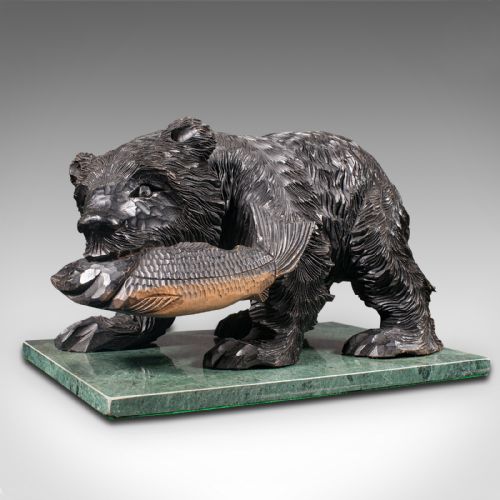
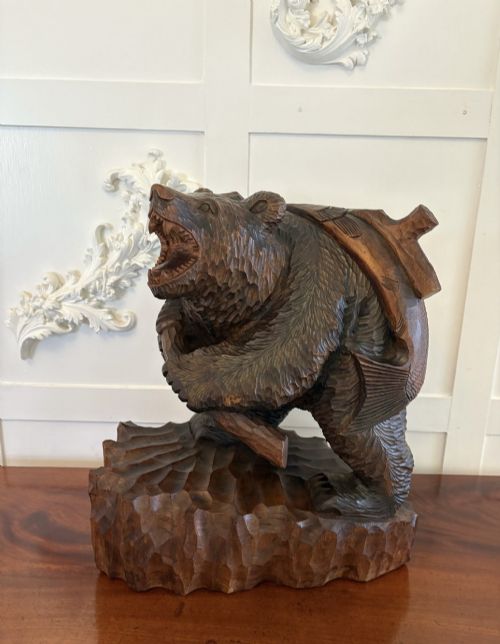
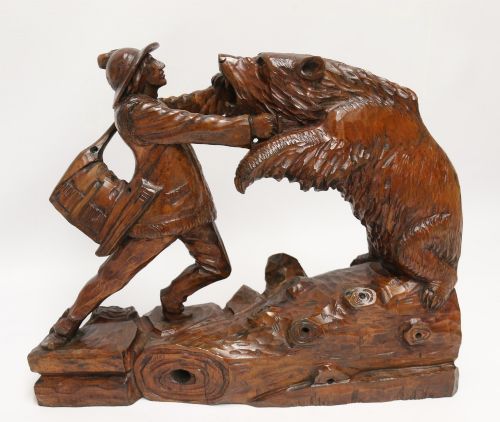
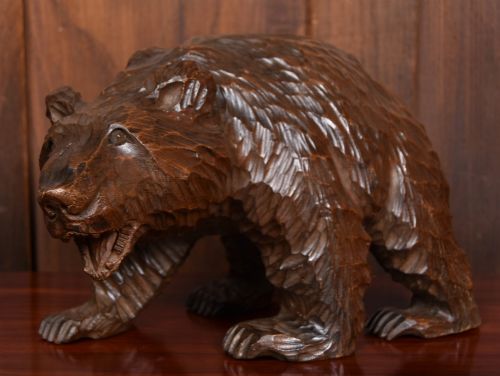
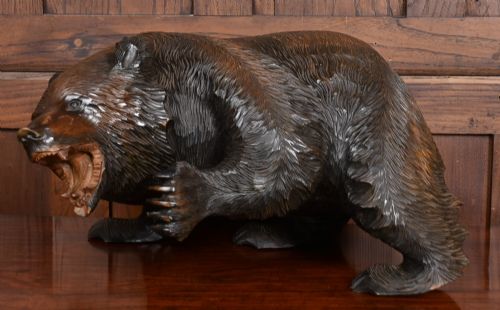
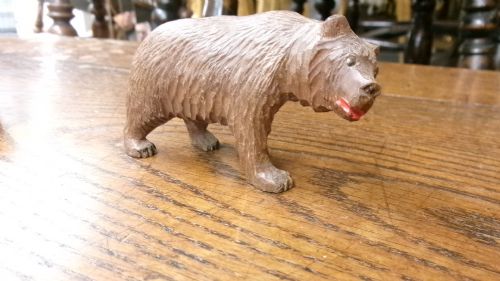
Carved wooden bear figures range from single sculptures to inkstands and condiment sets, shaped across the nineteenth century and the Edwardian period. These objects capture the animal in various postures, sometimes carrying a fish or holding a heart.
You will most frequently meet pieces attributed to the Black Forest style or Japanese folk art, produced in linden wood, walnut, and other hardwoods. They serve as decorative sculptures, statuettes, and functional novelties on desks and tables.
How they were made
Carvers shaped these figures from linden wood, walnut, and general hardwoods using hand tools to define the fur, muscles, and facial expressions. Some examples incorporate metal or stud eyes to add distinct detail to the wooden forms.
Makers finished the surfaces with wax to protect the timber and bring out the grain of the wood. The construction ranges from single solid blocks to fitted multi-piece inkstands and condiment sets.
Object forms include standalone sculptures, inkstands, and condiment sets in Black Forest and Japanese folk art styles.
What varies in quality
Quality rests on the depth of the carving and the realism or character achieved in the bear's form. Pieces with finely rendered fur, expressive postures, and well-integrated functional elements such as inkwells stand apart from simpler carvings.
The choice of material and the crispness of the hand-carved details dictate the distinction between standard decorative objects and finer sculptural works.
The Carved Wooden Bear Figures Glossary
- Black Forest
- A style of wood carving originating from the mountainous region of central Europe, known for realistic animal sculptures and rustic furnishings.
- Linden wood
- A pale, fine-grained timber frequently utilised by carvers for its smooth texture and ease of shaping intricate details.
- Inkstand
- A desk accessory featuring a tray for pens and one or more inkwells, occasionally incorporating carved animal figures.
- Condiment set
- A matched group of small vessels for holding table seasonings, sometimes fashioned into novelty shapes like bears.
Carved Wooden Bear Figures: Frequently Asked Questions
How were these bear figures used originally?
Many served purely as decorative sculptures, statuettes, and mantel ornaments in homes. Others had practical uses as desk inkstands or table condiment sets.
This combination of utility and novelty made them popular household items during the nineteenth century and Edwardian eras.
What styles do these carved bears represent?
The listings show strong influences from Black Forest carving traditions and Japanese folk art. These regional styles dictate the postures, facial expressions, and overall aesthetic of the animals.
European pieces often feature rustic or naturalistic settings, while Japanese examples display distinct carving techniques.
How do you date a carved wooden bear?
Dating relies on stylistic clues, the type of wood, and any accompanying functional elements like inkstands or condiment containers. Pieces span the Georgian, Victorian, and Edwardian periods, as well as specific years recorded in the nineteenth century.
Examining tool marks and the finish helps place the object within its proper era.
How should I care for a wooden bear carving?
Keep the carved timber away from direct sunlight and sudden temperature changes to prevent the wood from drying out or splitting. Gentle dusting with a soft brush maintains the surface without harming the carving.
Applying a suitable wax occasionally helps preserve the finish of the hardwood.