
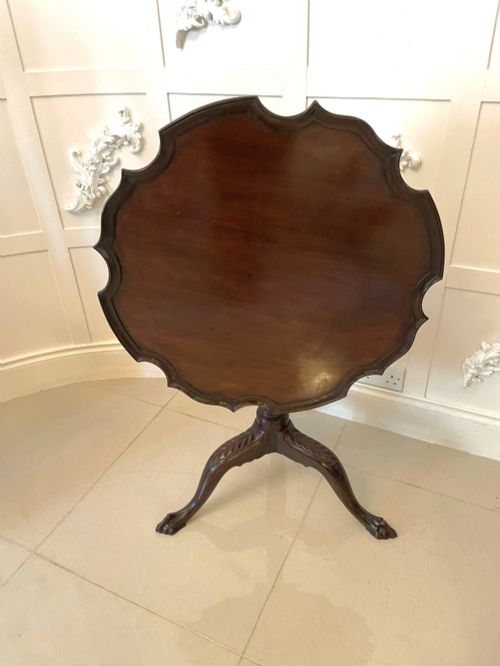
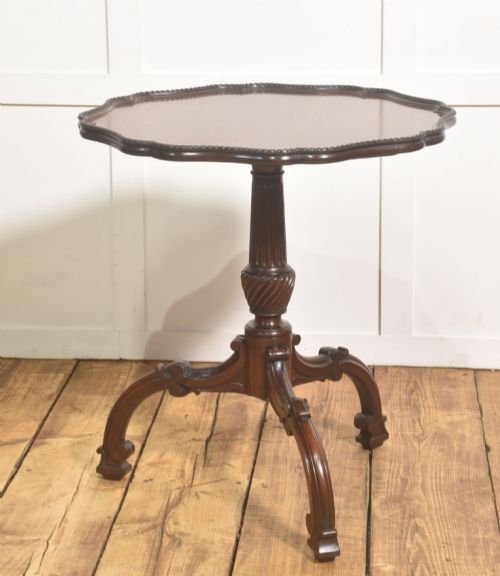
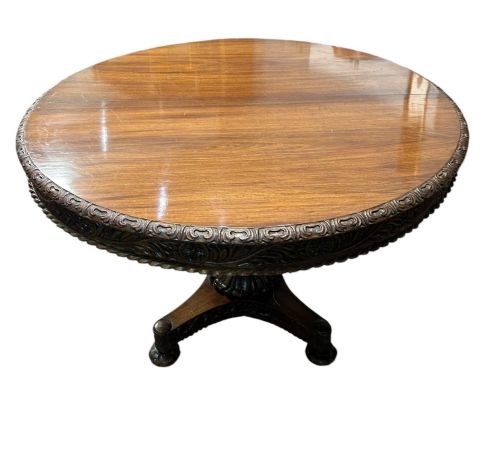
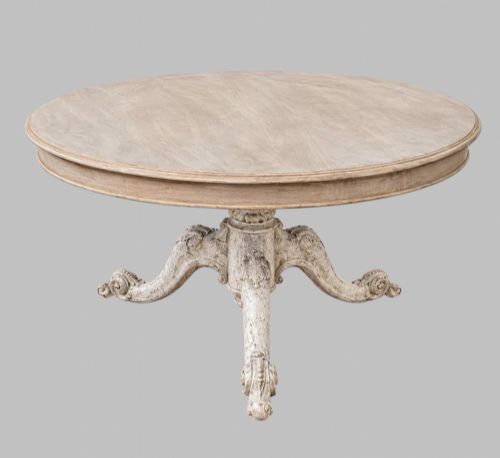


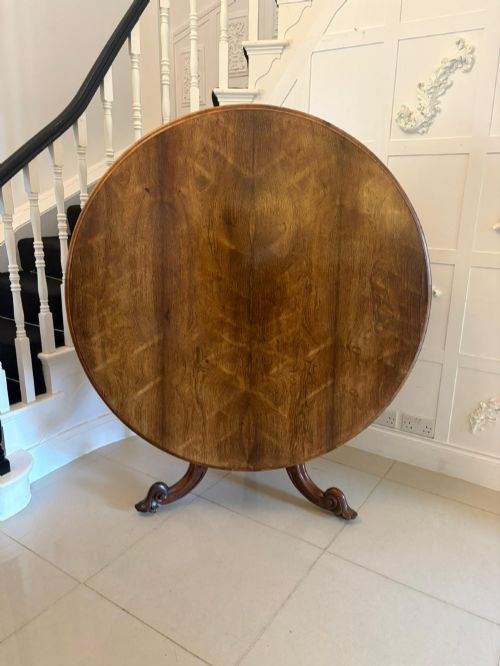
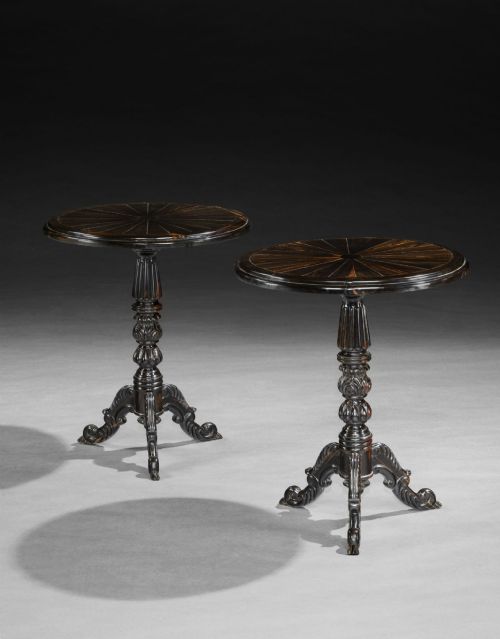
Carved Wood Tilt Table
A carved wood tilt table provides a sturdy surface that pivots flat when not in use, saving space in period rooms.
Carved Wood Tilt Table
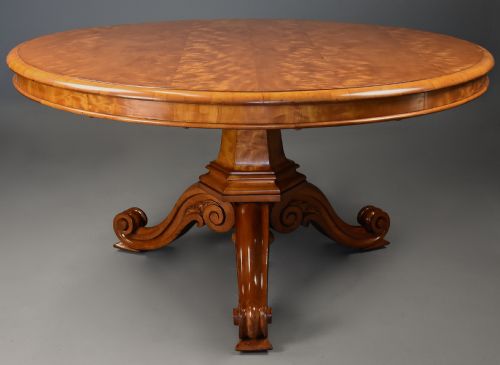
A carved wood tilt table brings together centuries of domestic craft, with examples spanning the Georgian, Regency, and Victorian eras. These versatile items appear in forms such as occasional tables, breakfast tables, and wine tables.
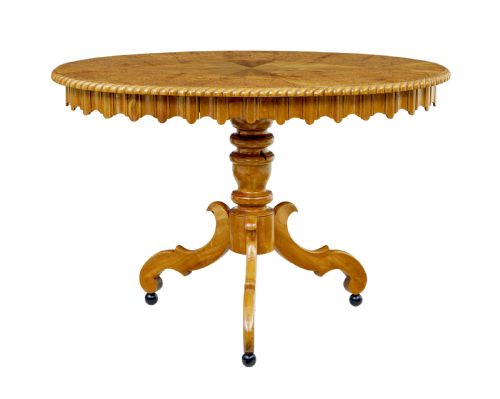
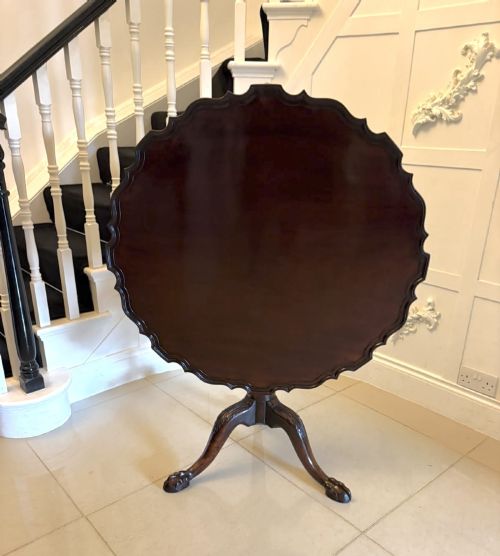
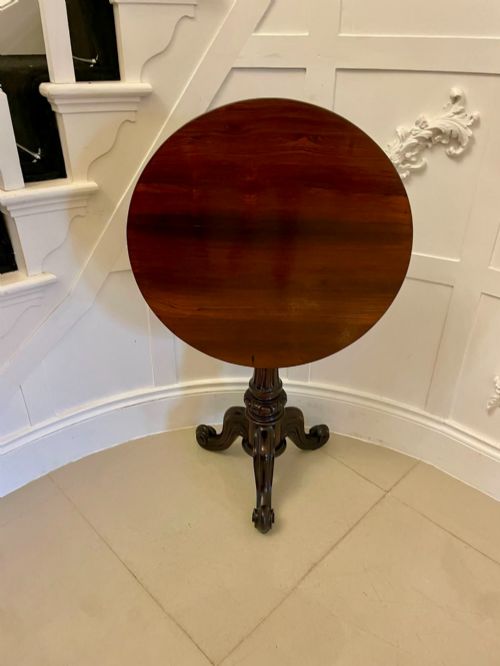
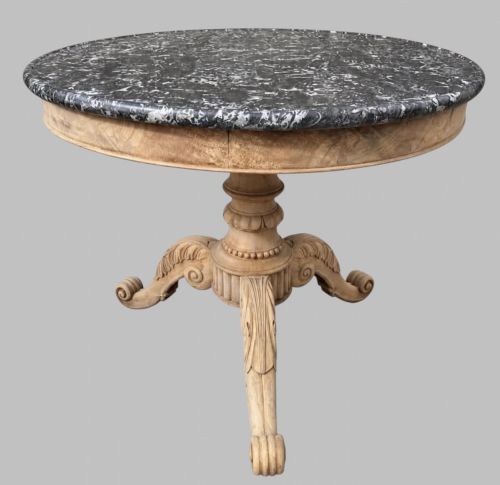
The most common versions on this page are round or oval pedestal tables supported by tripod bases, often made from rich timbers like mahogany and rosewood. They serve multiple functions in a room, shifting easily from a functional surface to a vertical display against a wall.
How they were made
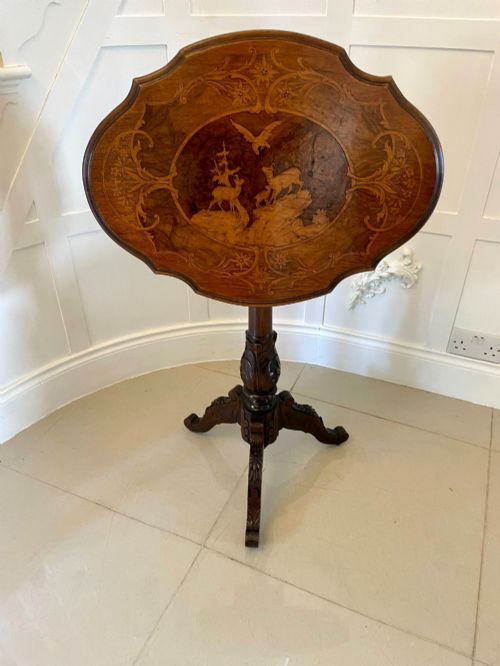
Cabinet makers built these pieces using dense hardwoods like mahogany, walnut, and rosewood, frequently incorporating exotic veneers such as burr birch and padauk. Solid sections were turned on lathes for the central pillars and hand-carved for the tripod legs.
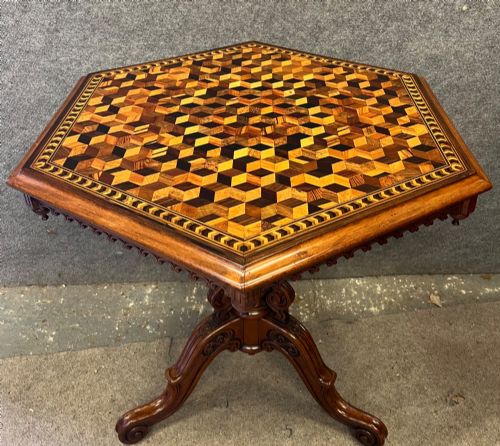
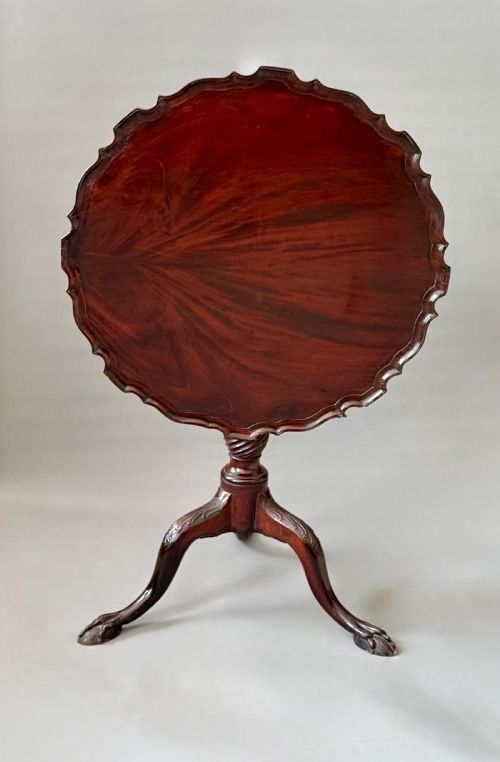
The characteristic tilting mechanism relies on a wooden block and catch fitted beneath the top, allowing the surface to pivot smoothly on a brass pivot pin. Tops often feature moulded edges, piecrust profiles, or delicate parquetry work.
Listings feature woods such as mahogany, rosewood, walnut, padauk, ebony, and linden across the Georgian, Regency, and Victorian periods.
What varies in quality
The distinction between standard examples and the finest pieces lies in the crispness of the hand-carved ornamentation and the selection of timber veneers. Superior items display deeply chiselled foliage on the pillar and legs, alongside well-figured grain on the top.
Structural stability also defines quality, particularly in the precision of the tilting mechanism and the tightness of the joint where the pillar meets the tripod base. Good proportions and a balanced stance separate workshop standards from exceptional furniture.
Gillow·Ralph Turnbull
The Carved Wood Tilt Table Glossary
- Tilt-top
- A table mechanism allowing the surface to hinge vertically for storage. This clever engineering saved valuable floor space in nineteenth-century interiors.
- Tripod base
- A three-legged support structure commonly found beneath pillar tables. It ensures stability on uneven floorboards by keeping all feet in firm contact with the ground.
- Piecrust edge
- A raised, decoratively carved rim shaped around the perimeter of a circular table top. The undulating profile resembles traditional pastry crusts.
- Breakfast table
- A large pedestal table designed for morning dining in private rooms. These pieces often feature substantial circular tops and robust carved bases.
Carved Wood Tilt Table: Frequently Asked Questions
How do I use a tilt table?
Release the brass catch beneath the surface to pivot the top into a vertical position against the pillar.
This allows the furniture to stand flat against a wall, freeing up floor space when the surface is not in use.
What rooms suit these tables?
Smaller wine tables and occasional pieces fit comfortably beside seating in drawing rooms or studies.
Larger breakfast or centre tables serve well as focal points in dining spaces or entrance halls.
How do I date a wooden table?
Examine the timber species, construction joints, and carving style to determine the likely period of manufacture.
Georgian examples tend to show restrained classical proportions, while Victorian pieces often display heavier carved decoration.
Are these tables sturdy?
The three-legged tripod base provides a reliable footing that adapts well to older, uneven floors.
Properly maintained pivot mechanisms hold the top firmly in place during normal daily use.