


Honey Wood Side Table
A honey wood side table brings warm, golden tones and practical surface space to a room, drawing on the natural grain of timbers like birch, elm, and satinwood.
Honey Wood Side Table
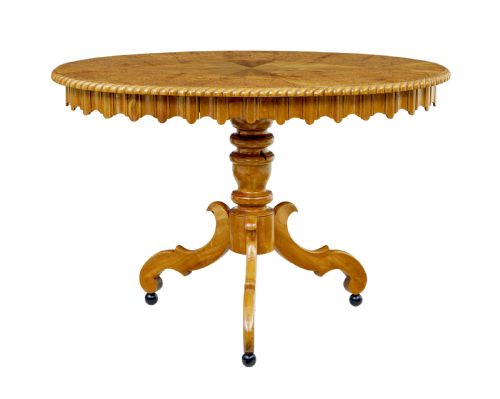
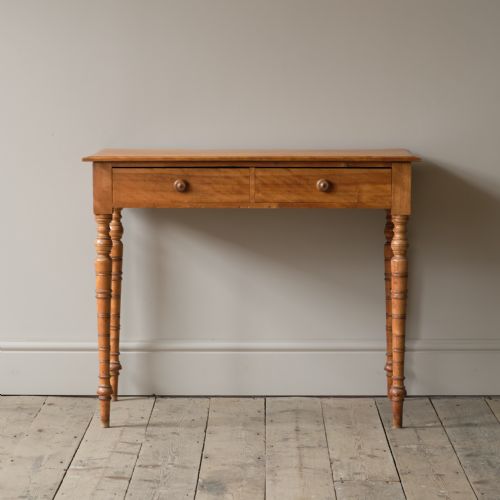
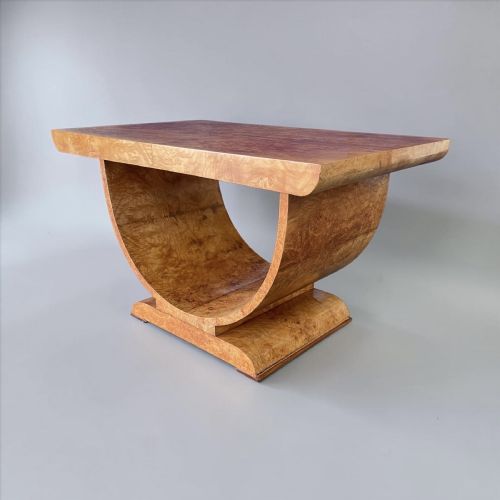
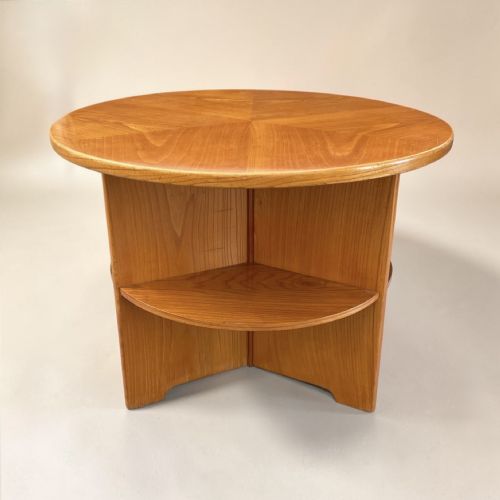
When buyers search for a honey wood side table, they are looking at compact occasional surfaces fashioned from light-toned timbers. The examples appearing on this page span the nineteenth and twentieth centuries, taking forms such as round coffee tables, narrow console tables, and folding occasional pieces.
Stylistic origins range from nineteenth-century Swedish and French provincial workshops to Art Deco and mid-century modern designs. Most pieces on offer favour the pale, figuring of birch, elm, satinwood, and fruitwood rather than dark, heavy polishes.
How they were made
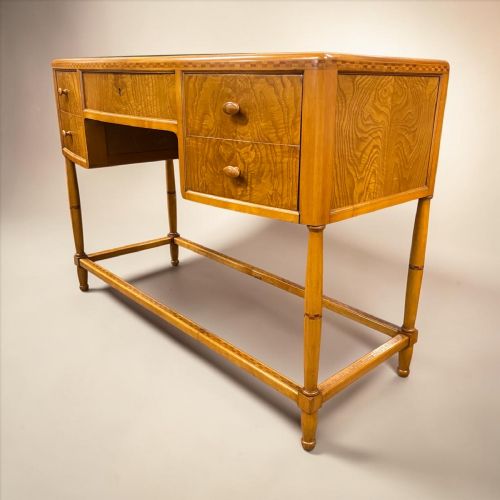
Joiners built these tables using timber solids and veneers selected for lively grain patterns, particularly burr birch, burr maple, and elm root. Panels were carefully matched and laid over stable secondary woods to display natural golden figures.
Construction methods rely on traditional cabinet-making joints appropriate to the period, from nineteenth-century dovetails to twentieth-century steam-bending and assembly. Surface finishes prioritize clear wax or oil to protect the wood while accentuating its pale warmth.
Current listings feature tables produced across multiple eras, including the nineteenth century, Art Deco period, and mid-twentieth century.
What varies in quality
The distinction between tiers rests upon the choice of timber figure and the precision of the cabinetwork. Tables utilising highly figured burr veneers or carefully selected root wood stand apart from plain-grained utility pieces.
Proportion and structural integrity define the higher end of the range, where slender supports remain rigid and tabletop joints stay flush. Finer examples maintain original finishes that highlight the natural honey colour without heavy staining.
Heal's
The Honey Wood Side Table Glossary
- Burr birch
- A growth on a birch tree producing swirling, speckled patterns in the timber grain. This wood is highly prized for decorative veneer work on nineteenth-century tables.
- Satinwood
- A hard, durable timber yielding a lustrous, golden-yellow appearance. It is frequently employed in fine cabinet-making and occasional table tops.
- Biedermeier
- A Central European style spanning the nineteenth century characterised by utilitarian comfort and clean lines. Pieces in this tradition highlight the natural beauty of wood grain over excessive ornamentation.
- Occasional table
- A small, movable table designed for specific, intermittent use within a room. These formats include tea tables, lamp tables, and small writing surfaces.
- Console table
- A table designed to stand against a wall, sometimes secured to it with brackets. Earlier versions often feature two front legs and rely on the wall for balance.
Honey Wood Side Table: Frequently Asked Questions
How do I date a side table?
Dating a side table involves examining the construction techniques, timber preparation, and stylistic markers visible in the piece. Nineteenth-century examples often display hand-cut joinery and native European hardwoods, while twentieth-century pieces may reflect Art Deco or mid-century aesthetic movements.
Materials provide further clues, as certain veneers and secondary woods became more common during specific decades. Comparing the overall silhouette against known period designs helps narrow down the decade of manufacture.
How do I style honey wood in a room?
Honey wood side tables blend easily with diverse interior palettes because their pale, golden tones provide warmth without visual heaviness. They work well paired with neutral upholstery, contrasting dark metals, or layered alongside other wooden furniture.
Placing one beside a sofa or in a hallway introduces both a functional surface and a touch of natural grain texture. The restrained profiles of these tables allow them to complement both traditional and modern settings.
Are these tables sturdy for daily use?
Most antique and vintage side tables are built using traditional joinery designed to withstand everyday demands. Timbers like elm and birch offer natural resilience and durability for supporting lamps, books, and cups.
Care should be taken to protect the surface from excessive moisture and heat by using coasters or mats. Routine dusting and occasional waxing keep the wood nourished and maintain its structural integrity.