





Carved Wood Room Divider
A carved wood room divider partitions space with intricate detail, bringing historic craftsmanship and distinct regional styles directly into a room.
Carved Wood Room Divider
A carved wood room divider functions as a movable partition, creating distinct zones within an interior space while displaying intricate craftsmanship. These pieces span multiple folds and panels, designed to stand independently and shape the flow of a room.
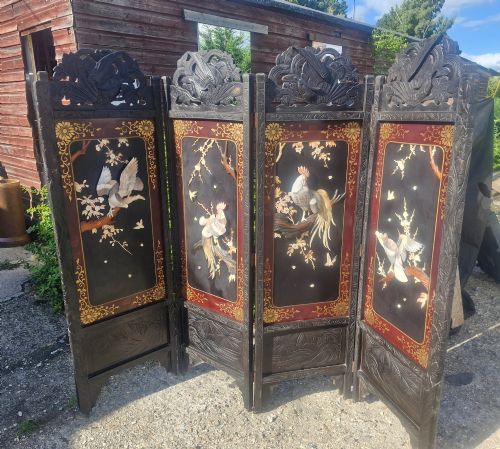
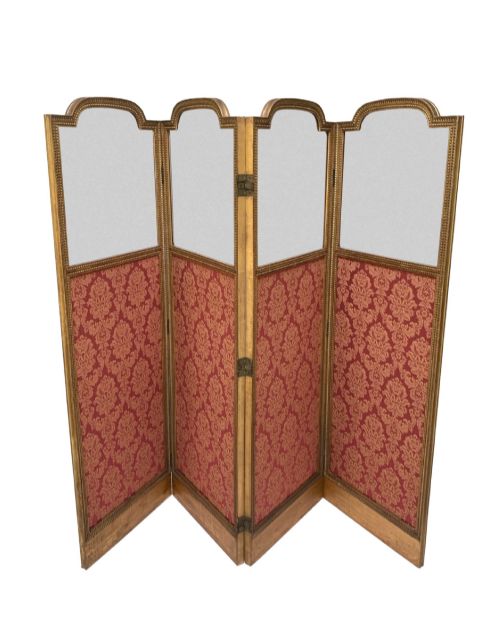
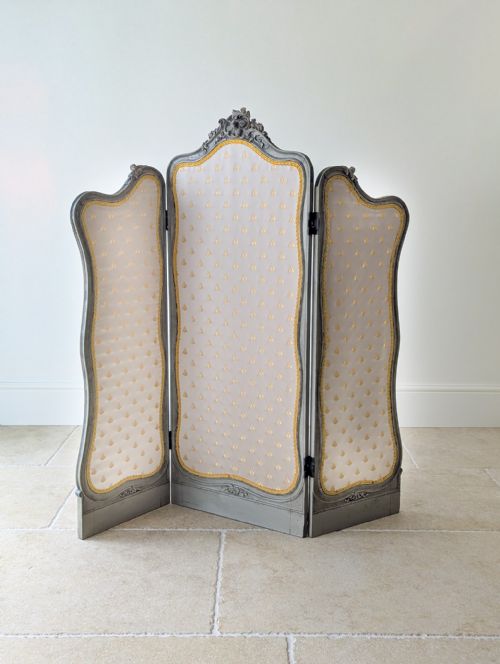
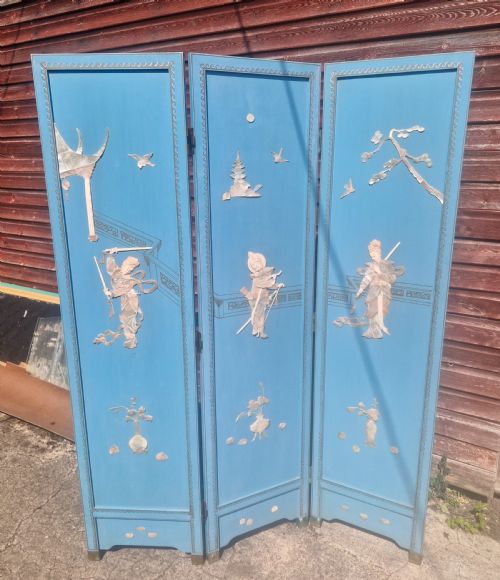
The selections encountered here range from large Japanese folding screens featuring deep carved bone figures to substantial Chinese hardwood and lacquer examples. European interpretations also appear, including Victorian giltwood pieces, French modesty screens with painted panels, and Regency needlepoint designs.
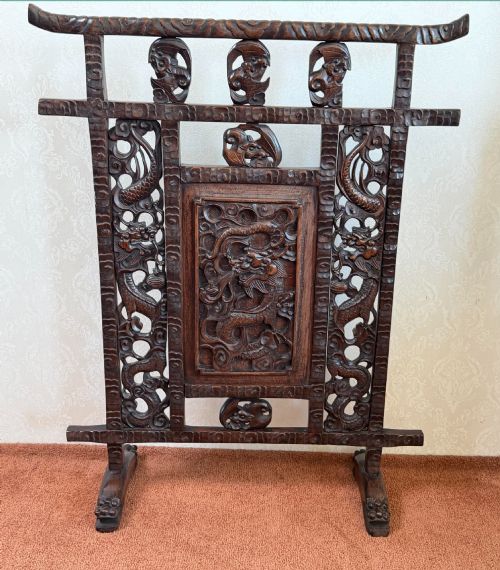
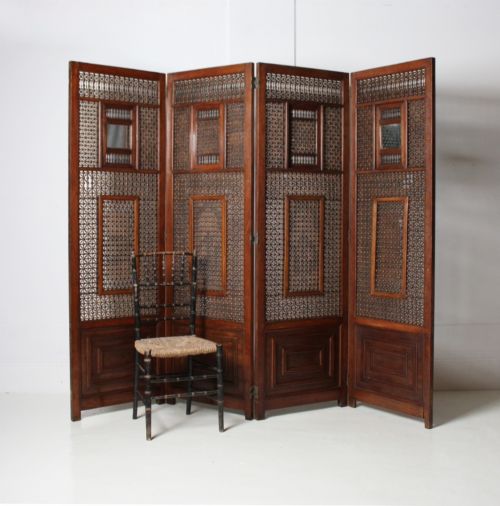
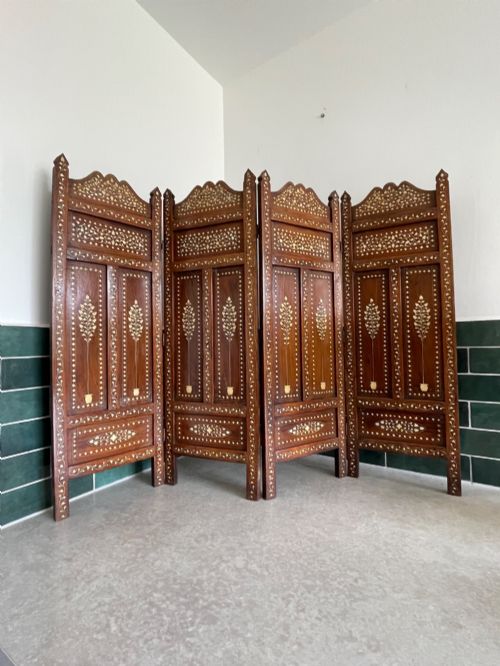
Form varies from grand four-fold and six-fold privacy screens down to smaller tabletop and fire screen formats. Regional traditions such as Anglo-Indian Hoshiarpur work, Burmese lacquered panels, and intricate mashrabiya lattice structures represent the primary regional expressions available.
Materials and construction techniques
Construction relies on solid hardwoods and softer timbers manipulated through deep carving, fretwork, and joinery. Artisans built multi-fold frames using hinges to allow smooth articulation across several panels.
Surface decoration frequently incorporates applied lacquer, gilding, and intricate bone inlay. Certain examples integrate delicate elements like silk, cotton, fabric panels, glass, and brass hardware into the wooden framework.
Listings feature items from the 19th century, Regency period, Victorian era, and early 20th century up through 1950.
Assessing quality and execution
Quality rests in the depth and precision of the carving, where sharply defined figures and clean fretwork demonstrate superior handwork. The handling of secondary materials, such as the snugness of bone inlay and the smoothness of lacquer layers, separates finer pieces from simpler items.
Structural integrity across the folds determines longevity, relying on sturdy hinges and stable timber that resists warping. The sophistication of the painted or needlepoint panels and the balance of the overall composition complete the hierarchy.
The Carved Wood Room Divider Glossary
- Mashrabiya
- An architectural element adapted into screens, featuring intricate wooden lattice turning that filters light and provides privacy. This technique creates complex geometric patterns across multiple panels.
- Giltwood
- Timber treated with gold leaf or gold paint applied to the surface. It provides a reflective, ornate finish frequently seen in European revival styles.
- Table Screen
- A miniature version designed to sit on a desk or tabletop rather than stand on the floor. These items often feature detailed carving or painted panels.
- Fire Screen
- A decorative panel placed in front of an unlit fireplace to block drafts or hide the grate. They share construction methods with larger room dividers but scale down for hearth use.
- Fretwork
- Ornamental design created by cutting patterns through solid wood with a fretsaw. It yields light, openwork panels common in Anglo-Indian and oriental pieces.
Carved Wood Room Divider: Frequently Asked Questions
How do I use a room divider in a modern home?
These partitions effectively zone open-plan areas, creating private corners or masking utilitarian spaces without permanent construction.
Position them against a blank wall as large-scale art or angle the folds to form a functional backdrop for seating.
What is the difference between a privacy screen and a modesty screen?
Privacy screens typically feature taller, multi-fold panels designed to block sightlines across an entire room.
Modesty screens historically served as lower partitions for specific grooming or dressing activities within private chambers.
How do I care for lacquered and giltwood surfaces?
Dust these panels regularly with a soft, dry cloth to prevent particulate buildup on delicate carved or painted areas.
Keep them away from direct sunlight and fluctuating humidity to protect the wood substrate and prevent surface cracking.
Can these screens support themselves safely?
Multi-fold panels stand securely when angled slightly rather than pulled completely flat, utilising the hinges for stability.
Ensure the surface beneath is level, and avoid placing them in high-traffic corridors where they might be bumped.