




Oriental Folding Partition
An oriental folding partition offers a clever way to divide a room with striking visual depth and craftsmanship.
Oriental Folding Partition
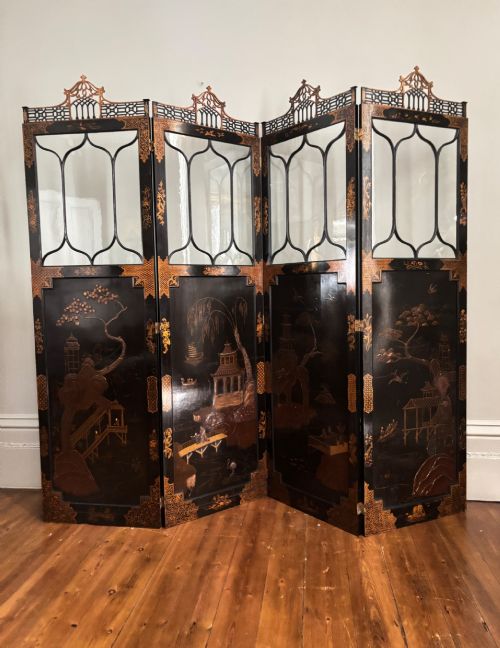
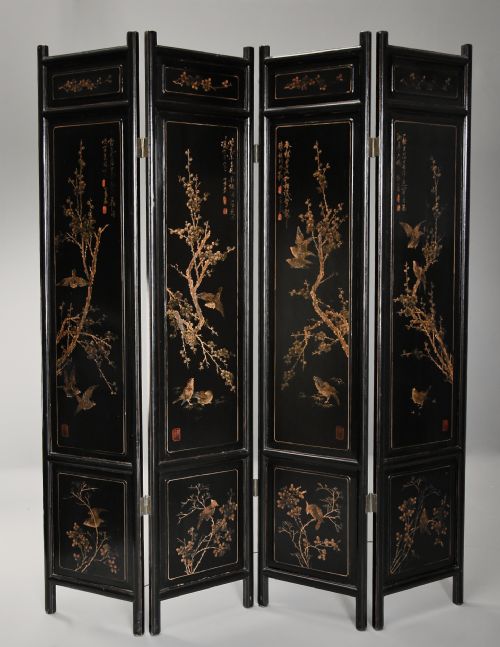
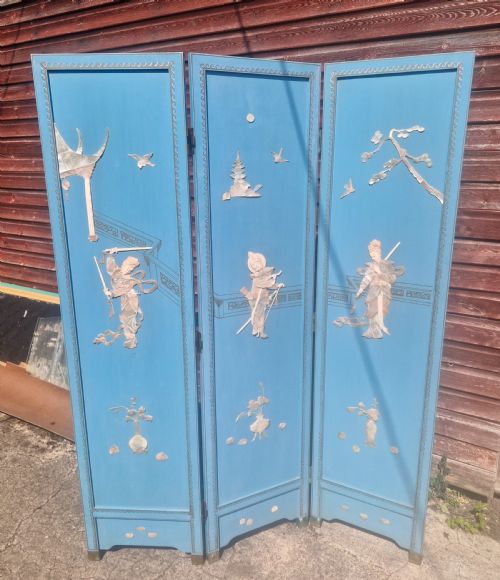
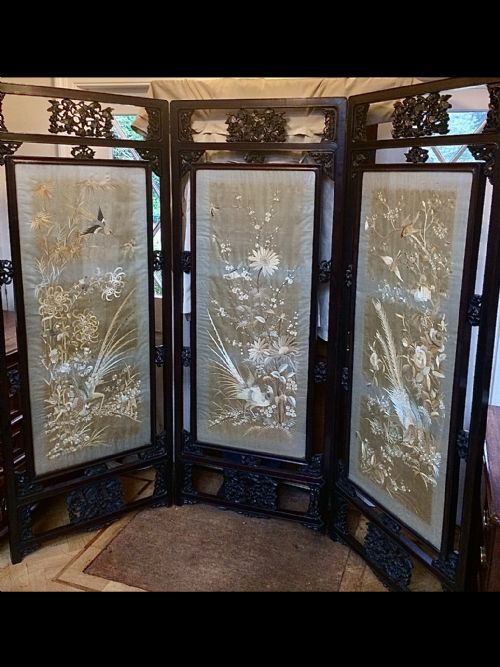
An oriental folding partition functions as a flexible room divider and decorative screen, shaping open spaces with multiple hinged panels. These pieces divide a larger floor plan or create a private corner within a room.
The selections here span periods from the Victorian era and the late nineteenth century through to the mid-twentieth century. Examples range from compact three-fold dressing screens up to substantial eight-fold room dividers.
Makers drew upon diverse regional traditions including Chinese Qing Dynasty, Chinese Chippendale, Japanese export, Anglo-Indian, and Burmese styles. The surface decoration frequently employs traditional motifs such as carved dragons, painted panels, and intricate fretwork.
Measures of quality
The depth and precision of the carving dictate much of the visual merit, particularly where dragons and floral motifs emerge from the wood. Crisp execution in fretwork and incised lacquer work separates standard output from finer commissions.
The integration of the panels reveals the maker's hand, seen in how evenly the leaves fold and how securely the brass hardware supports the weight. Heavier woods and substantial multi-fold constructions demand robust framing to maintain stability over time.
Listings feature wood, brass, lacquer, hardwood, glass, gold leaf, and pigment across multiple periods.
The Oriental Folding Partition Glossary
- Coromandel
- A style of Chinese folding screen featuring dark lacquer incised with designs and filled with pigment. The carved recesses often display intricate court scenes or natural motifs.
- Chinoiserie
- A European artistic style reflecting Chinese aesthetic traditions. Artisans applied these motifs to furniture and screens during various periods.
- Fretwork
- Openwork ornamentation carved or pierced into wood in geometric or interlocking patterns. This technique adds lightness to the upper sections of screens.
- Dressing screen
- A smaller portable partition traditionally used in bedrooms or dressing areas for privacy. These pieces typically feature three or four folding leaves.
- Lacquer
- A durable resin finish applied in multiple layers to wood surfaces. It provides a glossy protective coating that accepts polishing and intricate painting.
Oriental Folding Partition: Frequently Asked Questions
How do I place a room divider?
Position your screen to define zones within a larger living space, or set it against a blank wall to introduce texture and height. Angling the outer panels slightly ensures the structure remains stable on the floor.
Allow enough clearance around the hinges so the panels fold easily without scraping against furniture or flooring during daily use.
Can these partitions support weight?
These folding partitions are designed purely as decorative room dividers and visual screens rather than load-bearing architectural walls. Leaning heavy objects against them or using them to support shelving will strain the hinges and frame.
Their purpose is to shape the flow of a room and catch the eye through fine woodwork and painted detail.
How do I identify the period?
Examine the timber, the hardware, and the painting style to find clues about the era of manufacture. Victorian and late nineteenth-century pieces often display heavy carved hardwood or distinct export styles.
Twentieth-century examples may incorporate simpler frames or specific regional lacquer techniques. Comparing the joinery and finish helps place the piece within its historical context.