



Chinese Lacquer Screen
A Chinese lacquer screen brings depth of surface and division to a room, turning functional layout into focal points of art.
Chinese Lacquer Screen
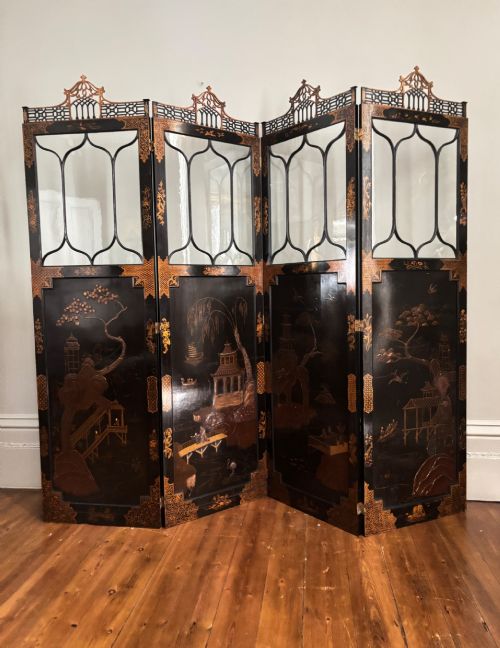
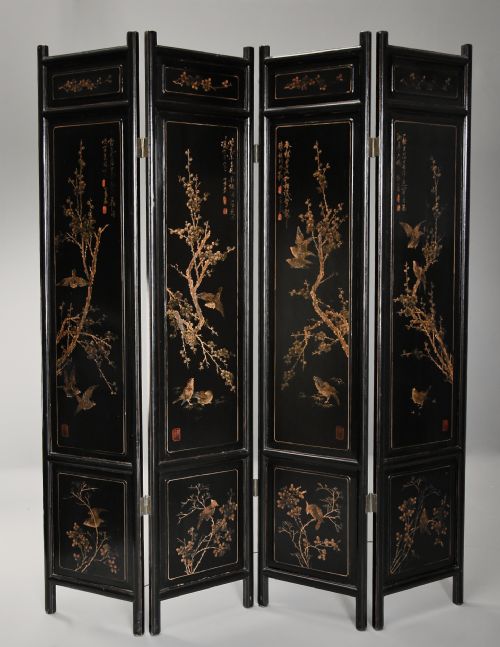
When you search for a chinese lacquer screen, you encounter folding panels, room dividers, dressing screens, and wall plaques spanning from the eighteenth century through the twentieth century. These pieces serve to partition spaces or mount as decorative panels, appearing in various scales from small three-fold dressing screens up to grand eight-fold room dividers.
The aesthetic bridges traditional Asian craftsmanship and European adaptation, taking forms such as Chinese Chippendale, Qing Dynasty, and Victorian Chinoiserie. You meet black lacquer grounds, red and gilt painted finishes, and smaller portable fire screens alongside heavy architectural dividers.
How They Were Made
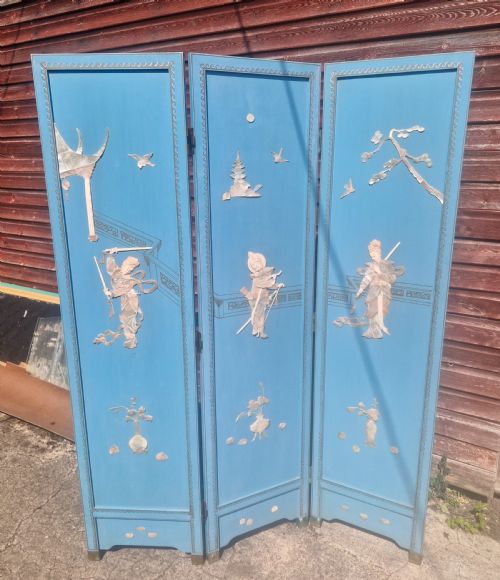
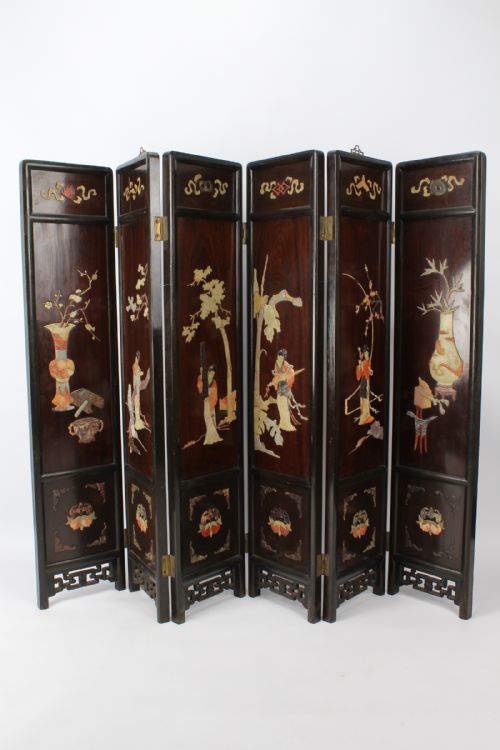
Craftsmen built these pieces using lacquered wood as the primary substrate, applying multiple layers of lacquer to achieve a dense and lustrous ground. Surfaces received hand-painted details in gold leaf and pigments, while elaborate examples incorporated mother-of-pearl, abalone, and carved hardstone mounted directly into the lacquer.
Techniques such as Coromandel or Bantam work involved incising designs into the built-up lacquer layers and filling the recesses with colours or gold. Brass hinges and mounts connected the individual leaves of folding screens, allowing flexible movement across multiple panels.
Hardstone and mother-of-pearl inlay turns flat panels into aviaries of shell birds perching permanently among lacquered branches.
What Varies in Quality
The distinction between ordinary and exceptional pieces lies in the depth of the lacquer buildup and the precision of the surface carving or inlay work. Fine examples display intricate hardstone and mother-of-pearl mounting with meticulous hand-gilding, whereas simpler versions rely solely on flat painted decoration.
The execution of the underlying woodwork and the structural integrity of the hinges dictate longevity in multi-fold screens. Panels with deep incised coromandel work show greater technical ambition than thin surface-painted panels.
The Chinese Lacquer Screen Glossary
- Coromandel
- A technique of incision where designs are cut into layers of dark lacquer and filled with colour. This method creates a low-relief textured surface found on grand folding screens.
- Chinoiserie
- European decorative style reflecting Chinese artistic influences. It appears in Western interpretations of oriental motifs on eighteenth and nineteenth-century furniture.
- Hardstone
- Minerals such as jade or agate carved and applied to lacquer grounds. These stones provide three-dimensional relief and natural colour variations within the pictorial scenes.
- Mother-of-Pearl
- Iridescent inner layer of mollusc shell used for inlay. Craftsmen cut thin pieces to form petals, birds, and architectural elements against dark lacquer.
- Bantam work
- Alternative term for incised lacquer work resembling Coromandel. This method involves coloured lacquer work set into carved recesses.
Chinese Lacquer Screen: Frequently Asked Questions
How do I use a folding screen in a room?
Folding screens divide open spaces, conceal functional areas, or stand against plain walls as large-scale art. Multi-panel versions articulate to fit corners or stretch flat to anchor a room layout.
Smaller three-fold or four-fold dressing screens function well in bedrooms, while large eight-fold pieces anchor spacious living areas.
What is Coromandel lacquer?
Coromandel lacquer involves coating wood in numerous layers of dark lacquer, carving the hardened surface to form designs, and filling the incisions with pigments and gold.
This technique produces durable panels with deep texture and pictorial detail depicting landscapes, figures, and foliage.
How do I date an antique lacquer screen?
Dating relies on examining the construction of the wooden panels, the formulation of the lacquer, the style of the hinges, and the artistic motifs. Eighteenth-century examples contrast with twentieth-century export pieces through wood density and carving depth.
Stylistic shifts between Qing Dynasty work, Victorian Chinoiserie, and Art Deco export pieces help narrow the decade of origin.
Can lacquer screens be wall mounted?
Specific pieces are constructed as wall art, wall plaques, or framed panel sets specifically for hanging. Freestanding folding screens are generally too heavy for standard wall mounting without professional architectural support.
Framed panels designed for walls appear individually or in matched sets of four.