
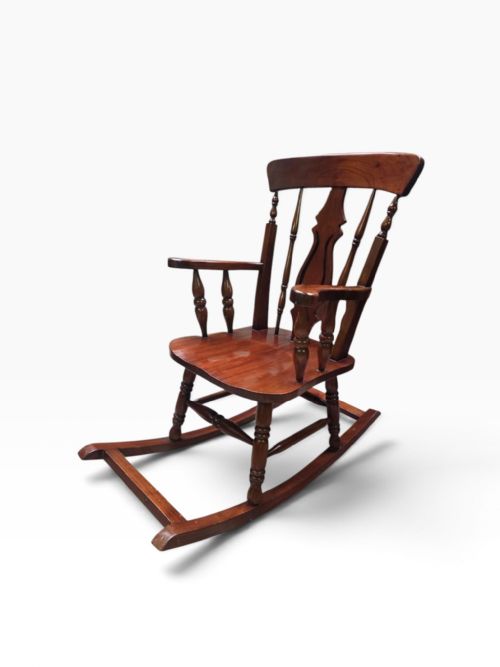
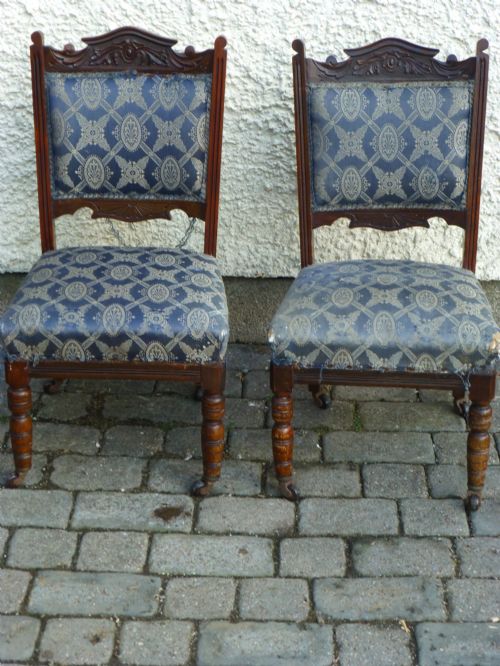
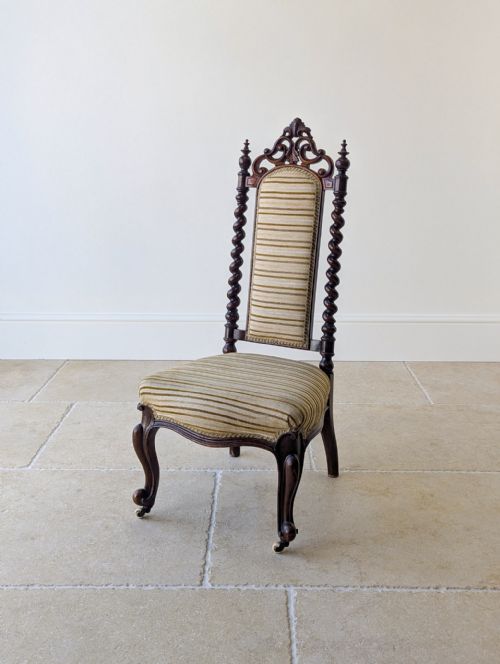
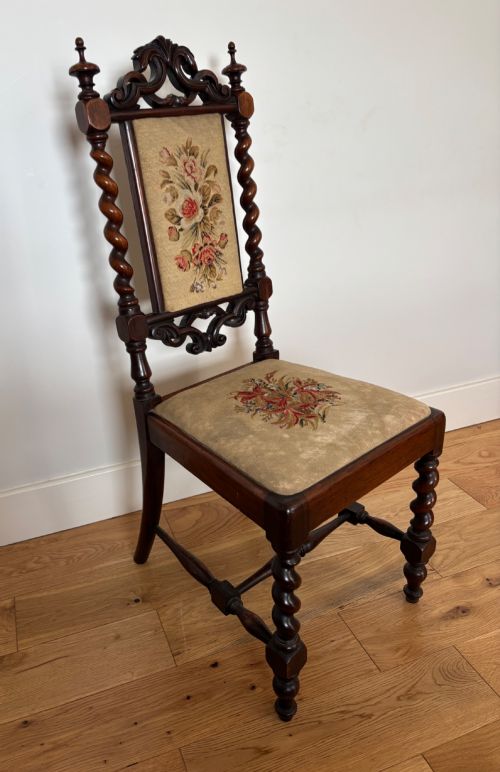


Carved Wood Nursing Chair
A carved wood nursing chair offers a low seat and supportive back designed for comfort, rooted primarily in the Victorian and Edwardian periods.
Carved Wood Nursing Chair
A carved wood nursing chair is typically a low-slung bedroom or parlour seat designed in the nineteenth and early twentieth centuries. These chairs appear frequently in Victorian walnut, mahogany and rosewood forms, alongside Edwardian walnut, beech and oak examples.
Buyers encounter variations ranging from low slipper chairs and prie-dieu prayer seats to high-backed parlour and bedroom designs. The seating surfaces often arrive ready for new upholstery, or retain period textiles such as velvet and fabric.
How they were made
Cabinet makers constructed these frames using hardwoods including walnut, mahogany, rosewood, oak and beech. Many feature detailed hand-carving along the wooden show-wood frames, backs and cabriole legs.
Metal components such as brass castors appear on specific period legs to aid mobility. Textures are completed with traditional upholstery textiles like velvet, fabric and textile coverings.
What varies in quality
The degree of craftsmanship in the timber carving distinguishes standard frames from exceptional ones. Sharp, deep relief work in rosewood or walnut indicates superior workshop execution.
The integrity of the timber frame and the presence of original show-wood elements dictate the overall standard. Pieces retaining their structural rigidity and authentic period upholstery materials hold distinct character.
R Whytock of Edinburgh·Lamb of Manchester·Wheeler
The Carved Wood Nursing Chair Glossary
- Prie-Dieu chair
- A low-backed devotional chair traditionally used for prayer, featuring an upright top rail designed to support leaning.
- Slipper chair
- A low-sitting upholstered chair designed originally for bedrooms to assist with putting on footwear.
- Show-wood
- Exposed polished timber frame sections visible around the upholstered padding of a chair.
- Cabriole leg
- A furniture leg that curves outward and then tapers inward, terminating in a pad or foot.
Carved Wood Nursing Chair: Frequently Asked Questions
How do I date a chair?
Dating relies on identifying stylistic markers, timber types, and construction methods associated with Victorian, Edwardian, or nineteenth century periods.
Details like rosewood frames, cabriole legs, and brass castors help narrow down the decade of manufacture.
Can I use them daily?
Many buyers place these chairs in living rooms, bedrooms, or reading corners as functional accent pieces.
Their sturdy hardwood frames allow for regular daily use, provided the joints and upholstery are stable.
What woods were used?
Cabinet makers utilised dense hardwoods such as walnut, mahogany, rosewood, oak, and beech for structural durability.
These timbers were frequently hand-carved and polished to display rich grain patterns on the exposed frame.