
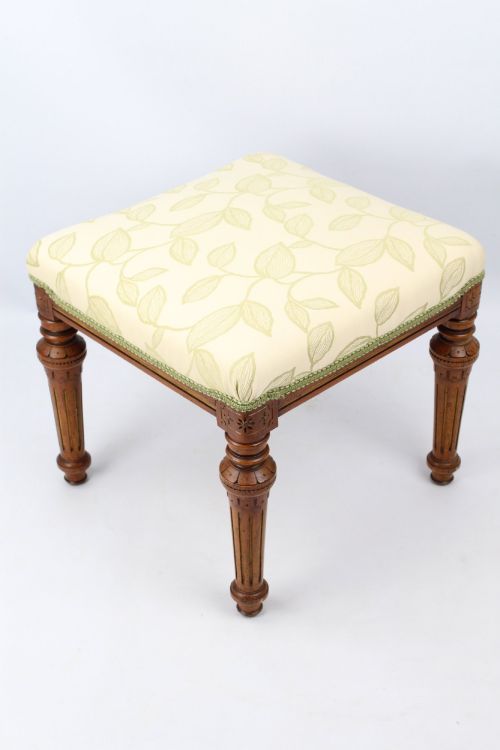
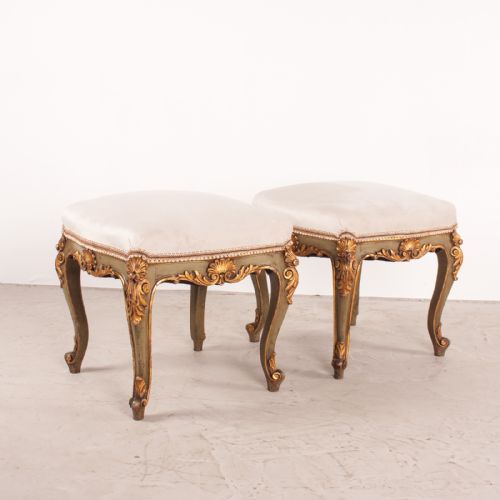
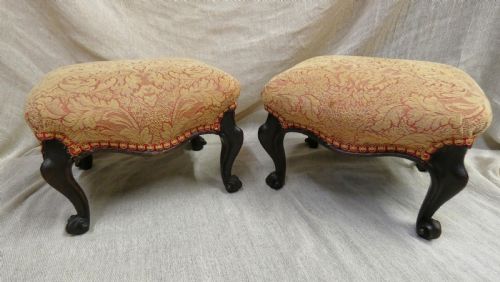
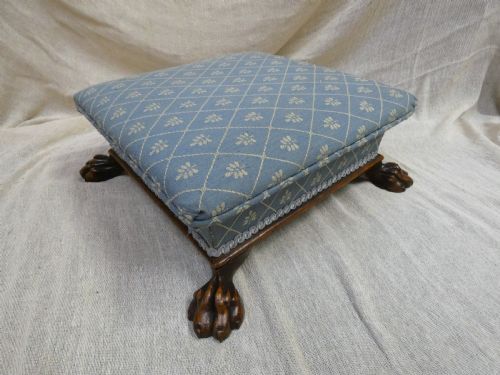
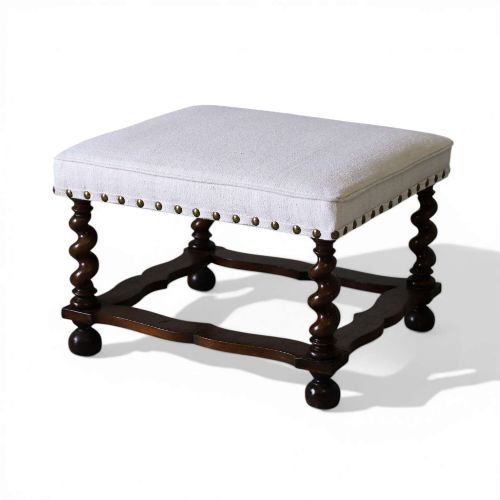

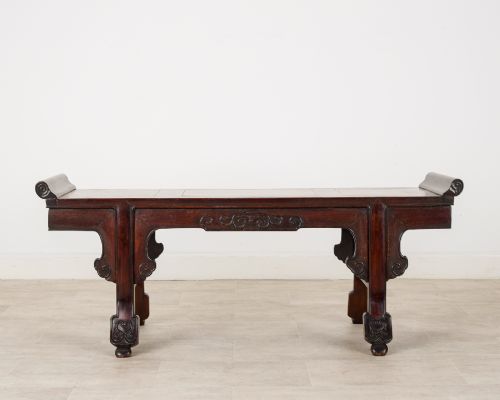
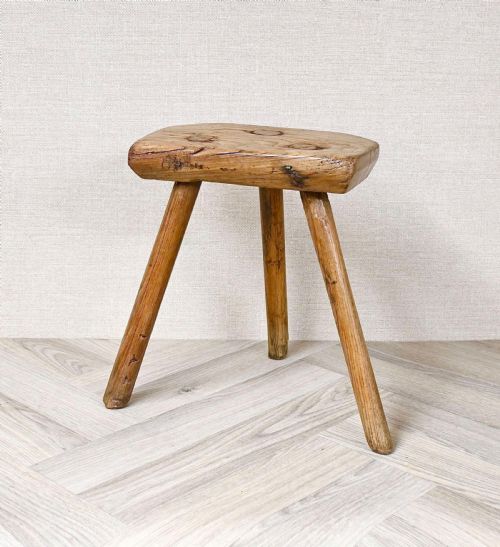
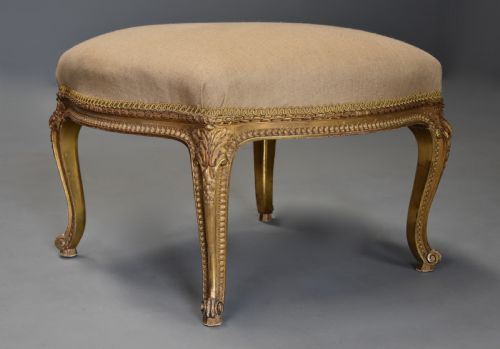
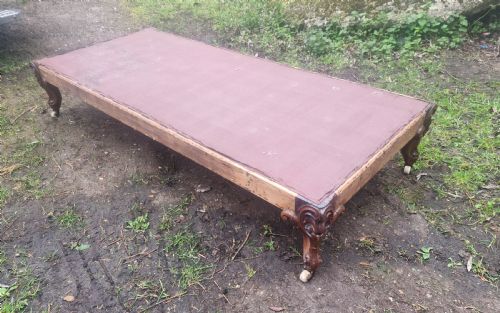


Carved Wood Low Stool
These carved wood low stool examples bring practical utility and historical craftsmanship to interiors, prized for their compact footprint and detailed woodwork.
Carved Wood Low Stool
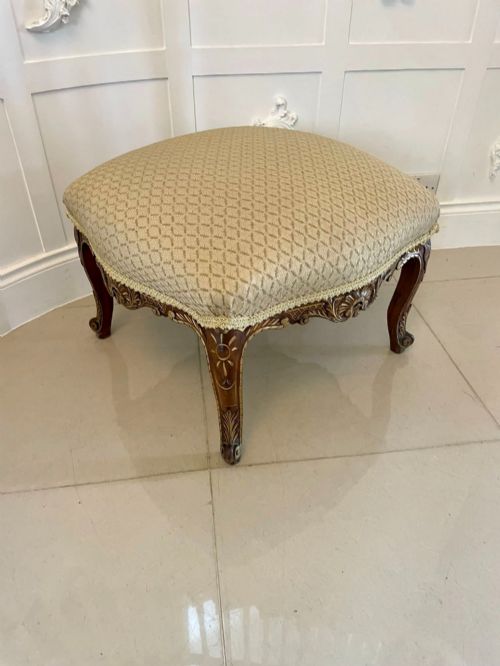
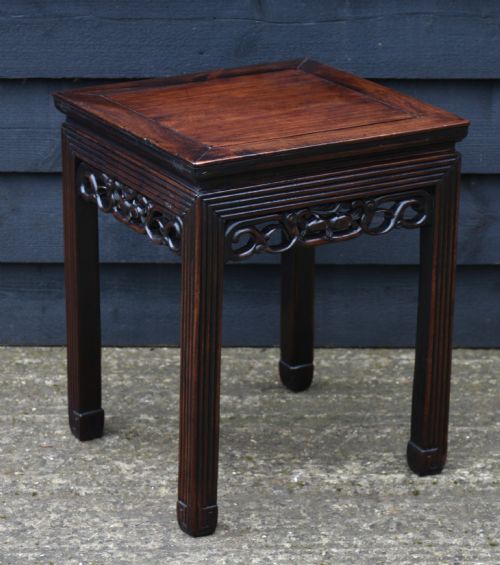
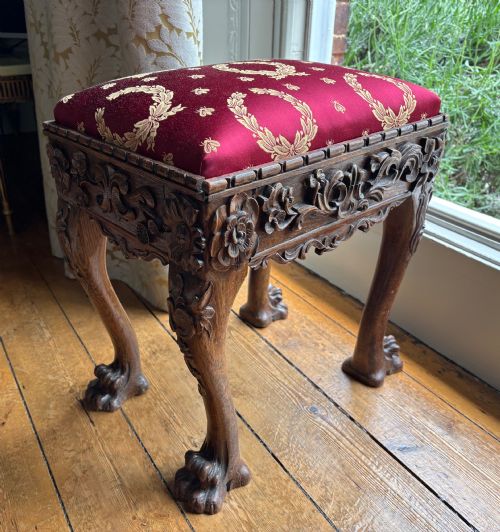
A carved wood low stool represents a diverse selection of seating and resting forms, spanning periods from the eighteenth century through the early twentieth century. Buyers seeking a carved wood low stool encounter pieces ranging from Victorian walnut frames and Arts and Crafts oak designs to Anglo-Indian hardwood creations and French revival models.
The assortment includes low stools, footstools, window seats, and dressing table stools, often appearing alongside related seating types such as benches and ottomans. The examples span multiple stylistic revivals and regional workshops, reflecting both vernacular rustic traditions and formal cabinet-making.
Materials and Technique
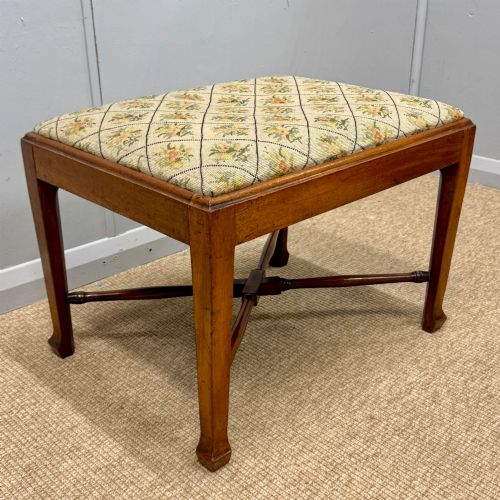
Carpenters and cabinet-makers utilised dense timbers such as oak, mahogany, walnut, rosewood, and exotic hardwoods to construct these frames. Artisans applied hand-carved detailing, turned legs, and cross stretchers to provide structural integrity alongside decorative depth.
Upholstered variants incorporate textiles, needlework, tapestry, leather, or fabric panels secured to the wooden substructure. Gilding, painting, and parcel-gilt treatments also appear on Continental and Victorian frames, supplementing the exposed carved wood grain.
Current listings incorporate items fashioned from oak, mahogany, walnut, rosewood, brass, and fabric across Victorian, Arts and Crafts, and eighteenth-century periods.
Craftsmanship and Proportion
Quality rests in the crispness and depth of the hand-carving upon the timber frame, distinguishing deeply modelled ornamentation from shallow or mechanical work. The choice of primary wood, whether figured walnut, dense rosewood, or solid oak, dictates the foundational substance of the piece.
Structural cohesion in the joints, stretchers, and leg turnings determines the durability of a low form subjected to weight. Original surface patination, intact upholstery foundations, and balanced proportions further separate standard utility pieces from finer examples.
Liberty and Co·Loidrault Freres Paris
The Carved Wood Low Stool Glossary
- Cross stretcher
- A structural wooden brace connecting the legs beneath a stool to provide stability. These members frequently feature turning or central finials.
- Joint stool
- A traditional wooden seat constructed with mortise and tenon joints rather than turned assembly. These sturdy forms typically date to earlier periods of English craftsmanship.
- Giltwood
- Timber coated with a thin layer of gold leaf or gesso preparation. It appears frequently on decorative nineteenth-century revival frames.
- Alvaro-Indian
- A descriptive term for nineteenth-century decorative items produced in the Indian subcontinent for British export. These pieces display intricate dense floral and foliate carving.
- Huali
- A fragrant Chinese hardwood utilised in Qing Dynasty seating. It possesses a distinct grain pattern favoured in high-status cabinet-making.
Carved Wood Low Stool: Frequently Asked Questions
What periods do these low stools represent?
The selection spans from the eighteenth century through the Victorian era up to the 1930s. Pieces reflect historical revivals including Chippendale, Louis XIV, Régence, and Arts and Crafts movements.
Craftsmen across these decades utilised regional timbers and traditional joinery methods, resulting in varied stylistic expressions from rustic milking stools to formal gilt frames.
How were these low stools used originally?
These low forms served primarily as footstools, dressing table seats, and window benches in period interiors. Their modest height suited domestic spaces where flexible seating or foot support was required.
Larger versions functioned as occasional tables or low coffee surfaces, adapting readily to contemporary domestic layouts.
What woods should I look for?
Listings feature solid oak, mahogany, walnut, rosewood, yew, and general dense hardwoods. English vernacular pieces favour oak, while formal Victorian and Continental items often utilise walnut or rosewood.
Exotic timbers and fruitwoods appear in specific regional craft traditions, contributing to the diversity of surface textures and colour tones available.
How do I care for antique wooden frames?
Maintain the timber by keeping pieces away from direct heat sources and rapid humidity fluctuations. Gentle dusting with a dry cloth preserves the original polish and surface patination.
Upholstered sections benefit from careful vacuuming with a soft brush attachment to protect delicate textiles and needlework panels.