


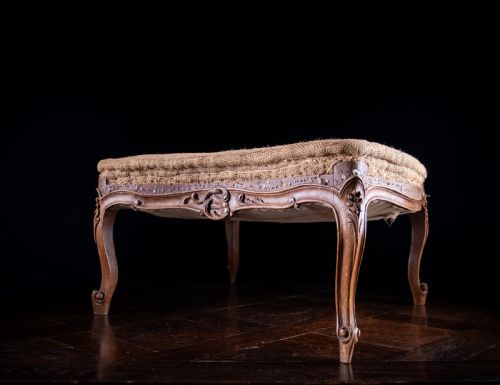


Antique Style Upholstered Footrest
An antique style upholstered footrest brings period comfort to a room, offering low seating or a support for tired feet through revival forms.
Antique Style Upholstered Footrest
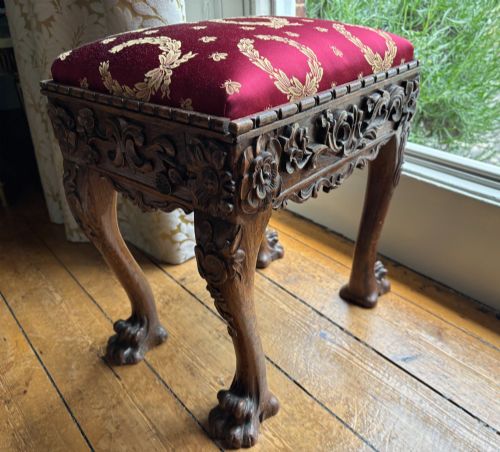
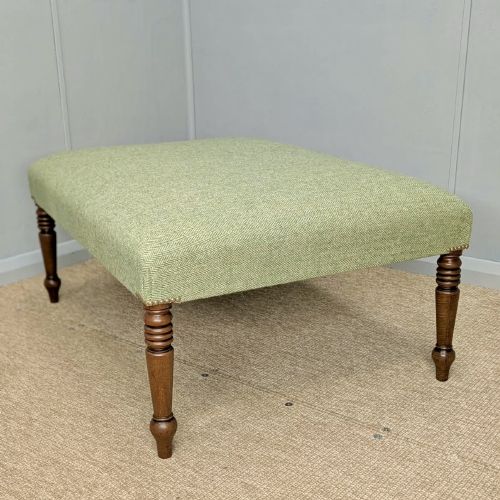
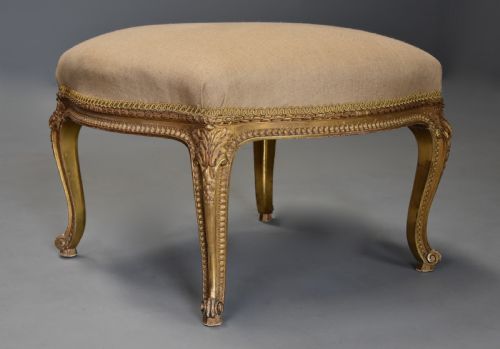
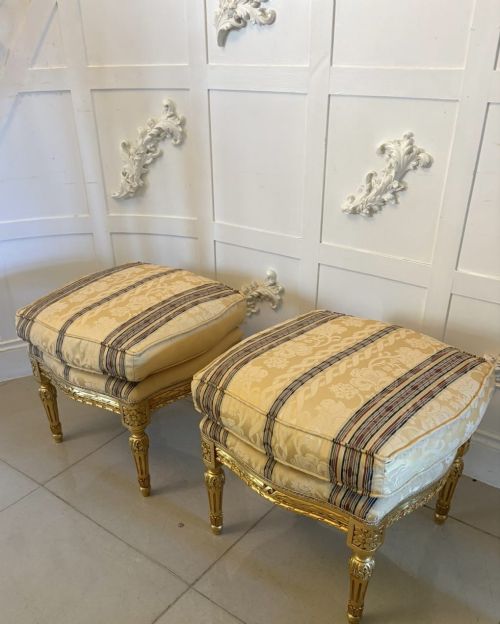
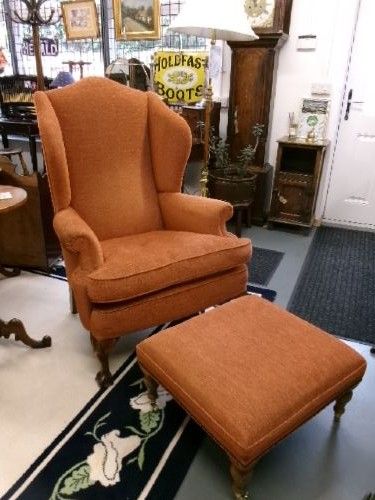
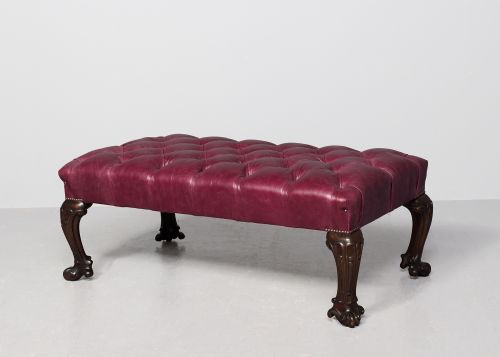
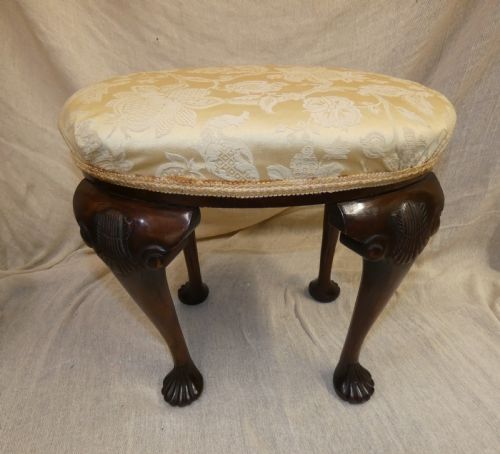
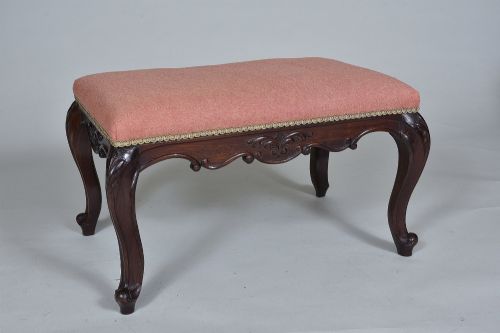
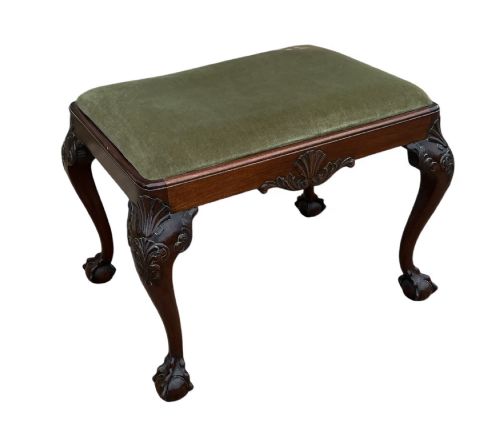
An antique style upholstered footrest appears across this selection primarily as a stool, footstool, or ottoman taking inspiration from earlier centuries. These pieces emerge from periods spanning the nineteenth century into the early twentieth, alongside revivals that echo Queen Anne, Chippendale, and Louis XV designs.
The forms range from compact dressing stools and adjustable gout stools to large fireside seats and long footstools. Walnut, mahogany, and beech frame these items, carrying upholstery in velvet, tapestry, wool, and textile.
How they were made
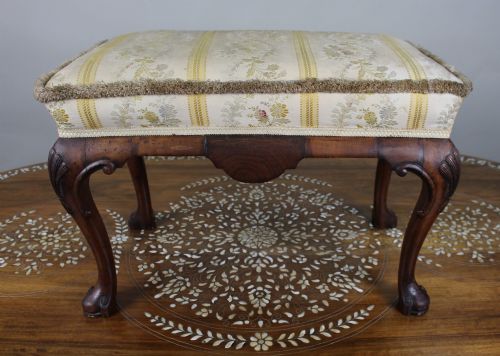
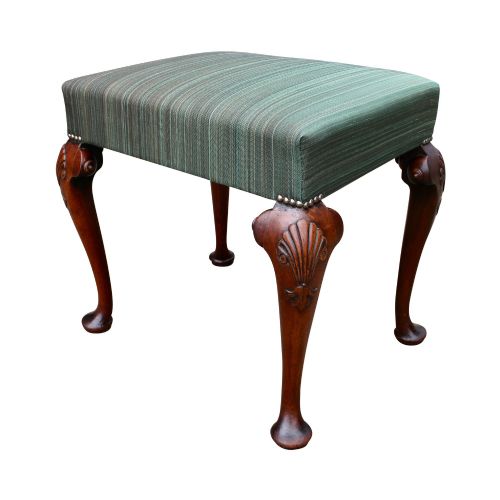
Craftsmen shaped these frames from solid hardwoods including mahogany, walnut, oak, beech, and giltwood, frequently carving the wood into cabriole legs or decorative motifs. Brass castors sometimes support the base, while black lacquer or paint occasionally finishes the exterior structure.
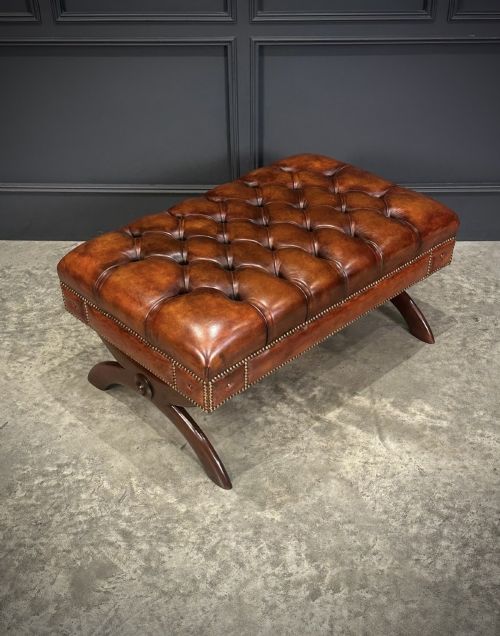
The upholstery employs traditional textiles such as velvet, wool, tapestry, needlework, and leather, often secured over deep buttoning or padding. Frames reflect specific historical revivals, incorporating stylistic details from George II, Victorian, and French periods.
Antique Style Upholstered Footrest Retail Price Guide 2026
Typical asking prices for style upholstered footrest among the pieces listed under this phrase on Sellingantiques today, from the lower quarter to the upper quarter. They describe what is for sale here now, not the wider market.
Listings feature walnut, mahogany, beech, and giltwood frames paired with velvet, wool, tapestry, and leather upholstery.
What varies in quality
The depth of hand-carving on the wooden frame separates standard examples from finer pieces, particularly where cabriole legs or giltwood details show crisper execution. Timber selection also matters, with richly grained walnut or solid mahogany indicating superior workshop standards.
The execution of the upholstery and the integrity of the underlying frame construction define the overall finish. Pieces retaining original textiles or needlework display an authenticity that elevates the physical presence of the footstool.
LOIDRAULT FRERES PARIS
The Antique Style Upholstered Footrest Glossary
- Cabriole leg
- A furniture leg that curves outward at the knee and tapers inward toward the foot, commonly seen on Queen Anne and Chippendale style pieces. This design mimics the shape of an animal's curving leg.
- Giltwood
- Wood that has been treated with a thin layer of gold leaf or gilt powder. It appears frequently on French style decorative frames.
- Gout stool
- An adjustable footstool designed to elevate and support the foot of someone suffering from gout. These items often feature a ratcheted mechanism to alter the angle.
- Needlework
- Hand-stitched textile work using yarn or thread on canvas, frequently used for the upholstery top of period stools. Such panels show traditional floral or geometric patterns.
- Ottoman
- A low, upholstered seat or footstool without a back or arms, designed for resting feet or sitting. Larger versions accommodate multiple people in a drawing room.
Antique Style Upholstered Footrest: Frequently Asked Questions
What periods do these footrests date from?
The selections span the nineteenth century and the early decades of the twentieth century. Many pieces adopt earlier revival styles like Queen Anne and Chippendale.
Craftsmen built these items using traditional hardwoods and textile coverings typical of Victorian and Edwardian parlours.
How were these stools originally used?
People used these low seats beside firesides, in dressing rooms, or alongside chairs to rest tired feet. Some specialised variants offered adjustable angles for medical comfort.
Larger ottomans and long footstools served communal seating functions in formal reception rooms.
Which woods appear most frequently?
Mahogany and walnut form the structural basis for the majority of these frames. Beech and oak appear alongside giltwood and painted finishes.
Carved details frequently highlight the wooden framing beneath the upholstered tops.
What types of upholstery do they feature?
Textiles range from plush velvet and wool to needlework tapestries and leather. Deep buttoning often secures the padding across the top surface.
Original needlework panels and traditional fabrics provide historical character to the pieces.