



Cream Floral Footstool
These cream floral footstools offer enduring comfort and upholstery, bringing period character and practical seating to any traditional room.
Cream Floral Footstool
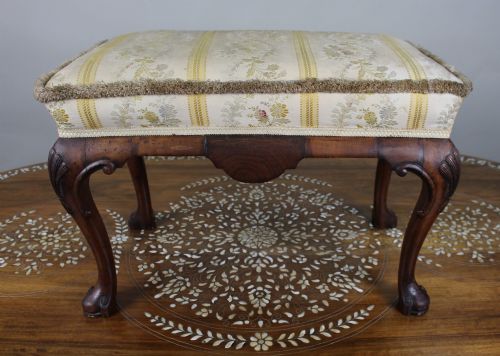
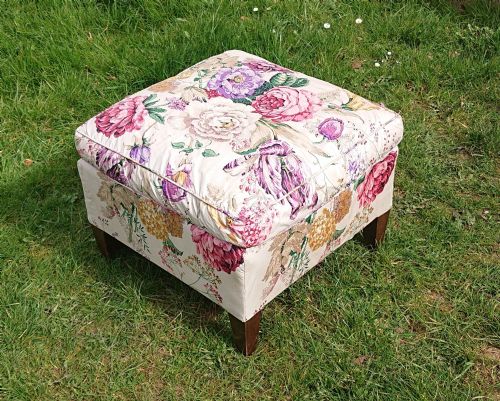
A cream floral footstool combines traditional seating frames with pale upholstery, appearing across periods from early Victorian work to pieces made around nineteen thirty. These items function as low resting places for the feet or as small occasional seats beside a fireside.
The selection on this page includes walnut and painted wood frames supporting textile, wool, and tapestry covers. Forms range from compact single footstools to longer Edwardian three-seater upholstered stools.
Makers and designers from English Country to French Chateau styles shaped these forms, incorporating Queen Anne revival lines alongside Louis XV and Italian neoclassical influences.
Materials and construction
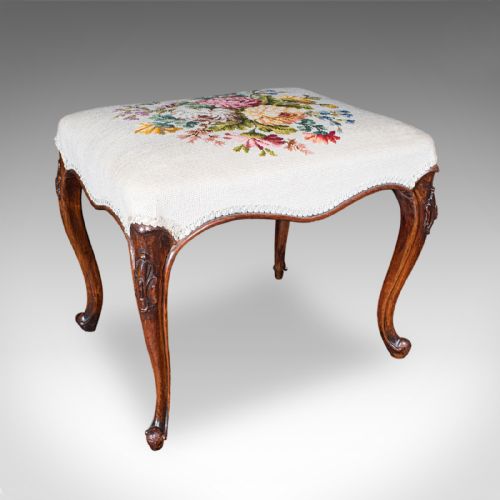
Carpenters shaped structural frames from walnut and painted wood, occasionally applying carved details to cabriole or turned legs. Brass studs frequently secure the outer edges of the upholstery to the wooden bases.
Upholsterers built the upper sections using supportive stuffing covered in textile, fabric, and wool. Needlepoint and tapestry needlework provide the decorative floral surfaces seen across these examples.
Cream Floral Footstool Retail Price Guide 2026
Typical asking prices for cream floral footstool among the pieces listed under this phrase on Sellingantiques today, from the lower quarter to the upper quarter. They describe what is for sale here now, not the wider market.
A solitary brass stud holds centuries of quiet fireside history in place.
Assessing quality in construction and finish
Finer examples display careful hand-carving on the walnut framework and sturdy joinery that withstands daily use. Lesser items rely on simpler painted finishes and lighter timber construction.
The execution of the textile upholstery dictates much of the visual appeal. Detailed needlepoint and crisp tapestry work elevate a piece above standard fabric coverings.
Howard and Sons
The Cream Floral Footstool Glossary
- Cabriole leg
- A furniture leg that curves outward at the knee and inward at the ankle, finishing in a pad or foot. This shape is characteristic of Queen Anne revival styles.
- Needlepoint
- A type of canvas work embroidery executed with wool or silk yarn. It forms the durable floral patterns seen on many period footstool covers.
- Tapestry
- A heavy hand-woven or needle-worked textile used for upholstery. It depicts pictorial or floral scenes with dense thread counts.
- Brass studs
- Smallheaded metal nails hammered into wooden frames to secure fabric edges. They provide a neat decorative border around the upholstery.
Cream Floral Footstool: Frequently Asked Questions
What periods do these footstools come from?
The listings span from the mid nineteenth century through the Edwardian era up to nineteen thirty. Pieces reflect shifting stylistic revivals over these decades.
Earlier items often feature heavy walnut and detailed needlepoint, while later pieces show lighter painted wood and simpler proportions.
How were these stools used historically?
These pieces served primarily as footrests beside firesides in parlours and drawing rooms. Their low height made them ideal companions to armchairs.
Some larger examples functioned as occasional seats or low benches when extra seating was required.
How should I clean a needlepoint top?
Textile and wool surfaces require gentle surface cleaning with a soft brush to remove dust. Avoid harsh chemical cleaners that might damage old fibres.
Professional textile conservators should handle deep cleaning of antique tapestry and needlework.
Are these frames made of solid wood?
Makers constructed these frames using traditional timber such as walnut or painted softwoods. Solid wood frames provide the structural integrity needed to support upholstery.
Carpenters joined the wooden components using traditional joinery methods appropriate to each period.