




Carved Wood Hearth Screen
A carved wood hearth screen protects a room from radiant heat while bringing rich texture, fine timber, and needlework into a traditional interior.
Carved Wood Hearth Screen
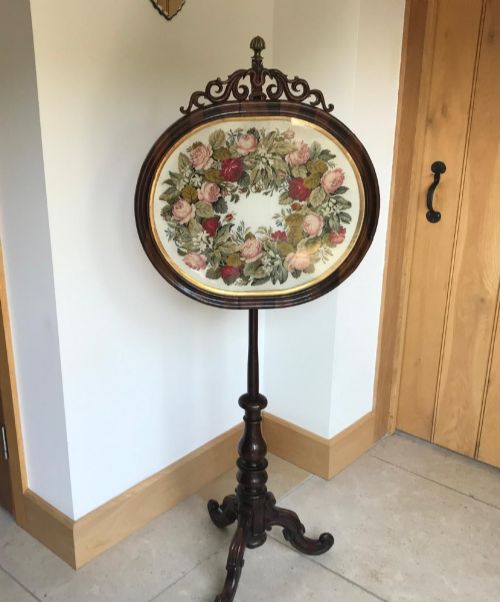
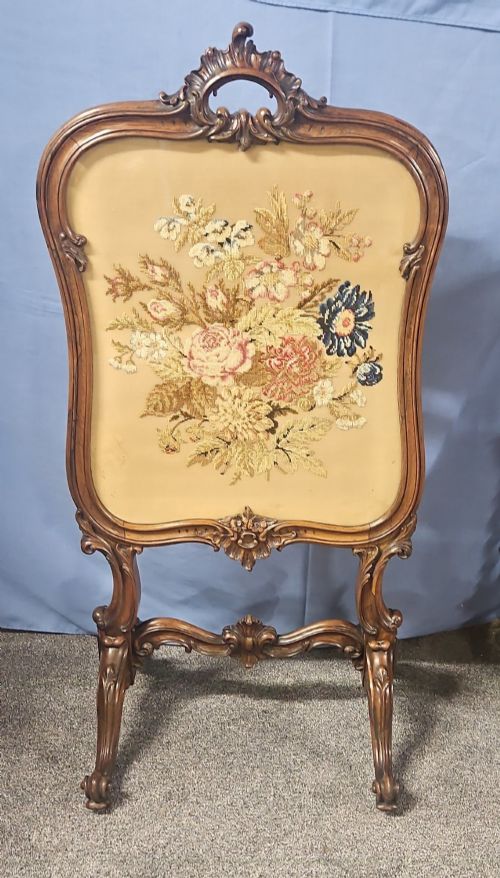
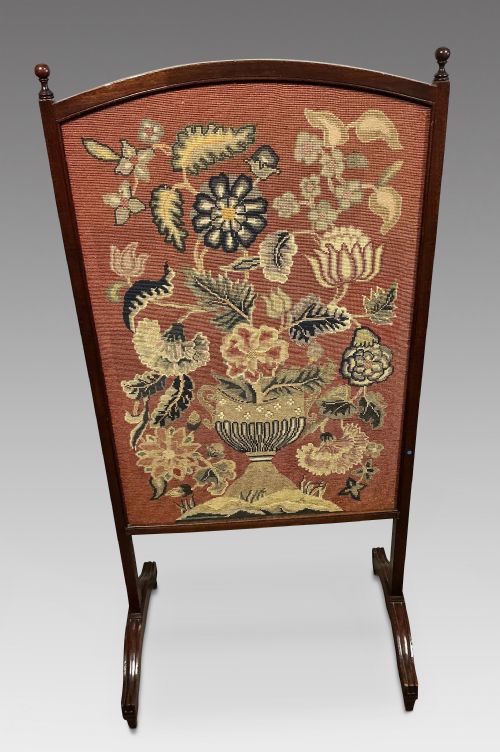
The selection ranges from substantial mahogany and rosewood floor frames to intricate pole screens with adjustable needlepoint panels. Most pieces combine a carved wooden framework with textile inserts, tapestry, glass, or brass decoration.
How they were made
Cabinetmakers utilised hardwoods such as mahogany, rosewood, oak, and walnut, employing traditional joinery and detailed hand-carving for the structural frames. Many examples incorporate turned pillars, bobbin turning, or giltwood detailing to achieve decorative depth.
The central panels feature specialised craft techniques including wool needlepoint, silk embroidery, embossed and chased brass, and inserted glass or tapestry. Pole screens integrate mechanical adjustments allowing the textile panel to slide vertically on a turned wooden shaft.
Several examples incorporate detailed family coats of arms and figural tapestries, ensuring your hearth is guarded by heraldic beasts.
What varies in quality
The distinction between standard and exceptional pieces lies in the crispness of the wood carving and the density of the timber. Finely executed mouldings, substantial proportions, and well-balanced bases separate superior examples from simpler production.
The intricacy and preservation of the central panel heavily influence the overall standard. Hand-stitched needlework with varied polychrome threads and well-preserved brass or tapestry work represent higher tiers of craftsmanship.
The Carved Wood Hearth Screen Glossary
- Pole screen
- A vertical wooden stand featuring an adjustable framed panel that slides up and down on a central shaft to block radiant heat. This form allows the user to alter the height of the needlework banner.
- Needlepoint
- A type of canvas work embroidery created with uniform stitches to form pictorial or heraldic scenes. These detailed textiles serve as the decorative core within many wooden frames.
- Giltwood
- Timber treated with a thin layer of gold leaf or metallic gilt over a prepared base. This finish adds reflective brilliance to formal Georgian and revival frames.
- Bobbin turned
- A style of woodwork shaped on a lathe to resemble a string of rounded bobbins or spools. This technique creates a tactile, repetitive profile popular during the Victorian era.
- Cheval screen
- A heavy standing fire screen supported by two sturdy side pillars and feet, allowing the large central panel to pivot. It provides broader coverage than a standard pole screen.
Carved Wood Hearth Screen: Frequently Asked Questions
How do you use a hearth screen?
These screens are placed a short distance from an active fireplace to intercept excessive radiant heat and protect people seated nearby. They also serve to conceal an empty hearth during warmer months.
Position the screen to balance functional protection with the visual display of the carved timber and textile panel.
How do I date a wooden fire screen?
Dating relies on stylistic clues such as timber choice, carving motifs, and assembly methods. Regency and Georgian pieces often display restrained classical lines, while Victorian examples favor exuberant carving, rosewood, and walnut.
Needlework panels and hardware styles provide additional chronological indicators.
Are these screens suitable for modern homes?
These pieces function effectively in contemporary interiors as decorative focal points near non-working fireplaces, in hallways, or as room dividers. Their rich textiles and carved wood add warmth to minimalist spaces.
Care should be taken to keep them at a safe distance from active, high-heat fires.