
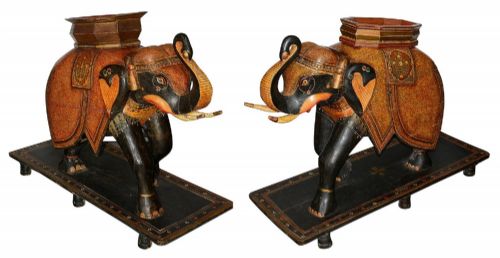


Carved Wood Elephant Table
A carved wood elephant table brings colonial presence to a room, serving as an occasional surface or a low side table supported by animal figures.
Carved Wood Elephant Table
A carved wood elephant table combines functional surface space with sculptural animal forms, taking the shape of side tables, occasional tables, coffee tables, and plant stands. The versions most commonly found span from the nineteenth century into the early twentieth century, originating from regions such as India, Burma, and Ceylon.
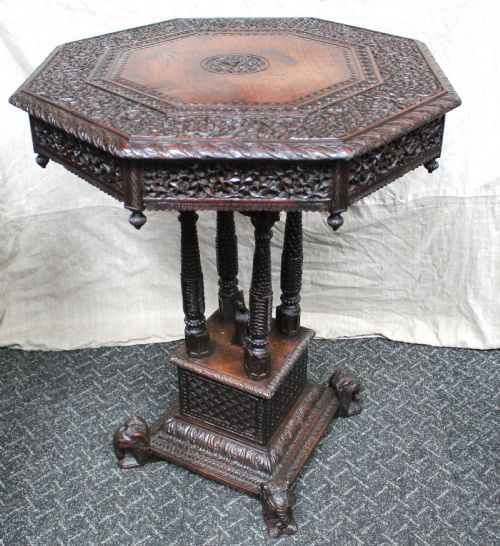
Makers utilised regional aesthetic traditions, producing pieces defined by Anglo-Indian, Anglo-Burmese, and Qing Dynasty styles. Forms range from small circular occasional tables to large centre tables and tripod designs, occasionally expanding into related seating such as stools and hall benches.
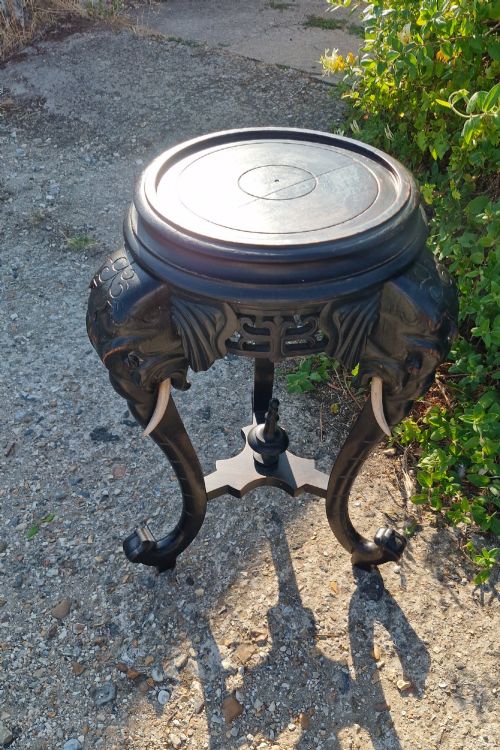
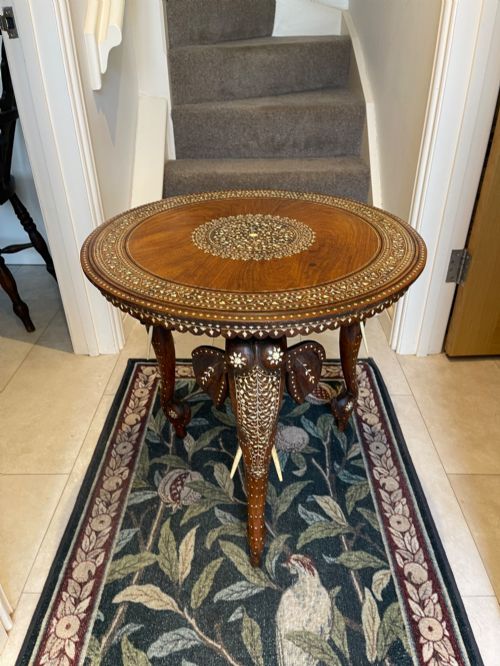
The design frequently incorporates elephant heads, trunks, and tusks as structural supports for the tabletop. These surfaces meet practical household needs while displaying distinct regional carving techniques.
How they were made
Carpenters and carvers shaped these pieces from dense timbers including teak, rosewood, ebony, padouk, and general hardwoods. Artisans selected these materials for their ability to hold intricate detail under deep relief carving.
Detailing often involved contrasting elements such as bone, bone inlay, and painted wood for tusks and decorative highlights. Lacquer and polish were applied to finish the timber surfaces, accentuating the grain and the depth of the sculptural work.
The materials recorded in these listings include teak, rosewood, ebony, hardwood, and bone inlay.
What varies in quality
Timber selection dictates durability and finish, with solid rosewood, teak, and ebony yielding a heavier, crisper result than softer painted alternatives. The integration of materials like bone inlay and applied tusks separates simpler tables from highly elaborate exhibition pieces.
The Carved Wood Elephant Table Glossary
- Anglo-Indian
- A descriptive term for furniture made in India during the British colonial period, combining British furniture forms with local Indian carving traditions. These items often feature dense floral patterns alongside animal motifs.
- Hoshiarpur
- A town in Punjab renowned for its intricate woodworking and inlay traditions. Pieces from this centre typically display complex geometric patterns in bone or wire.
- Specimen Wood
- Furniture constructed from a variety of distinct timber species assembled to show contrasting natural colours and grain patterns. Such tables often originate from Ceylonese workshops.
- Occasional Table
- A small, movable table designed for a specific, transient use in a sitting room or hallway. They appear frequently in forms supported by figural elephant legs.
Carved Wood Elephant Table: Frequently Asked Questions
What is an elephant table?
An elephant table is a small surface, such as an occasional or side table, where the legs or support structure take the form of carved elephants. These pieces frequently incorporate detailed heads, trunks, and tusks into the framework.
They emerged in popularity during the nineteenth and early twentieth centuries, particularly within colonial trade networks across India and Burma. Today they function as distinctive statement items in domestic interiors.
How do I date an elephant table?
Dating relies on examining the timber species, the style of the carving, and the construction methods used beneath the top. Nineteenth-century examples often employ solid rosewood or teak with deep, hand-chiseled relief.
Later pieces from the early twentieth century may show machine-assisted elements or simpler surface finishing. Comparing the decorative motifs against regional styles like Anglo-Indian or Hoshiarpur also helps narrow the period of origin.
Were these tables made in Britain?
These tables were generally manufactured in workshops overseas, predominantly in India, Burma, and Ceylon, during the colonial era. European demand drove production, leading craftsmen to adapt traditional local carving for export.
As a result, the forms often match British furniture types like tripod tables and plant stands while retaining distinctly Asian decorative techniques.
How do I care for carved wood?
Carved wood requires stable indoor humidity to prevent the dense timbers, such as teak and rosewood, from splitting along the grain. Regular dusting with a soft brush helps clear out intricate recesses without damaging the relief work.
Avoiding direct sunlight preserves the original polish and prevents fading across the timber and any inlaid bone elements.