


Brass Inset Top Table
A brass inset top table brings a touch of refined metalwork into a room, offering sturdy surfaces framed by gleaming borders.
Brass Inset Top Table
A brass inset top table brings a touch of refined metalwork into a room, offering sturdy surfaces framed by gleaming borders. When you search for a brass inset top table, you look at pieces that combine woodwork with metal detailing, spanning desks, coffee tables, and stands.
The selections here range across Victorian and Edwardian periods, stretching from the late nineteenth century into the nineteen-thirties. You will encounter forms such as writing tables, pedestal desks, and nests of tables alongside occasional coffee tables.
The styles mirror these periods, drawing on Victorian and Edwardian aesthetics, Sheraton Revival, and French influences. Makers and workshops from these eras utilised various timbers to support the metal work.
How they were made
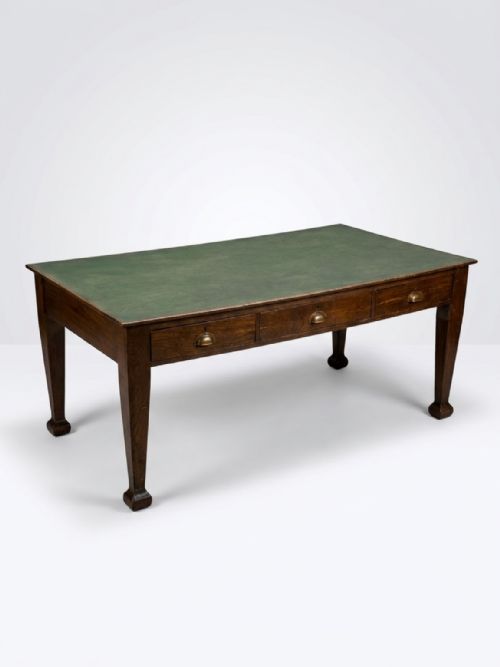
Cabinet makers utilised a selection of timbers including mahogany, oak, walnut, satinwood, and teak to construct the main bodies of these tables. They often paired these woods with inset leather panels and polished brass strips or frames.
Joinery techniques matched the period demands, from solid construction to veneered surfaces on carcases. Brass elements were carefully sunk into recesses within the timber tops, creating a flush surface.
Listings span the nineteenth and early twentieth centuries, featuring mahogany, oak, and walnut across desks and coffee tables.
What varies in quality
Quality rests in the selection of timber and the precision of the brass inlay work. Tighter grain in the mahogany or oak and cleaner fitting of the metal components set finer examples apart.
The integration of secondary materials like leather or marble dictates the overall finish. Better pieces display balanced proportions and considered decorative detailing across the frame.
Shapland and Petter of Barnstaple
The Brass Inset Top Table Glossary
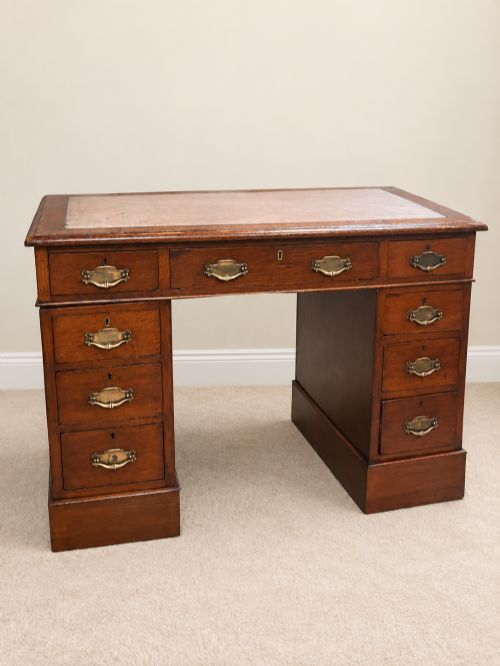
- Pedestal desk
- A heavy writing table supported by two banks of drawers rather than legs. It provides substantial storage beneath the inset top.
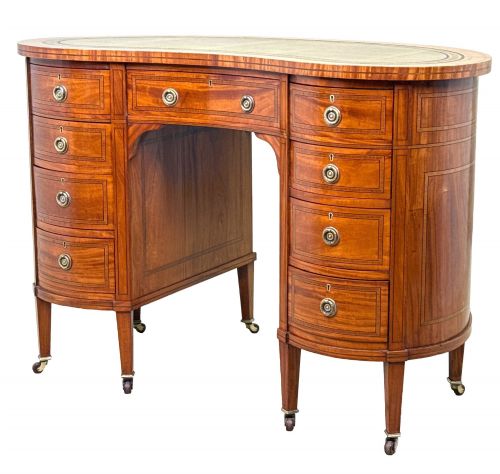
- Kidney shaped desk
- A writing table with a curved front profile resembling a kidney bean. This form fits comfortably against the body.
- Quartetto nest
- A set of four graduating occasional tables that slide neatly beneath one another. They save space when not in use.
- Gallery back
- A raised wooden or metal border along the rear edge of a desk top. It prevents items from sliding off the back.
Brass Inset Top Table: Frequently Asked Questions
What is a brass inset top table?
These pieces are functional items of furniture, predominantly desks and occasional tables, featuring metal borders or panels integrated into the upper surface. They combine timber structures with brass details.
You will find examples ranging from nineteenth-century writing desks to early twentieth-century coffee tables and stands, reflecting various period tastes.
How do I date an Edwardian desk?
Edwardian pieces often display lighter timbers such as satinwood or paler mahogany alongside refined inlay work. They generally date from around nineteen hundred to the First World War.
Construction methods and stylistic revivals, such as Sheraton Revival influences, also help place the piece within this early twentieth-century bracket.
Where were these tables used?
Historically, these items served in studies, libraries, and principal reception rooms as writing surfaces or display tables. Their sturdy construction suited daily administrative tasks.
Today, many adapt well to modern home offices or living spaces as functional desks and low coffee tables.
How do I care for leather and brass?
Leather surfaces benefit from occasional gentle cleaning and conditioning to prevent drying and cracking. Brass elements can be polished carefully to maintain their brightness.
Avoid excessive moisture on both materials to preserve the original finishes and the integrity of the surrounding wood.