
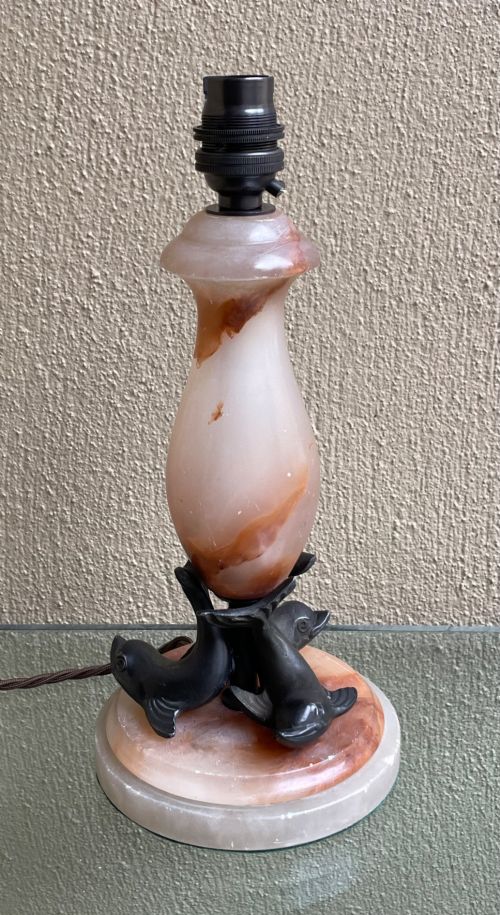


Figurative Art Deco Table
These figurative art deco table pieces capture the bold human and animal forms of the interwar period.
Figurative Art Deco Table
A figurative art deco table piece brings sculptural presence to a room, most often taking the form of figural table lamps, candlesticks, and occasional tables from the early twentieth century. These items combine practical function with striking depictions of athletes, animals, dancers, and performers, originating primarily from French workshops during the 1920s, 1930s, and 1940s.
Buyers searching for a figurative art deco table object will most frequently encounter lighting pieces such as alabaster dolphin lamps, bronze female nudes, and spelter night lights mounted on marble bases. Alongside these figural lamps, the category occasionally spans coffee tables in ebony and walnut and silver-plated candlesticks reflecting the streamlined aesthetic of the era.
Materials and construction
These works rely on a diverse palette of hardstone, metal, and wood, pairing heavy bases of marble, onyx, and alabaster with figures cast in brass, bronze, patinated metal, and spelter. Glass and porcelain also appear, particularly in lamp panels and perfume lamps, capturing the luminous qualities favoured by designers of the period.
Makers employed casting and carving techniques to achieve sharp outlines and smooth surfaces, anchoring metal or ceramic figures firmly onto stone plinths. The contrast between polished metals and veined stone defines the physical construction of these objects.
Materials documented across the pieces include natural stone bases like alabaster and onyx paired with metal figural castings.
Assessing quality
Quality rests in the sculptural definition of the figures and the weight and selection of the supporting materials. Pieces featuring finely chased bronzes or detailed spelter work command attention through their expressive postures, whereas simpler castings show softer contours and less individual character.
The choice of base materials similarly divides the range, with solid marble, onyx, and alabaster providing a stable and handsome foundation that elevates the overall presence of the sculpture or lamp above standard production pieces.
Argilor Paris
The Figurative Art Deco Table Glossary
- Spelter
- A zinc alloy commonly used as a cost-effective substitute for bronze in decorative figures and lamp bases during the early twentieth century. It accepts patination readily to simulate heavier metals.
- Alabaster
- A fine-grained stone used for lamp bodies and sculptural elements that allows light to diffuse gently through its surface. It often exhibits natural veining and pale tones.
- Patinated metal
- Metal treated with chemicals or heat to produce a specific surface colour and finish, enhancing the depth and detail of figural castings.
- Art Deco
- The dominant design style of the 1920s and 1930s characterised by stylised geometric forms, streamlined shapes, and modern materials.
Figurative Art Deco Table: Frequently Asked Questions
What periods do these pieces date from?
The items span the 1920s, 1930s, and 1940s, capturing the height and evolution of the design movement across several decades.
Most surviving examples cluster around the interwar years, reflecting the prevailing manufacturing output of French workshops.
How were these decorative items used originally?
Many of these objects served dual purposes as functional lighting and sculptural ornaments, illuminating rooms while depicting athletes, animals, and performers.
Smaller pieces functioned as night lights or perfume lamps, adding ambient glow and scent to domestic interiors.
How do I style a figurative table piece?
These items work well as focal points on sideboards, desks, or coffee tables where their sculptural silhouettes can be appreciated from multiple angles.
Parks of stone and metal harmonize naturally with both vintage interiors and clean, modern surfaces.
What materials are most common?
Marble, onyx, and alabaster form the primary foundation materials, frequently paired with metal figures cast in bronze, brass, or spelter.
Glass and wood also appear in specific lamp designs and occasional tables.