


Carved Wood Decoy Birds
These carved wood decoy birds bring utilitarian craft into the home as rustic decorative objects with genuine presence.
Carved Wood Decoy Birds
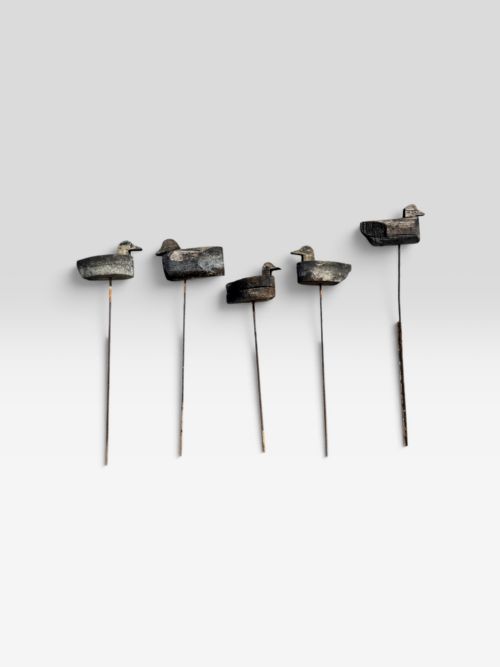
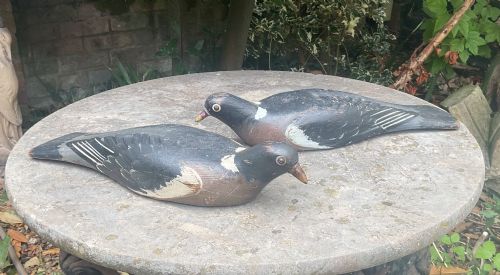
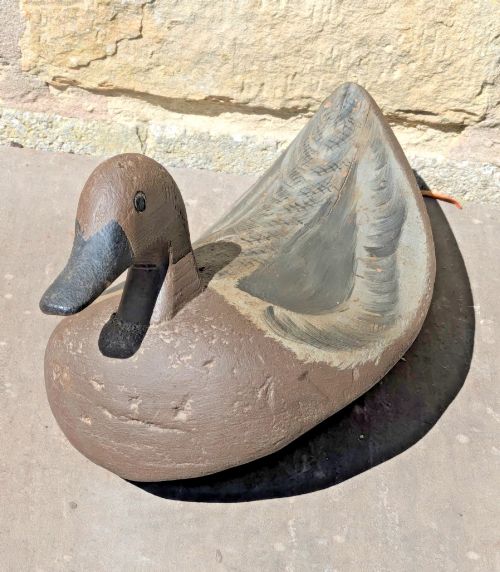
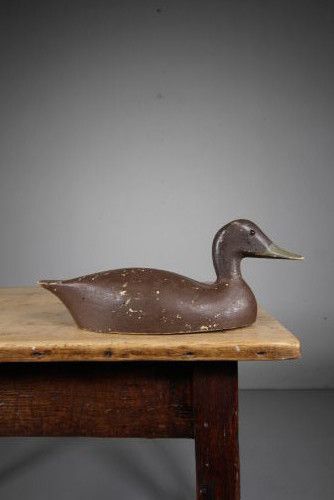
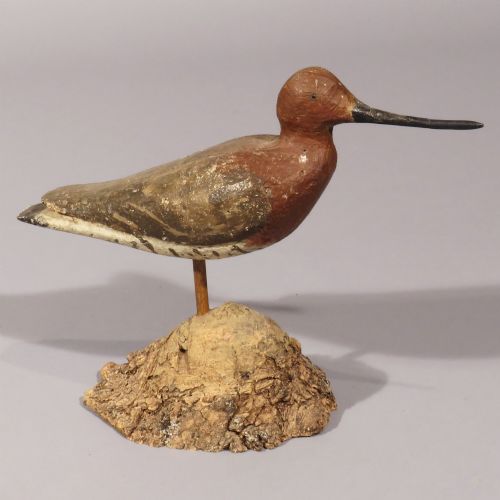
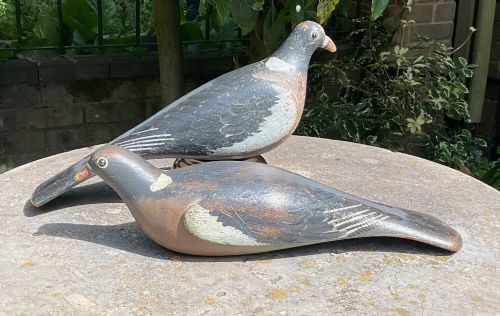
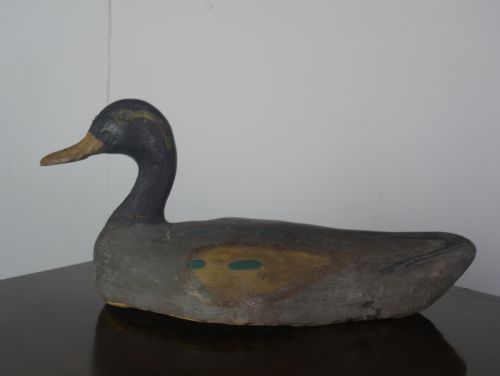
Carved wood decoy birds are traditional working pieces created to attract wild fowl, now collected entirely for their display value in domestic interiors. When you examine carved wood decoy birds on this page, you will encounter forms ranging from simple ducks and geese to pigeons, loons, and godwits.
English examples predominate, alongside continental pieces such as French decoys. Forms include single birds, pairs, and small sets, often retaining traces of their original working surfaces.
How they were made
The foundation of these pieces is carved timber and wood, sometimes incorporating bark, with occasional structural elements in metal or iron. Makers shaped the bodies from solid blocks of wood, using simple hand tools to achieve the characteristic silhouettes of ducks, pigeons, and wading birds.
Surface treatment relies heavily on applied paint, which was fundamental to the original working function of the birds. Many examples feature layered paint finishes that have weathered over decades of use, while others retain simpler, block-colour schemes.
Details such as glass eyes appear in certain specimens to heighten the realism required for attracting wild fowl. Construction methods remain straightforward, prioritising durability and weight for use on water or in fields.
Listings feature works from the nineteenth century up to the nineteen-thirties, spanning periods such as the Edwardian era.
What varies in quality
Quality in these pieces rests primarily on the vigour of the carving and the character of the silhouette. A strong piece possesses sculptural presence from every angle, capturing the specific posture of a duck, goose, or pigeon without excessive detail.
The survival of original surface paint plays a major role in distinguishing better examples. Surfaces that show honest patination from working use, rather than later intervention, hold greater appeal for collectors of folk art.
Anatomical proportion and regional stylistic quirks also set individual birds apart. Pieces that demonstrate a maker's confident interpretation of form tend to command stronger interest than routine production.
The Carved Wood Decoy Birds Glossary
- Folk art
- Objects created by self-taught or traditional makers working outside academic artistic traditions. These pieces often serve a practical purpose while embodying strong regional design characteristics.
- Patina
- The surface alteration and wear accumulated on an object through age and use. In decoy birds, this often includes softened paint layers and weathered wood texture.
- Decoy
- A carved or moulded representation of a bird used to attract wild fowl within range of a hunter. Most surviving examples have transitioned entirely from working gear to decorative sculpture.
- Edwardian
- Pertaining to the reign of King Edward VII, spanning from nineteen hundred to nineteen ten. Pieces from this period often display simpler decorative schemes than Victorian items.
Carved Wood Decoy Birds: Frequently Asked Questions
How were decoy birds used?
Decoy birds were placed on open water or in fields to attract wild fowl within shooting range. Shooters relied on the silhouette and painted surface to draw birds close.
Over time, changing methods of sport rendered working decoys obsolete, leading to their preservation as decorative objects.
How do I clean wooden decoys?
Maintenance requires only gentle dusting with a dry, soft cloth to protect the historic surface. Avoid using water, detergents, or modern polishes that can damage old paint.
Keeping the wood away from direct sunlight and damp environments preserves the stability of the timber.
Are these decoys English?
The selection includes both English regional pieces and examples from continental makers, such as France. English country folk art forms are particularly well represented.
Specific origins often show in the silhouette and the choice of native timbers used by the maker.
What birds are represented?
The available pieces depict a variety of wild fowl, including ducks, pigeons, geese, loons, and godwits. Some listings feature pairs or small groups rather than single birds.
Each bird type reflects the specific quarry targeted by traditional wildfowlers in different habitats.