


Antique Hunting Decoys
Antique hunting decoys bring expressive folk art and rural craft into the home, shaped from timber and painted by hand.
Antique Hunting Decoys
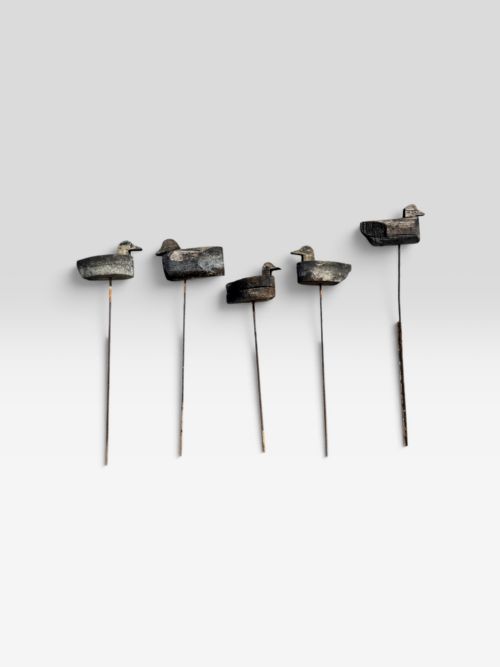
When you search for antique hunting decoys, you encounter carved working figures that once lured birds into shooting range across marshes and fields. These pieces range from substantial wooden geese and ducks to smaller pigeon decoys and treen bird calls.
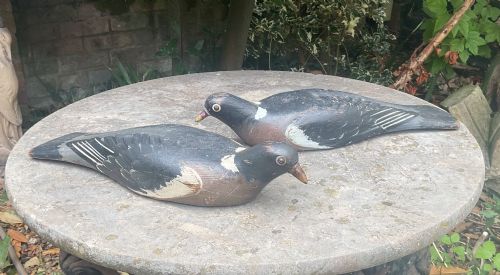
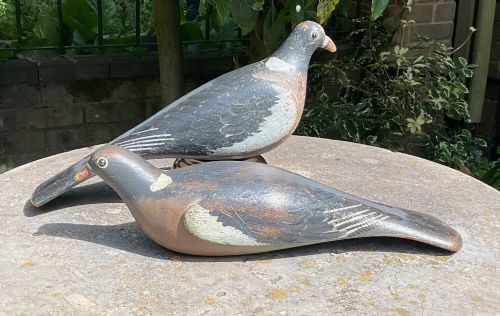
The selections available here lean heavily into English folk art traditions from the nineteenth century through to the nineteen-thirties. You will frequently find pairs and sets of painted timber birds showing the honest wear of their working past.
How they were made
Maker-carpenters shaped these decoy bodies from local timbers and hardwoods using hand tools, often turning wood or carving solid blocks to achieve realistic avian forms. Glass eyes were sometimes added to heighten the lifelike appearance of the decoy.
Makers finished the carved timber bodies with thick lead-based or oil paints, capturing the plumage and markings of ducks, geese, and pigeons through repeated brushwork that has weathered over decades of use.
Several of these wooden pigeons possess an endearing, lopsided gaze that suggests the maker hurried before the evening shoot.
What varies in quality
The distinction between ordinary and exceptional decoys lies in the strength of the carving and the character of the original painted surface. Sculptures with deeply modeled contours and untouched, patinated pigment stand apart from simpler, heavily restored examples.
Original pairs and matched sets command greater visual interest than single specimens, as the grouping preserves the functional intent of the original spread used in the field.
The Antique Hunting Decoys Glossary
- Folk art
- Objects created by self-taught or rural artisans outside the formal academic traditions of fine art. These pieces prioritize practical utility and direct expression over academic refinement.
- Treen
- Small handmade wooden household objects and utilitarian items carved for domestic or rural use. This category encompasses turned wooden items and small carved implements.
- Decoy
- A carved or moulded figure designed to attract wild birds or animals by mimicking their appearance. They were historically anchored in water or placed in fields to lure passing game.
- Painted wood
- Timber surfaces coated with decorative or protective liquid pigment. This finish often develops a desirable craquelure and patina as the underlying material ages.
Antique Hunting Decoys: Frequently Asked Questions
How were hunting decoys used?
Hunters placed these carved wooden figures on open water or across fields to convince passing flocks that a safe feeding or resting spot awaited them. The decoys were often deployed in large sets or pairs to create a convincing illusion.
Over time, exposure to weather wore down the original paint layers and softened the carved wood details. This active service outdoors generated the distinct patinas that collectors prize today.
How do I date an old decoy?
Dating relies on examining the tool marks left by the carver, the species of timber used, and the composition of the paint layers. Nineteenth-century examples often display broader hand-tool marks and heavier timber construction than later twentieth-century versions.
Stylistic cues also help narrow the period, as Edwardian and interwar pieces frequently show more standardised forms. Comparing the surface wear to authenticated pieces from similar decades provides further confirmation.
How do I live with wooden decoys?
Wooden decoys fit naturally into rustic, traditional, or contemporary interiors as sculptural focal points on mantelpieces, sideboards, or bookcases. Their earthy tones and tactile surfaces complement books, ceramics, and natural materials.
Protect them from direct sunlight and extreme humidity fluctuations to preserve the stability of the timber and the integrity of the historic paint finish. Gentle dusting with a dry cloth is all the maintenance required.