


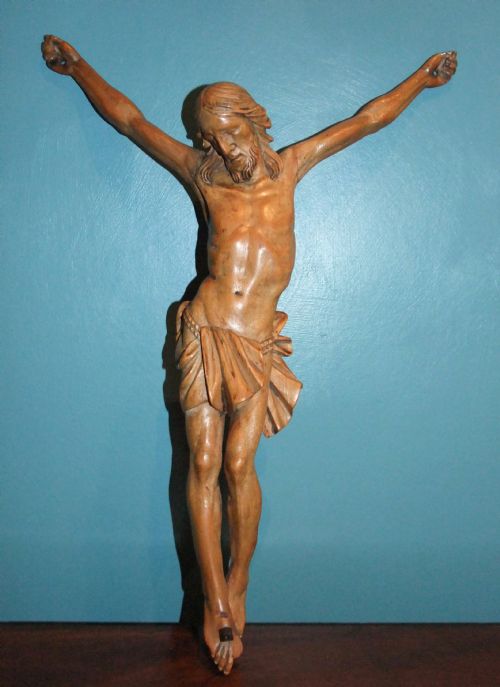
Carved Wood Crucifix
A carved wood crucifix brings centuries of devotion into a room, joining sacred sculpture with tangible art.
Carved Wood Crucifix
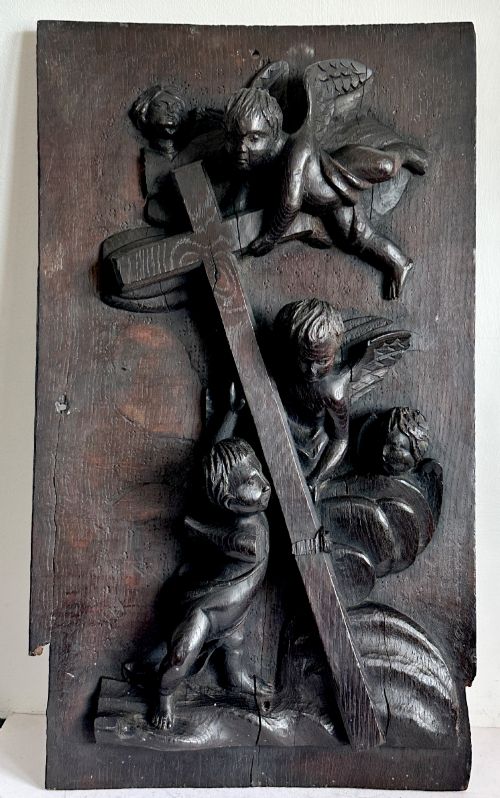
A carved wood crucifix comprises religious sculptures and wall reliefs representing Christ upon the cross, originating from periods spanning the sixteenth to the nineteenth century. These devotional objects appear as standing crucifixes, wall sculptures, and individual corpus Christi figures mounted upon timber crosses.
Spanish, French, and Low Country origins dominate the selection, alongside regional items like Black Forest carvings. Pieces take the form of intricate domestic altarpieces, substantial wall hangings, and life-size representations intended for solemn contemplation.
The materials and styles reflect centuries of ecclesiastical tradition, moving from Renaissance detail through Baroque drama to Gothic Revival expression. Buyers encounter both complete standing crosses and detached corpus figures carved with intense anatomical focus.
Distinctions in Quality
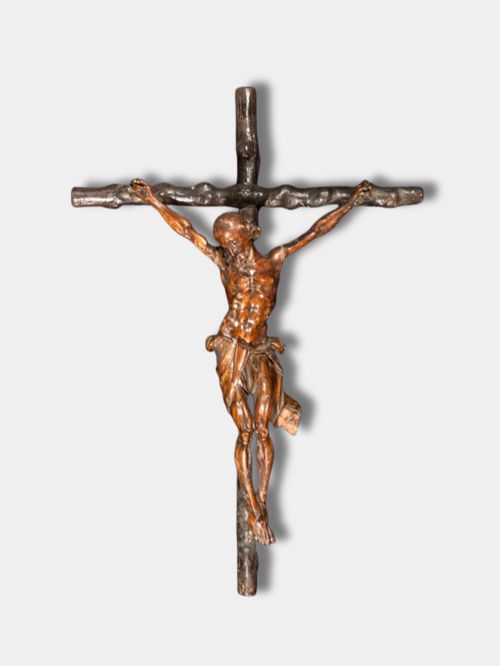
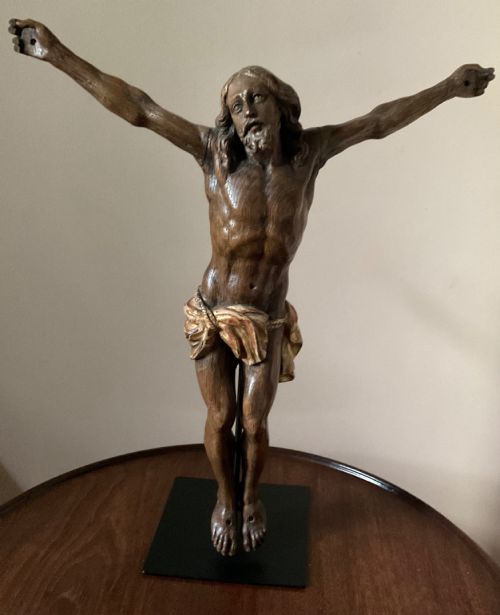
The anatomical precision of the corpus Christi figure defines the upper echelon of these sculptures. Master carvers rendered musculature, skeletal tension, and facial anguish with anatomical truth rather than rigid formula.
The preservation of original surface layers, including parcel gilding and polychrome paint, commands greater appreciation. Objects retaining their authentic nineteenth-century or earlier patination demonstrate superior historical integrity.
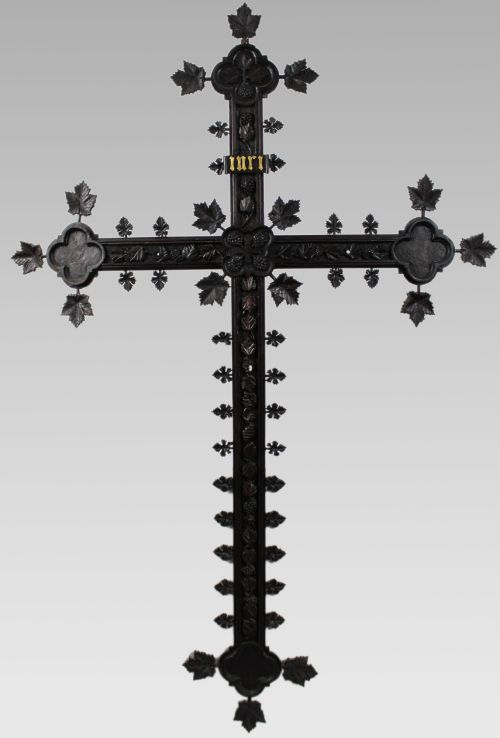
The complexity of the surrounding cross or frame elevates the piece, particularly where foliage, skulls, or architectural motifs are deeply integrated. Integration between the figure and its original cross ensures a cohesive sculptural statement.
The inventory records Spanish Baroque, French Baroque, and Gothic Revival styles alongside regional Low Country and Black Forest traditions.
The Carved Wood Crucifix Glossary
- Corpus Christi
- The sculptural figure of Christ on the cross. This central element highlights the carver's skill in rendering anatomy and emotional expression.
- Parcel Gilt
- Partial gilding applied to specific areas of a wooden sculpture. This technique highlights raised details against a dark wood or painted ground.
- Polychrome
- Painted in several colours. Artisans applied pigments to wood to heighten the realism of religious statues and wall reliefs.
- Spanish Baroque
- A theatrical and emotionally intense artistic style prevalent during the seventeenth and eighteenth centuries. This aesthetic emphasises dramatic drapery and profound suffering.
- Low Country
- Pertaining to the historical region encompassing modern-day Belgium and the Netherlands. Carvings from this area often display distinct regional realism.
Carved Wood Crucifix: Frequently Asked Questions
How do I date an antique crucifix?
Dating relies on stylistic markers within the carving, tool marks on the reverse, and the ageing of the timber. Renaissance and Baroque figures show distinct approaches to drapery and human anatomy compared to later nineteenth-century revival pieces.
Examining the wood species and any remaining polychrome or gilding provides further clues. Expert analysis of construction methods helps separate seventeenth-century originals from later copies.
Where should I display a wall crucifix?
These sculptures require stable indoor environments away from direct sunlight and dramatic humidity shifts. Wall reliefs and framed corpus figures suit private studies, quiet hallways, or dedicated gallery spaces.
Ensure the mounting wall can support the weight of dense hardwoods like oak or fruitwood. Placing the piece at eye level allows proper appreciation of the carver's anatomical detail.
How do I clean carved wooden religious figures?
Dusting requires a soft, dry artist's brush to gently clear debris from crevices without disturbing fragile surfaces. Avoid all liquid cleaners, polishes, and modern chemical agents that might strip historic patination.
Preserving original finishes, especially delicate parcel gilding and paint, demands minimal intervention. Professional conservators should address any structural instability or loose elements.
What is a Black Forest crucifix?
Black Forest carvings originate from the forested mountain region in Central Europe known for intricate woodwork. These pieces often feature deeply carved foliage, naturalistic motifs, and rich dark wood tones.
Nineteenth-century examples frequently combine high-relief natural elements with traditional devotional iconography. Their distinct regional style makes them readily identifiable among European sculptures.