


Carved Wooden Christ
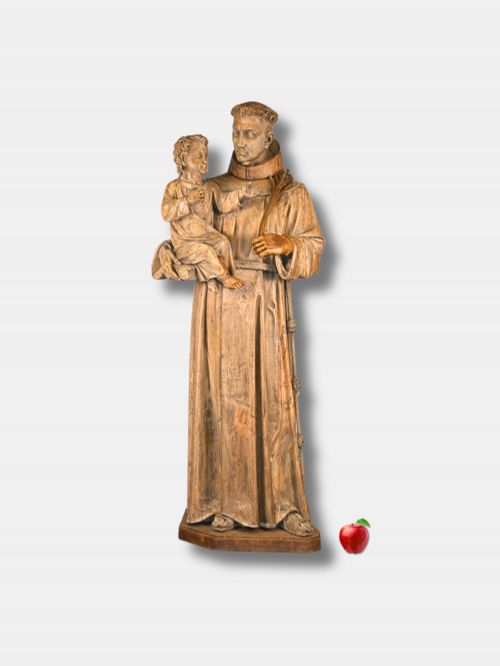
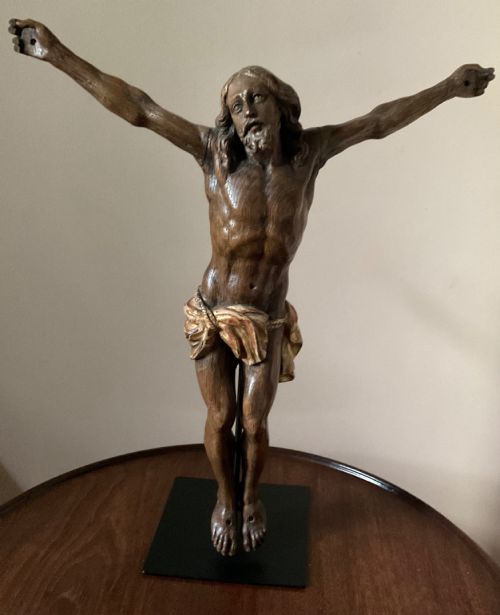
These carved wooden christ figures and panels carry centuries of devotional devotion, ranging from intimate domestic panels to monumental church sculpture.
Carved Wooden Christ
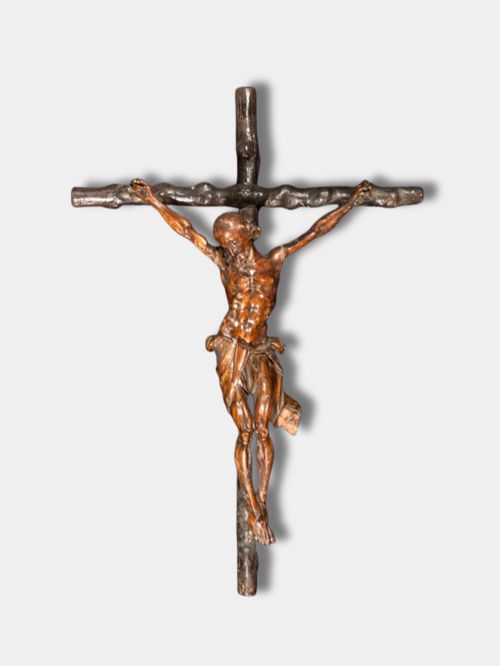
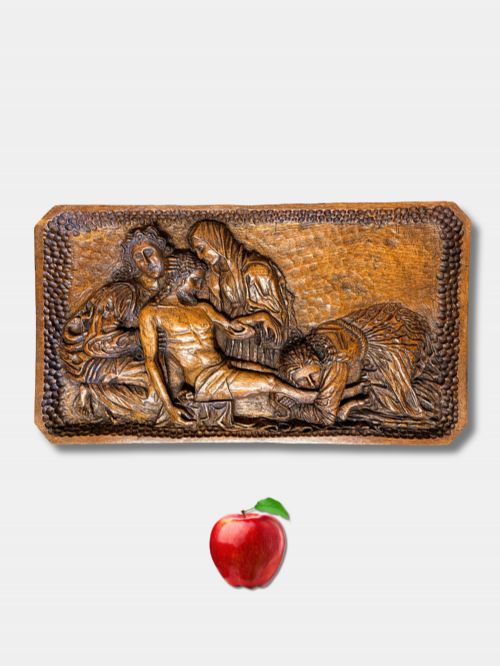
A carved wooden christ brings centuries of religious iconography into domestic and institutional spaces, taking forms that range from freestanding Corpus Christi figures on crosses to narrative relief panels depicting scenes like the Lamentation and the Calvary journey. Buyers searching for a carved wooden christ encounter pieces originating from diverse European traditions, including Spanish, French, Italian, and German workshops.
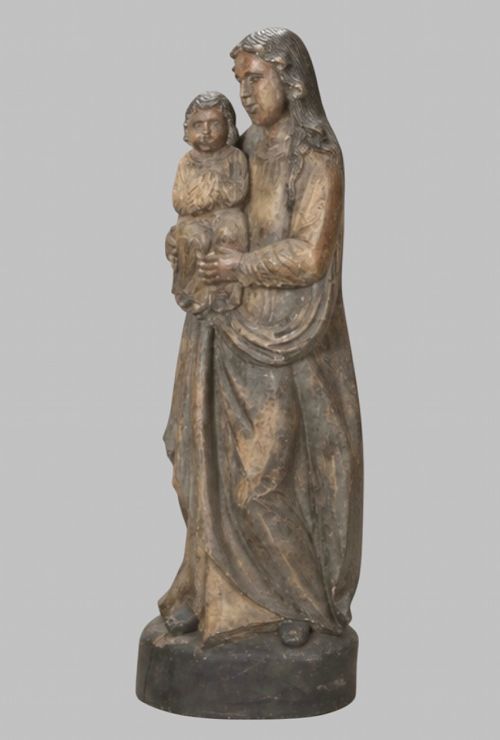
The selection on this page leans heavily toward figures and panels produced between the sixteenth and nineteenth centuries, alongside specific representations such as the Christ Child, the Man of Sorrow, and the Veil of Veronica. These sculptures manifest in varying scales, from portable devotional objects to life-size church figures carved in deep relief or executed fully in the round.
Materials and techniques
Many surfaces received polychrome paint, parcel gilding, or plaster preparation layers to enhance realism and symbolic colour, while others rely on the warm patina of unpainted timber. Working with gouges and chisels, artisans shaped these panels and figures to capture anatomical detail and emotional intensity.
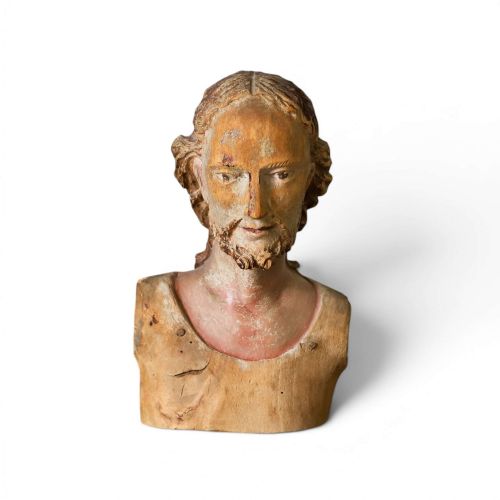
One recorded artisan left us a finely carved wooden bust of Christ, proving that even centuries ago, sculptors could capture a likeness in timber.
Assessing quality
Quality in these carvings rests upon the anatomical precision of the hands, feet, and facial expression, distinguishing master carvers from provincial artisans. Superior pieces achieve a lifelike tension in muscles and drapery folds that breathes movement into rigid timber.
The preservation of original surface treatments, such as early polychrome pigments or parcel gilding, elevates a piece above stripped or heavily restored examples. Depth of relief and the ambition of the composition similarly separate standard devotional objects from monumental sculptural works.
Louis Sosson
The Carved Wooden Christ Glossary
- Corpus Christi
- The figure of Christ depicted on the cross. This term specifically isolates the sculptural body from the cross itself.
- Polychrome
- Painted in several colours. This surface treatment was frequently applied to wood carvings to heighten naturalism.
- Relief
- Sculpture in which figures project from a background plane. Low and high relief variants appear across European wall panels.
- Parcel Gilt
- Partially gilded with gold leaf. This technique highlighted specific garments or halos on wooden religious figures.
- Pieta
- A subject depicting the Virgin Mary holding the dead body of Christ. These sculptures often emphasise deep emotional grief.
Carved Wooden Christ: Frequently Asked Questions
How were these wooden figures used originally?
These carvings served primarily as focal points for private prayer in domestic chapels or as devotional fixtures in larger churches and religious institutions. They helped direct contemplation toward specific narratives of the Passion or the infancy of Christ.
Portable crosses and small panels allowed individuals to carry their devotional practice outside formal ecclesiastical buildings. Over time, many transitioned from active liturgical service into secular collections.
How do I identify the wood type?
Examining the grain, colour, and weight of the timber helps determine the species used by the carver. Oak and walnut present prominent grain patterns, while boxwood and lime wood offer a smooth, dense surface suited to miniature detail.
Regional preferences also guide identification, as certain timbers like olive wood or fruitwood frequently align with specific Southern European workshops.
What is polychrome wood?
Polychrome wood refers to sculptures painted with various pigments, often applied over a prepared chalk or gesso ground. This method added realistic skin tones and clothing colours to wooden religious figures.
Surviving traces of original paint provide vital clues regarding the date and geographical origin of an ecclesiastical carving.
How should I care for antique wood carvings?
Maintaining a stable indoor climate away from direct sunlight and strong heat sources protects the timber from splitting or warping. Sudden humidity changes place stress on old adhesives and prepared surfaces.
Dusting gently with a dry, soft brush preserves both bare wood finishes and delicate historical paint layers without introducing moisture.