
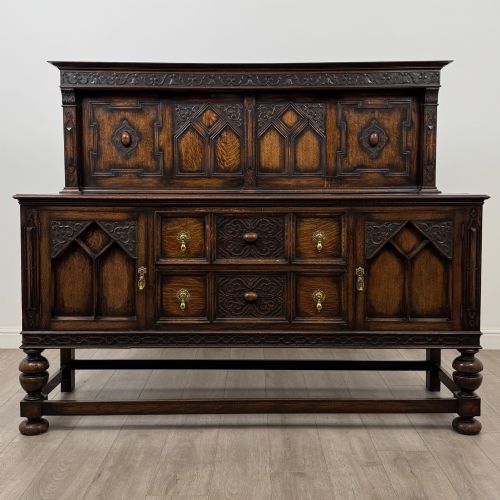
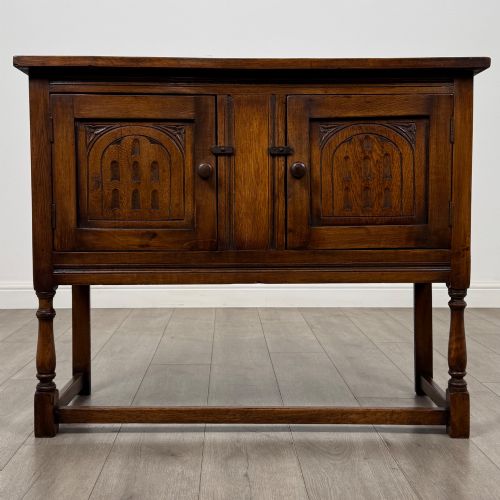
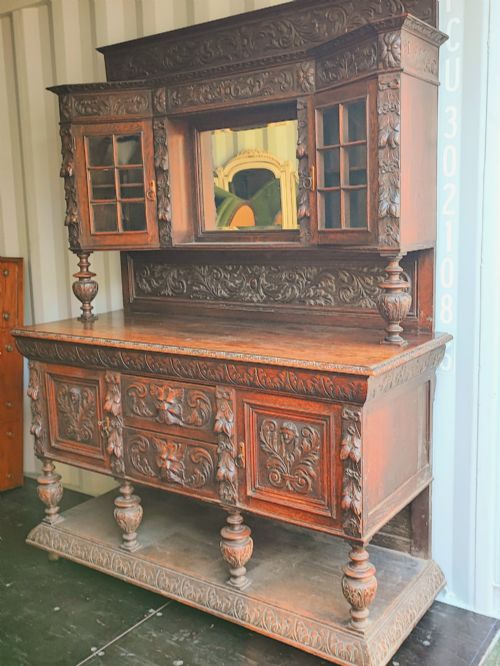





Carved Wood Court Cupboard
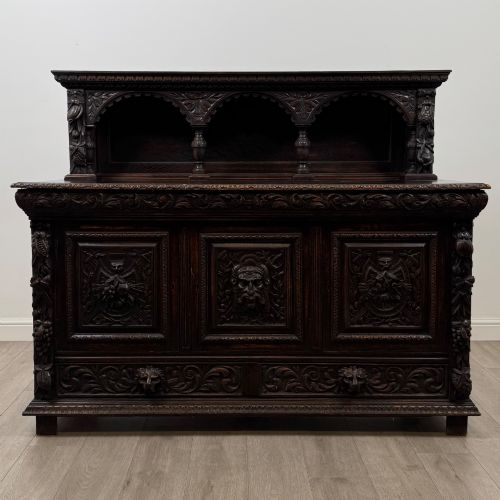
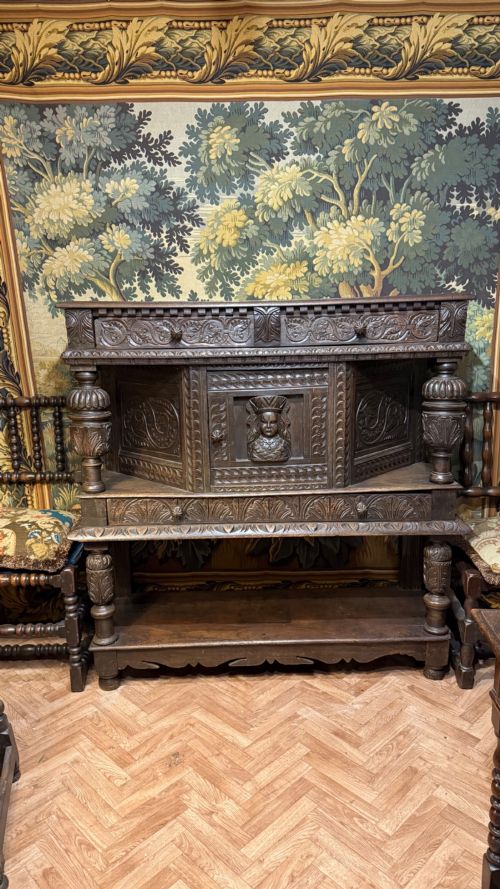
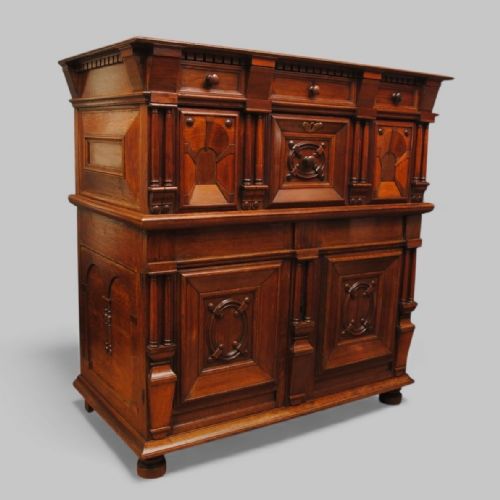
A carved wood court cupboard is a heavy, panelled storage piece built to display plate and hold dry goods.
Carved Wood Court Cupboard
A carved wood court cupboard stands as a substantial piece of vernacular furniture designed with enclosed tiers for storage and display. These items originate across several centuries, spanning from early joined examples to later revival iterations.
The variations met here most often include nineteenth century revival pieces and seventeenth century originals, alongside related sideboards and dressers. Many incorporate panelled doors, structural shelving and recessed upper stages intended for household provisions.
Makers constructed these forms primarily using heavy timber frames, adding geometric panelling, applied mouldings and figural carving. The resulting items function as both focal points in a dining room and practical depositories for tableware.
How they were made
Carpenters relied principally on oak, supplemented by walnut, fruitwood, elm and yew, joined using traditional pegged mortise and tenon framing. Panels fit into grooved framework to accommodate seasonal timber movement without splitting the structure.
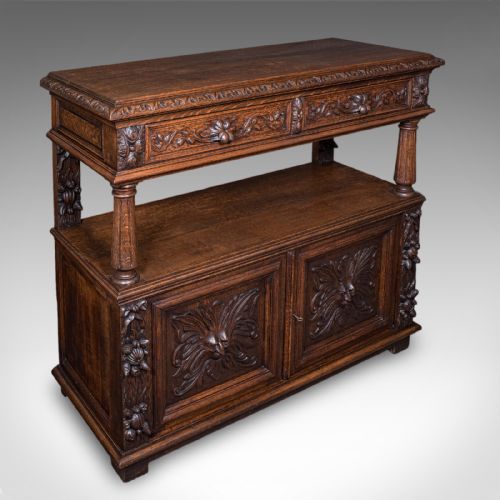
Decoration relied on hand chisels to produce chip carving, strapwork, guilloche patterns and high relief motifs such as green masks and lion figures. Hardware typically consisted of wrought iron hinges and brass drop handles or latches.
Several heavy sideboards conceal grinning green men staring out from thick oak foliage.
What varies in quality
Quality rests upon the crispness of the hand carving, the selection of figured timber and the integrity of the original joints. Earlier joined work displays meticulous hand-planed surfaces and tight pegs, whereas lower grades show mechanical tooling or softer secondary woods.
Proportion and depth of relief also separate master pieces from standard workshops. High tier examples feature undercut mouldings, balanced symmetry across multi-tiered elevations and thick timbers that resist warping.
The Carved Wood Court Cupboard Glossary
- Court cupboard
- A short, two-stage or three-stage cupboard used historically for storing and displaying plate. The upper section is often recessed behind turned columns or short posts.
- Joined cupboard
- Furniture constructed using frame-and-panel techniques held together by timber pegs rather than nails. This method provided structural stability against humidity changes.
- Green Man
- A sculptural architectural motif representing a human face emerging from or entwined with foliage. It symbolizes rebirth and appears frequently in nineteenth century revival carving.
- Livery cupboard
- A small storage unit designed to hold rations, candles or small items of food for night use. These typically feature panelled doors pierced with spindles for ventilation.
- Tridarn
- A traditional Welsh three-tiered cupboard featuring enclosed upper and middle sections above an open base. These serve for displaying regional pottery and heavy serving dishes.
Carved Wood Court Cupboard: Frequently Asked Questions
What is a court cupboard?
A court cupboard is a traditional two-tiered wooden storage piece featuring a recessed upper stage supported by columns. They were built to display status and store household valuables.
Historically, households placed them in dining halls or parlours. The enclosed compartments held linens, dry goods and silverware.
How do I date a court cupboard?
Dating relies on examining construction methods, tool marks and timber species. Pegged joints, hand-riven oak panels and vernacular joinery typically indicate earlier periods.
Revival pieces from the nineteenth century often display machine-sawn backing boards, softer secondary timbers and heavier, deeper relief carving styles typical of Victorian tastes.
Are these cupboards heavy?
Solid oak and elm construction makes these pieces exceptionally heavy and robust. Moving them generally requires multiple people and careful handling of projecting cornices.
Their sheer weight provides stability, meaning they sit securely against walls without requiring wall fixings.
How do I maintain oak furniture?
Maintenance involves applying natural beeswax periodically to nourish the dry timber and preserve the historic surface finish. Avoid placing them near direct heat sources.
Keeping the environment stable prevents the timber from shrinking and loosening the pegged joints over time.