


Carved Wood Corner Unit
A carved wood corner unit brings dead space to life, offering display or storage through walnut, mahogany and oak.
Carved Wood Corner Unit
A carved wood corner unit spans several distinct forms designed to fit domestic angles, most commonly multi-tiered whatnots, glazed display cabinets and solid timber cupboards. These pieces emerge in Georgian, Victorian and Edwardian iterations, shifting from utilitarian storage to elaborate display furniture.
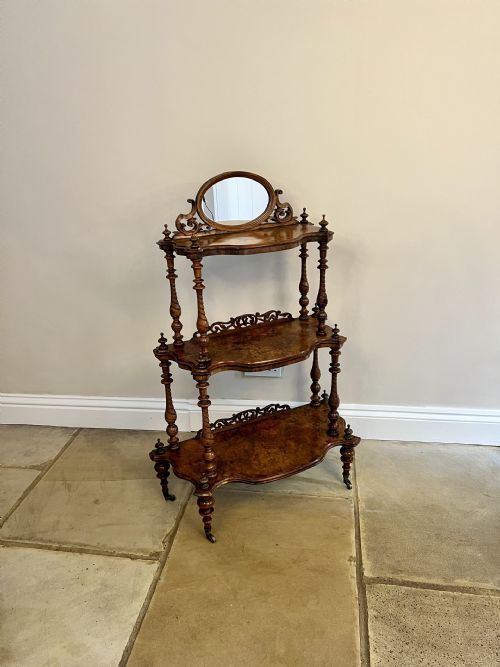
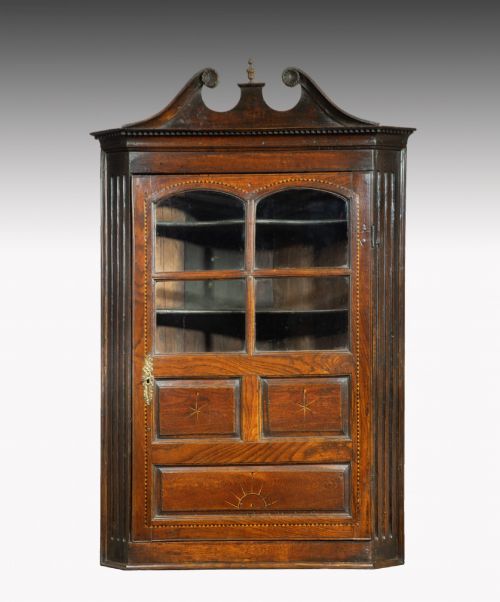
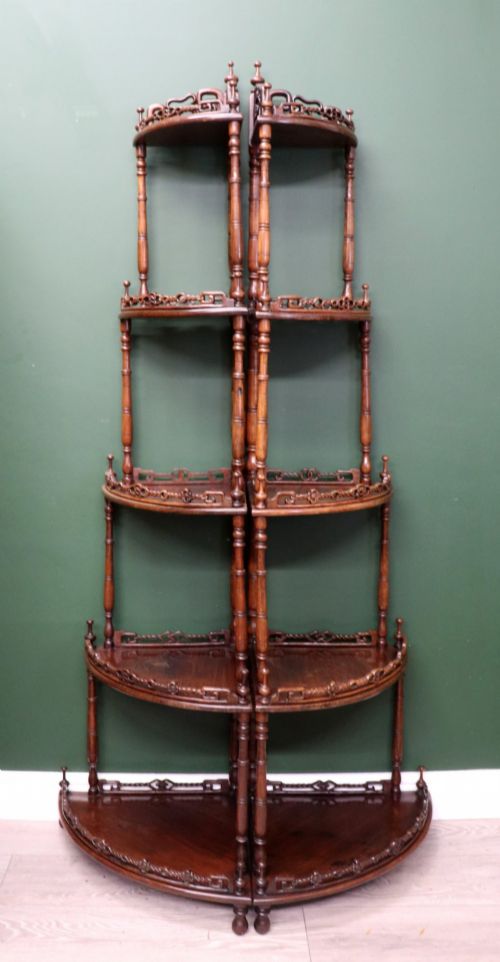
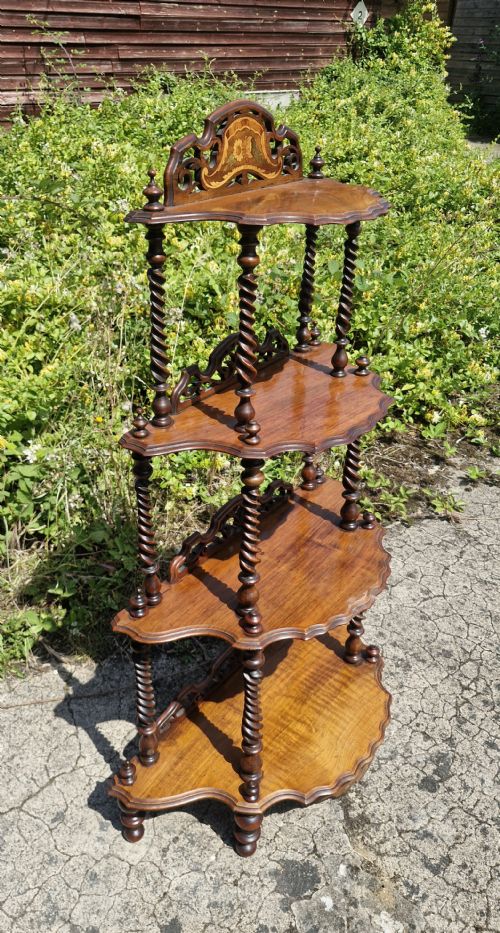
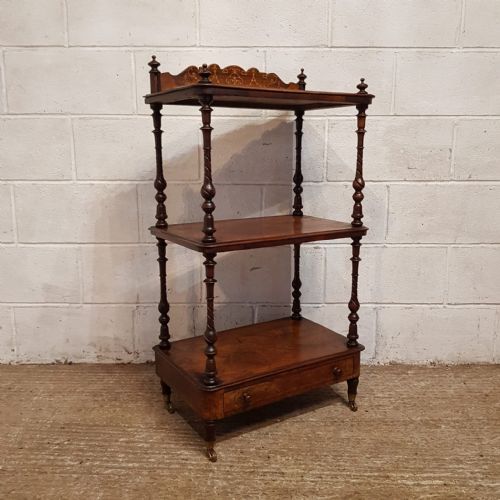
The walnut and mahogany whatnot dominates the selection, featuring tiered shelves supported by turned columns and shaped uprights. Alongside these, enclosed corner cupboards in oak and red walnut provide concealed storage behind panelled doors.
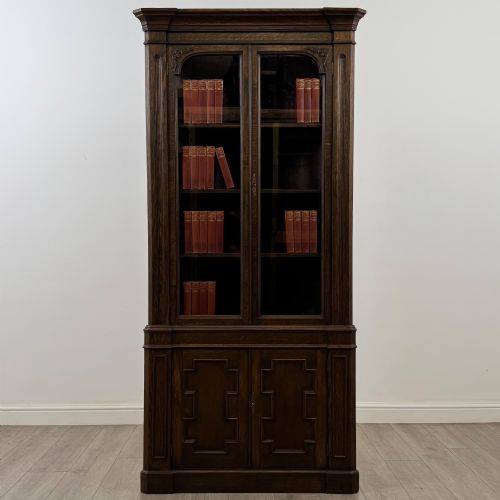
Origins stretch from English country houses to regional workshops, with specialised pieces carrying marquetry inlay or Anglo-Indian colonial craftsmanship. Buyers encounter everything from simple pine cupboards to exhibition quality burr walnut stands.
Materials and Construction
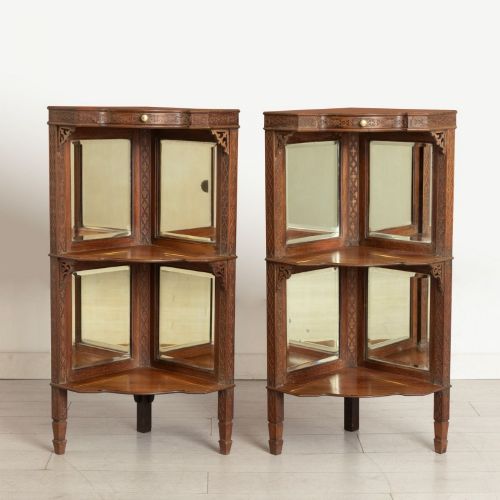
Cabinet makers utilised solid timbers including oak, mahogany and walnut for structural integrity, often applying burr walnut veneers and marquetry inlay to prominent surfaces. Brass hardware, mirror glass inserts and carved wooden details complete the construction of these corner pieces.
Joinery techniques ranged from standard pegged joints in earlier oak pieces to sophisticated turned supports and applied mouldings on Victorian whatnots. Individual workshops combined carved ornamentation with polished wood finishes to highlight the natural grain.
Makers occasionally adapted exotic imported timbers, resulting in unusual colonial gin cabinets tucked away in rural country houses.
Markers of Quality
Quality rests upon the selection of timber figures, where richly figured burr walnut and dense mahogany distinguish superior examples from plain pine or secondary woods. The crispness of the hand carving and the precision of the marquetry inlay also signal superior workshop output.
Structural stability matters significantly in multi-tiered whatnots and tall corner cabinets, where sturdy uprights and tight joinery ensure the piece bears weight without sway. Original glass, matching brass fittings and documented maker attribution further elevate the standing of an individual unit.
Edwards & Roberts·Goodhall, Lamb and Heighway
The Carved Wood Corner Unit Glossary
- Whatnot
- An open shelved piece of furniture designed for displaying ornaments, books or collectibles, often fitted into a corner.
- Marquetry
- Decorative veneer work using contrasting pieces of wood to create pictorial or geometric patterns on the surface.
- Burr walnut
- A highly prized wood grain showing intricate swirling patterns taken from the excrescence on a walnut tree.
- Ebonised
- Timber treated with a dark finish to imitate the appearance of ebony, frequently seen on Victorian carved elements.
Carved Wood Corner Unit: Frequently Asked Questions
What is a corner whatnot?
A corner whatnot is a multi-tiered open shelving unit designed specifically to fit into the corner of a room. It served historically for displaying decorative objects, ceramics and small books.
These pieces rose to prominence during the Victorian period when domestic interiors emphasised surface display. Their triangular footprint allows them to utilise awkward room angles effectively.
How do I date an oak corner cupboard?
Dating relies on examining construction methods, timber selection and stylistic cues such as panel design. Earlier Georgian cupboards often feature solid oak with pegged frame-and-panel doors.
Later Victorian and Edwardian revivals introduce machine-sawn elements, different hinge types and lighter interior fittings. Comparing the secondary woods inside the cabinet provides further clues to its age.
Where should I place a corner unit?
These units suit any room corner where floor space is limited but display or storage capacity is needed. They anchor empty wall junctions in dining rooms, studies and hallways.
Open-shelved whatnots work well for lighter decorative items, while enclosed cupboards provide practical storage for tableware or household goods.
Are walnut whatnots sturdy?
Quality walnut whatnots utilise solid internal framing and substantial turned supports to ensure stability across multiple tiers. Heavier items should sit on the lowest shelves to maintain proper balance.
Periodic checks of the upright connections and wall fixings help keep tall tiered stands secure in high-traffic areas.