


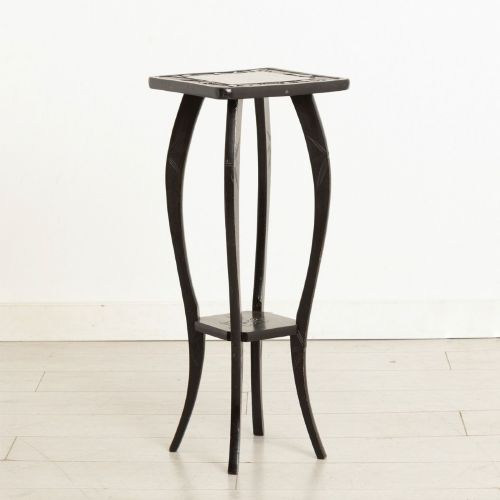
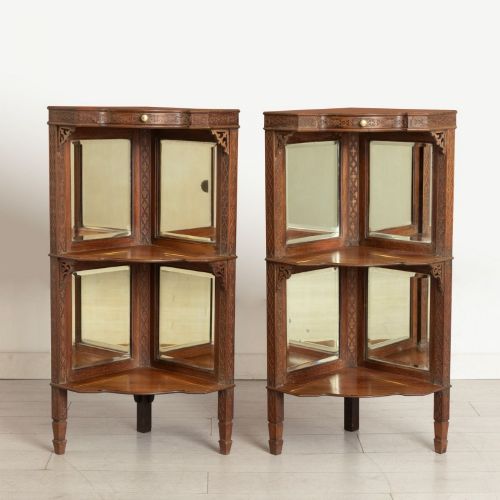
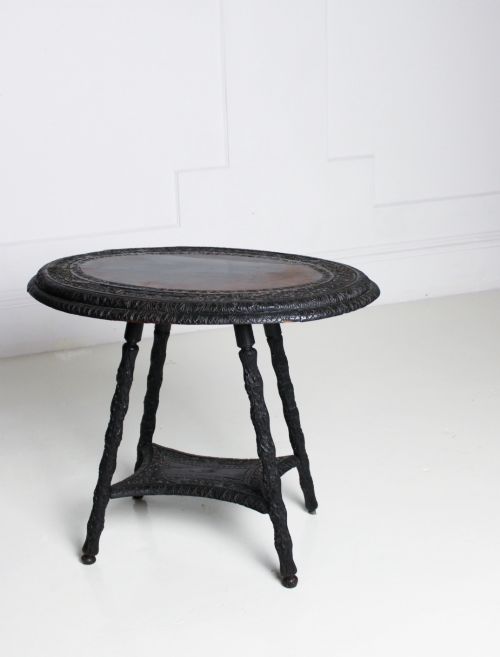
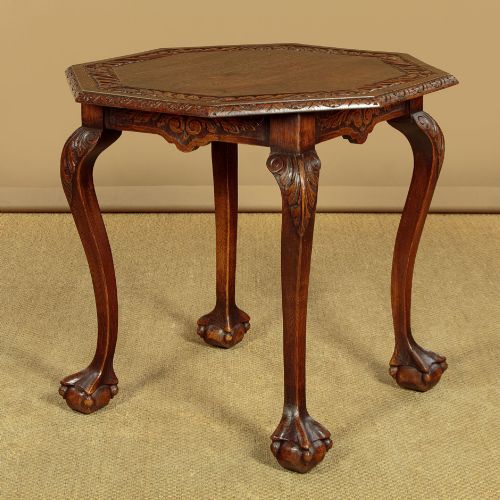

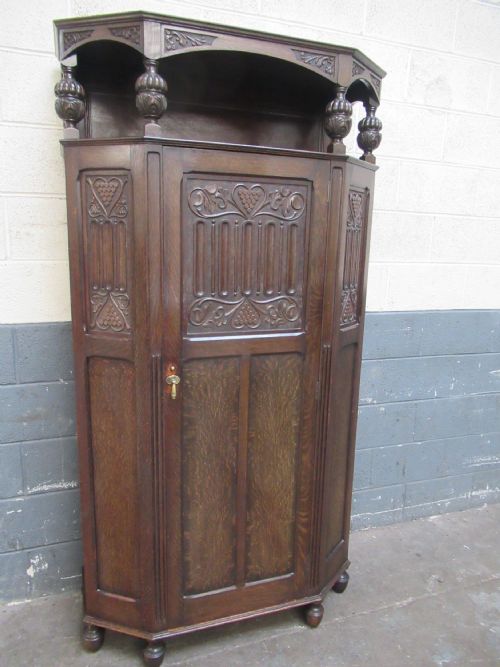
Carved Wood Corner Stand
A carved wood corner stand utilises neglected room angles to display objects while bringing rich timber texture into a interior.
Carved Wood Corner Stand
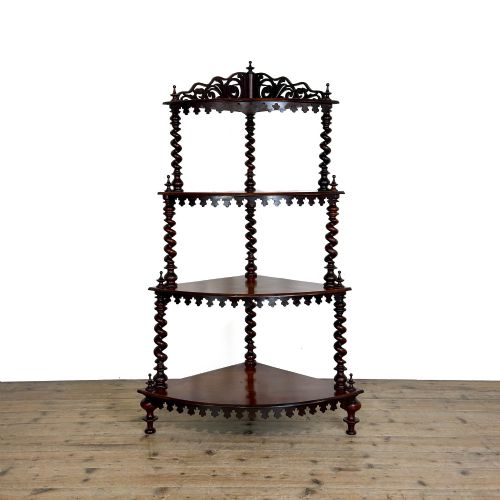
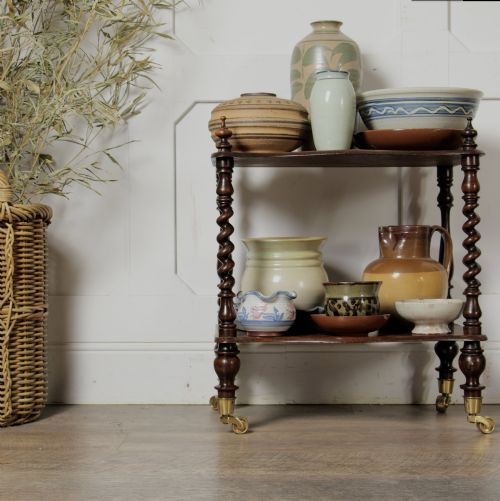
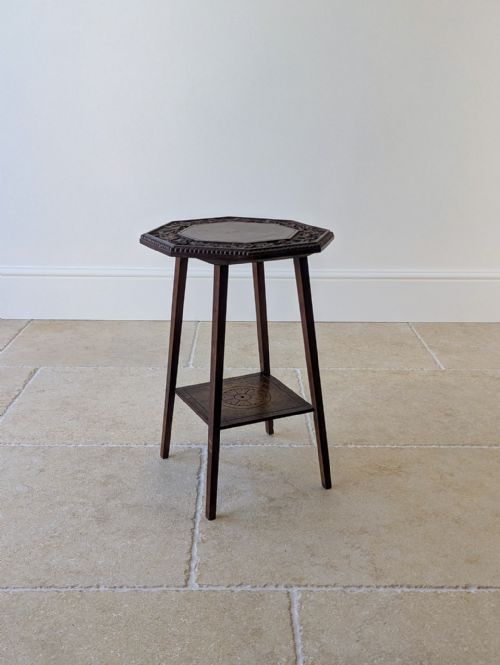
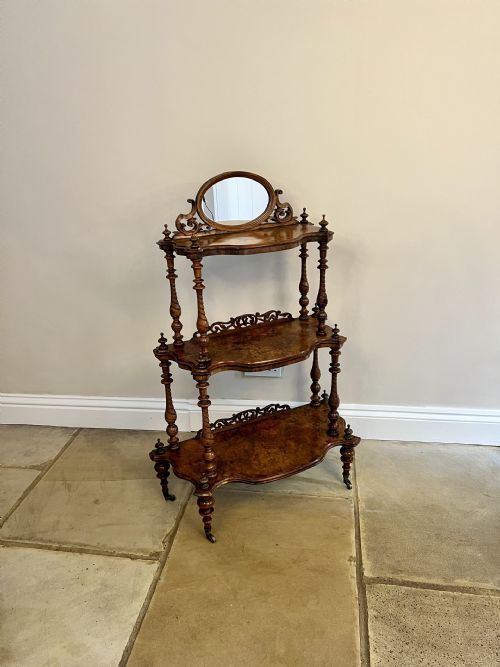
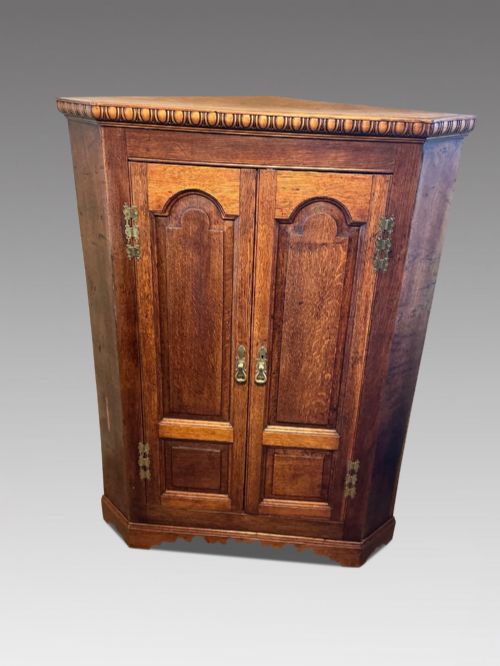
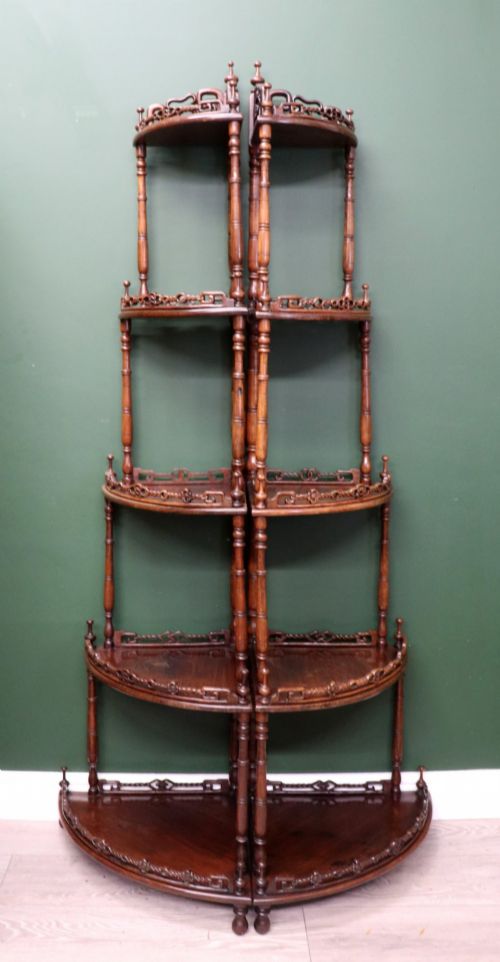
When you examine a carved wood corner stand, you encounter tiered shelving units, multi-tiered whatnots, and floor-standing corner cabinets designed to fit snugly into room angles. The pieces appearing here span the Victorian, Edwardian, and Georgian eras, alongside the Arts and Crafts and Moorish Revival movements.
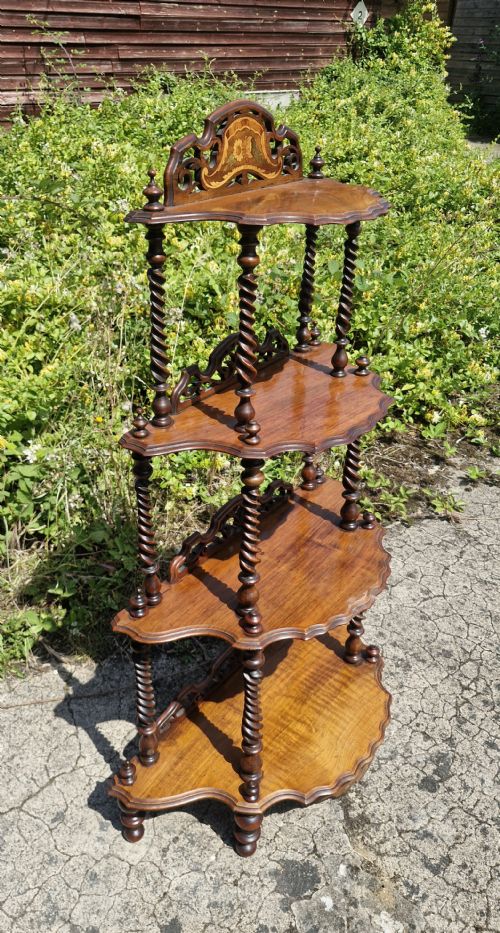
The most common formats you will meet are walnut and mahogany corner whatnots and display cabinets, often featuring multiple tiers supported by turned columns or carved uprights. These functional furniture items served as display surfaces for ornaments or storage for books and ceramics in period homes.
How they were made
Cabinet makers constructed these stands primarily from solid and veneered hardwoods such as walnut, mahogany, burr walnut, rosewood, and oak, frequently selecting figured veneers for visible top surfaces and tier boards. Turnery, hand-carving, and fretwork shaped the uprights and galleries, while brass fittings and occasional bone inlay added contrast.
Timber preparation involved seasoning native and imported woods before cutting joints and shaping edges by hand, producing sturdy frameworks capable of supporting heavy display items across multiple tiers.
What varies in quality
The distinction between standard production items and exhibition pieces lies in the choice of timber and the depth of hand-carving. Highly figured burr walnut or richly grained rosewood veneers elevate a piece significantly above plain mahogany or standard oak.
Structural refinement also separates finer examples from simpler ones, seen in the intricacy of turned barley twist supports, finely fretted galleries, and well-executed joinery that ensures stability across several tiers.
Liberty & Co.·Edwards & Roberts
The Carved Wood Corner Stand Glossary
- Whatnot
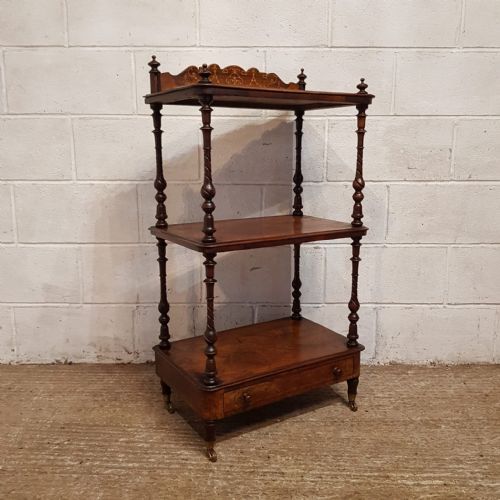
- An open tiered piece of furniture with shelves for displaying ornaments or books. This form became particularly popular during the Victorian period for corner placements.
- Barley twist
- A type of turned wooden column resembling a spiralling rope or barley sugar stick. Craftsmen produced this decorative feature on a lathe.
- Burr walnut
- Timber taken from the gnarled growth of a walnut tree, yielding highly decorative swirling grain patterns. Cabinet makers prized this wood for veneering prominent surfaces.
- Ebonised wood
- Timber treated with a dark stain or finish to imitate ebony. This technique appeared frequently on Victorian and Arts and Crafts furniture.
Carved Wood Corner Stand: Frequently Asked Questions
What is a corner whatnot?
A corner whatnot is a multi-tiered shelving unit designed to fit into a room angle to display decorative objects.
These pieces typically feature three to five shelves supported by turned or carved uprights.
How do I date a corner stand?
Dating relies on timber choices, construction techniques, and stylistic movements such as Arts and Crafts or Victorian revivals.
Detailed carving, specific wood grains like burr walnut, and maker labels often point to a precise late nineteenth or early twentieth-century origin.
Where should I place a corner stand?
These stands suit empty room corners where they utilise vertical space without obstructing pathways.
They function effectively in living rooms, hallways, or studies for holding plants, lamps, or small collections.
What woods were used for these stands?
Makers utilised timbers such as mahogany, walnut, oak, rosewood, and burr walnut.
Some pieces also incorporated ebonised wood or brass and bone details for decorative contrast.