

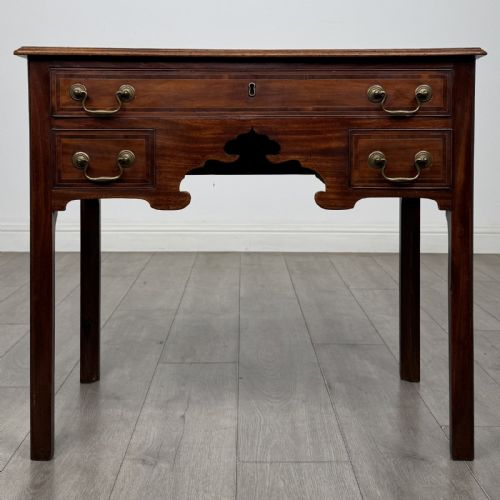
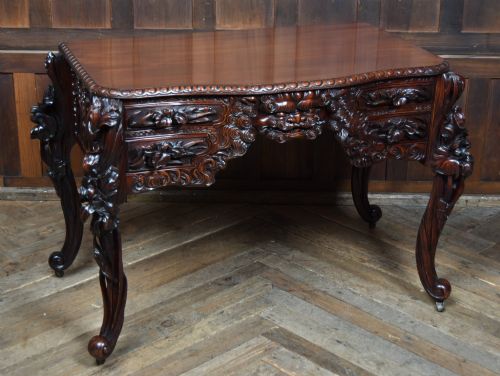
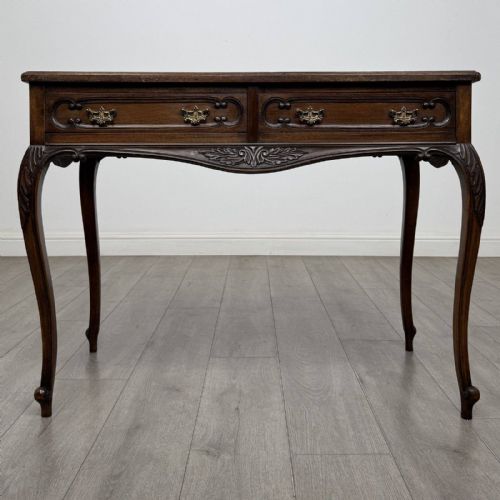
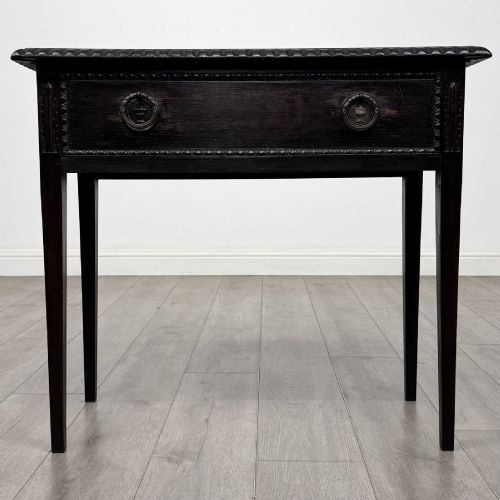
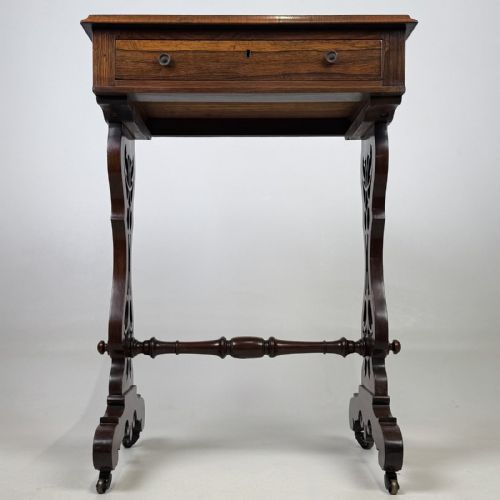
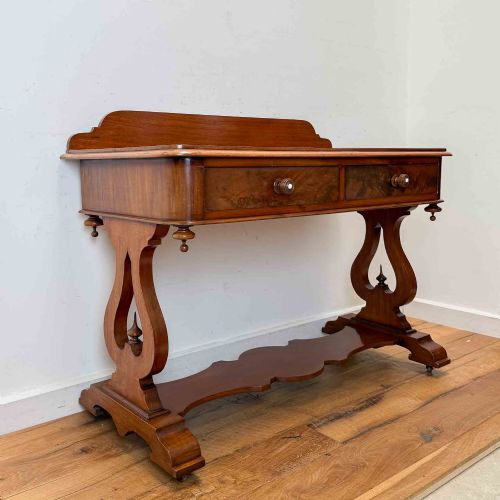
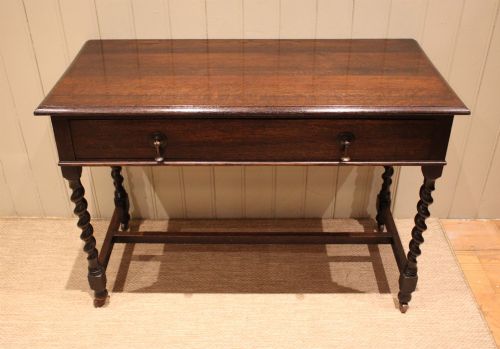
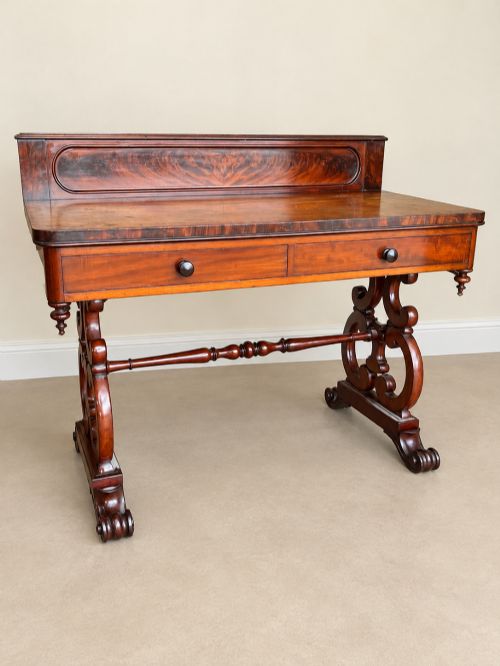
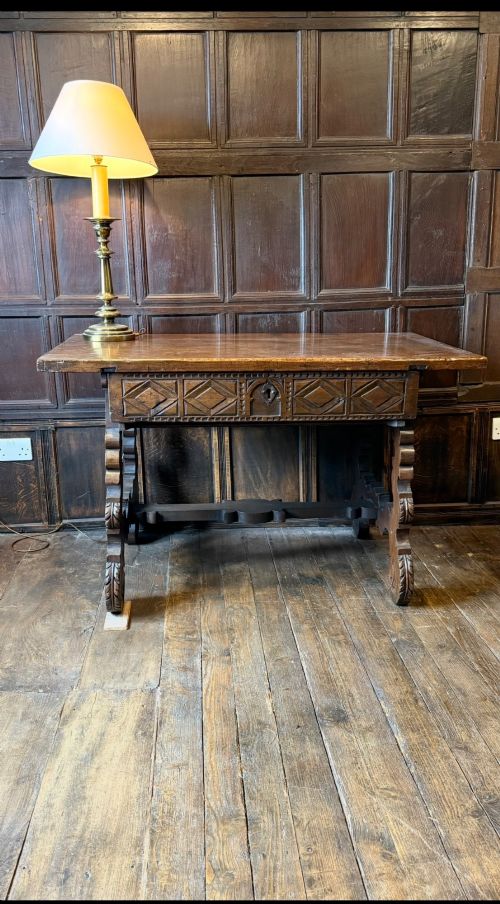
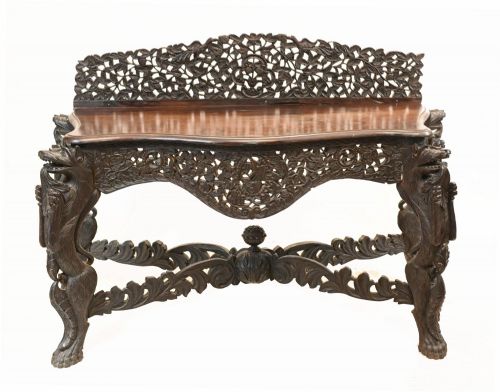
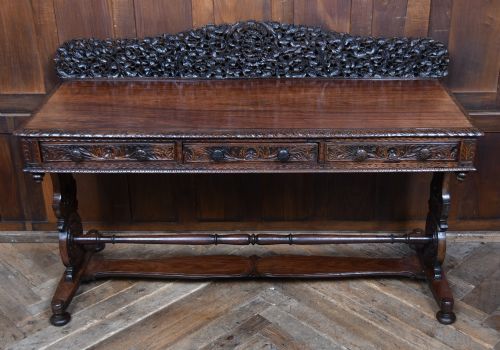
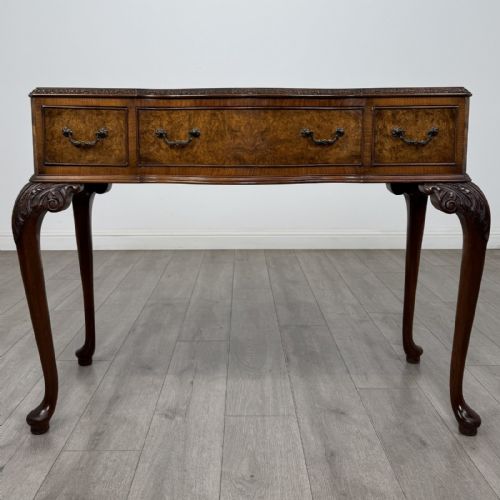
Carved Wood Console Desk
A carved wood console desk brings architectural presence and a dedicated writing surface to hallways and reception rooms alike.
Carved Wood Console Desk
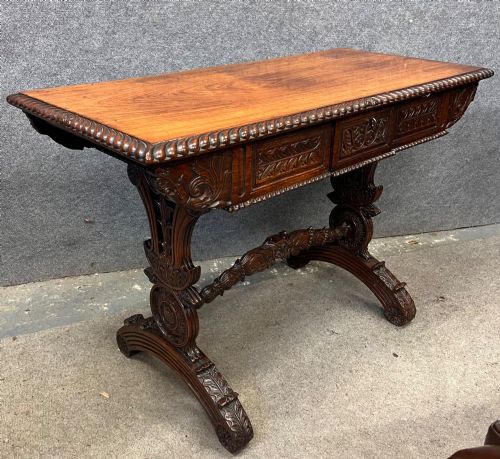
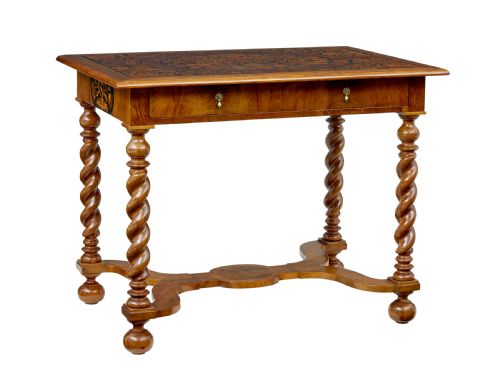
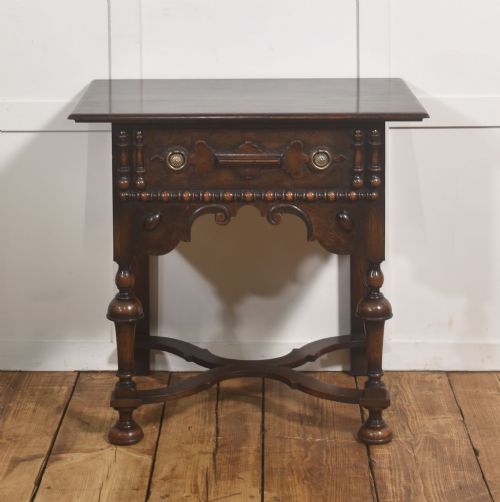
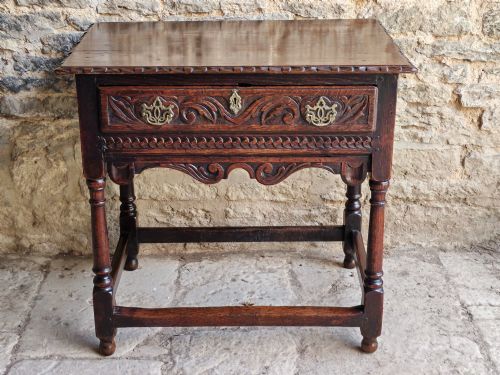
A carved wood console desk combines the narrow wall-mounting or freestanding profile of a console with the functional writing surface of a desk. These pieces emerge across the seventeenth, eighteenth, and nineteenth centuries, taking forms such as side tables, lowboys, and dedicated writing tables.
The most common examples on this page date from the Victorian and Edwardian eras, alongside earlier Georgian and seventeenth-century walnut or oak specimens. Makers from these periods adapted the console form for domestic study and reception spaces, incorporating drawers and inset panels.
Regional variations span British mahogany and oak designs to Spanish rustic oak, Italian carved tables, and Chinese hardwood examples. Buyers select these tables to anchor a room while providing a practical surface for correspondence.
Materials and Construction
Cabinet makers utilised dense hardwoods including mahogany, walnut, burr walnut, rosewood, and oak as the structural foundation for these desks. Figured veneers such as burr walnut and yew tree were applied to primary surfaces to create visual depth and grain contrast.
Carving was executed directly into the solid timber frames, yielding decorative motifs along friezes, cabriole legs, and stretcher bases. Secondary elements incorporate brass drawer pulls, marble table tops, and wrought iron supports.
Joinery techniques relied on traditional framing and dovetailing to secure drawers and carcases, ensuring stability for daily writing use. Freestanding variants feature finished backs, allowing placement away from walls in the centre of a room.
Carved Wood Console Desk Retail Price Guide 2026
Typical asking prices for carved wood console desk among the pieces listed under this phrase on Sellingantiques today, from the lower quarter to the upper quarter. They describe what is for sale here now, not the wider market.
Listings feature woods spanning mahogany, oak, walnut, burr walnut, rosewood, padauk, zebrawood, and yew tree.
Craftsmanship and Material Depth
Quality separates through the selection of timber and the execution of carved ornamentation. Desks utilising highly figured burr walnut, padauk, or dense rosewood display superior natural grain patterns compared to standard domestic timbers.
The crispness and depth of hand-carved details distinguish superior pieces from utilitarian items. Deep relief carving on friezes and cabriole legs requires advanced technical skill from the cabinet maker.
Original patination and surface preservation indicate how well a desk has survived. Examples retaining untouched polish and patinated timber surfaces hold greater interest for collectors than stripped or heavily restored counterparts.
James Mein of Kelso·Gillows
The Carved Wood Console Desk Glossary
- Console table
- A table designed to stand against a wall, frequently secured to it or supported by front legs. These tables often double as slim desks in hallways and reception rooms.
- Lowboy
- A small seventeenth or eighteenth-century dressing or writing table featuring one or more tiers of drawers beneath the top. They typically rest on four slender legs.
- Marquetry
- The art of applying pieces of veneer to a structure to form decorative patterns and pictures. It appears on sixteenth to nineteenth-century tabletops.
- Patina
- The surface sheen and colour developed over decades of handling, exposure, and polishing. Original patina is valued by collectors.
- Frieze
- The horizontal decorative band running beneath the upper surface of a table. Carving and drawers are frequently housed within this section.
Carved Wood Console Desk: Frequently Asked Questions
How do I use a console desk?
A console desk serves as a compact workspace in a home office or bedroom, providing a surface for writing and laptop use without dominating the floor space.
They also function effectively in hallways as a surface for correspondence, keys, and decorative lighting.
Are these desks suitable for daily work?
Many period examples offer sufficient depth and height for contemporary seating and writing tasks, provided the kneehole clearance matches your chair.
Drawer configurations on nineteenth-century models easily accommodate modern stationery and small devices.
How do I identify a Victorian desk?
Victorian pieces frequently utilise dense mahogany or burr walnut, often featuring heavy carved ornamentation, glazed or panelled drawers, and robust cabriole legs.
Construction methods from this era involve machine-assisted timber preparation alongside traditional hand-finishing.