


Carved Wood Cane Chair
A carved wood cane chair brings tactile warmth and historic texture to a room, spanning rustic revival styles and grand colonial seating.
Carved Wood Cane Chair
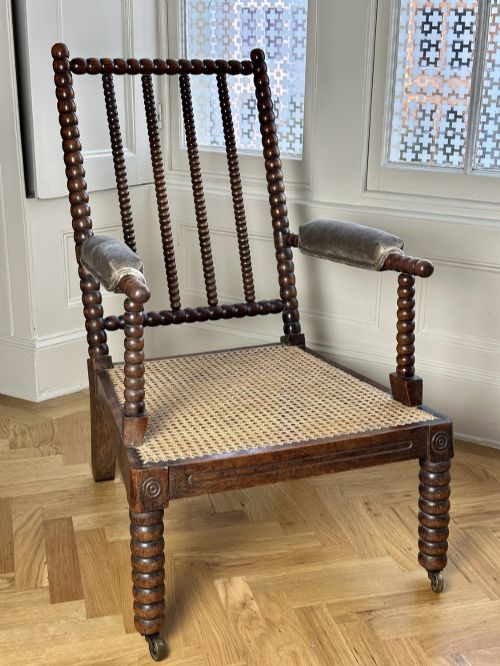
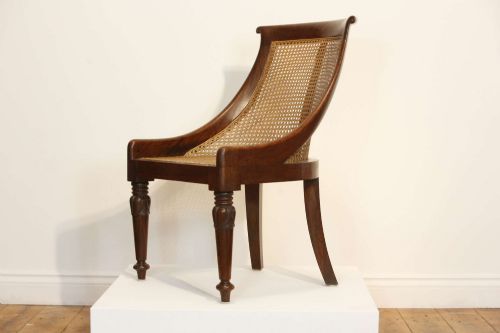
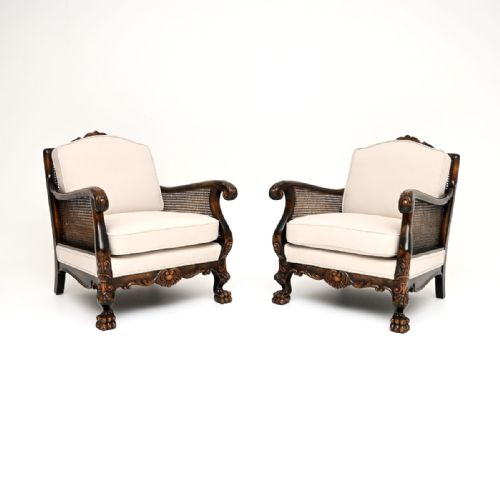
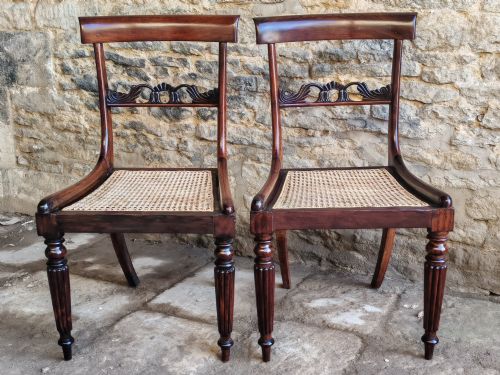
A carved wood cane chair is a seat constructed from timber featuring hand-woven rattan or cane panels within the backrest or seat frame. These pieces emerge from periods ranging from the seventeenth century through to the Edwardian era and the nineteen-twenties.
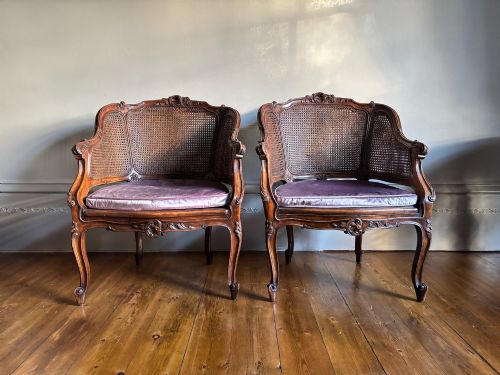
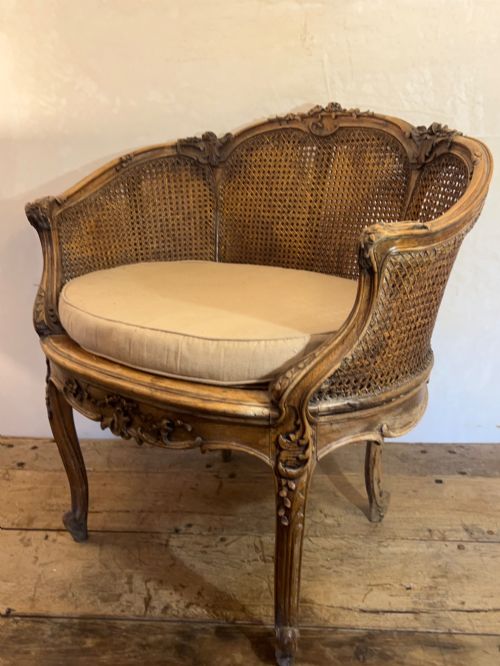
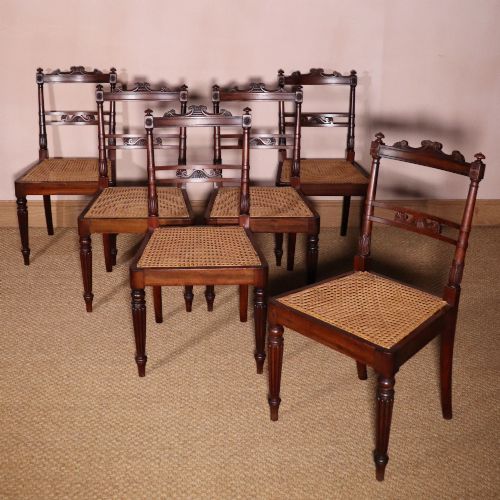
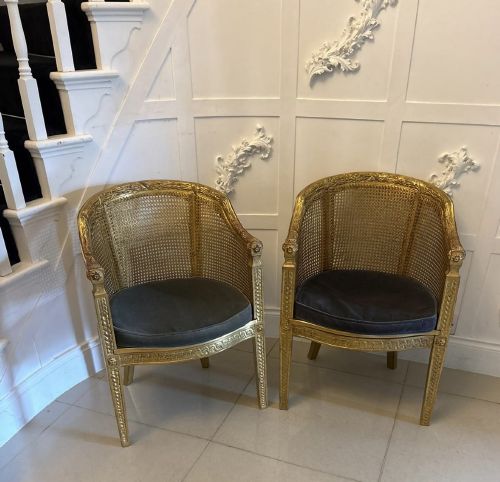
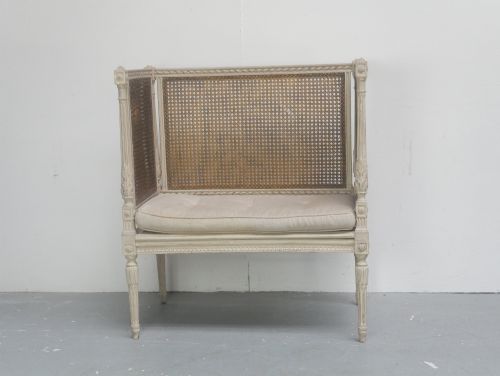
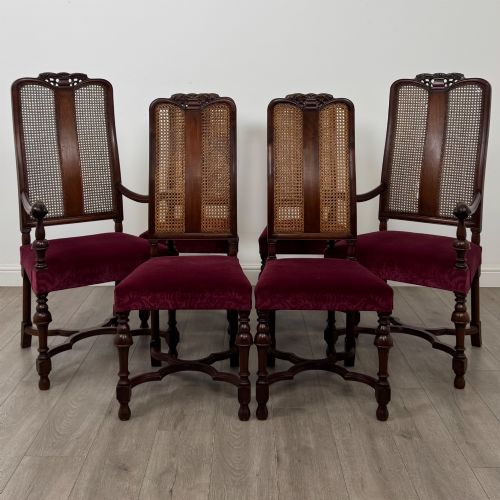
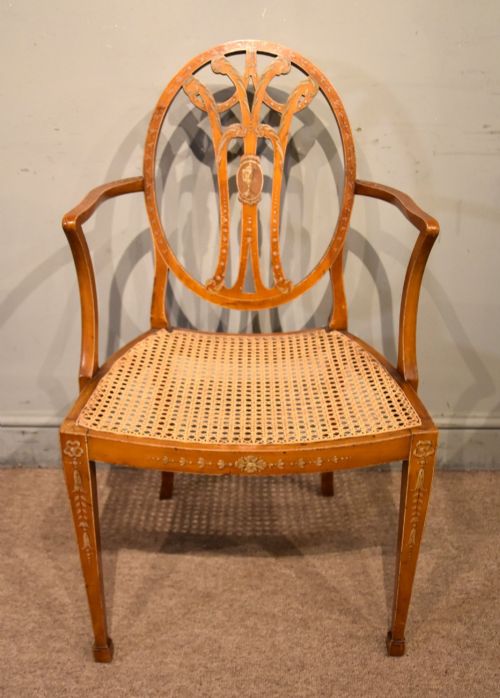
The selection here includes diverse forms such as open armchairs, bergere chairs, dining sets, rocking chairs, and hall chairs. Walnut, mahogany, oak, rosewood, and ebony form the primary structures, often styled in revivalist fashions like Jacobean, Carolean, and Louis XV.
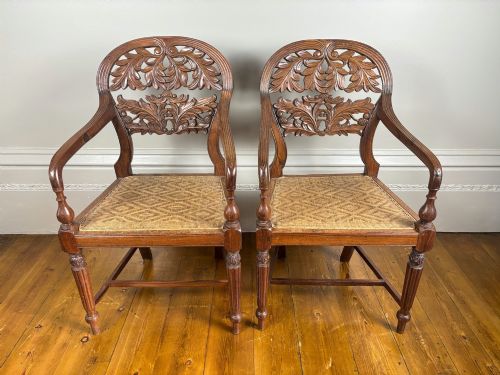
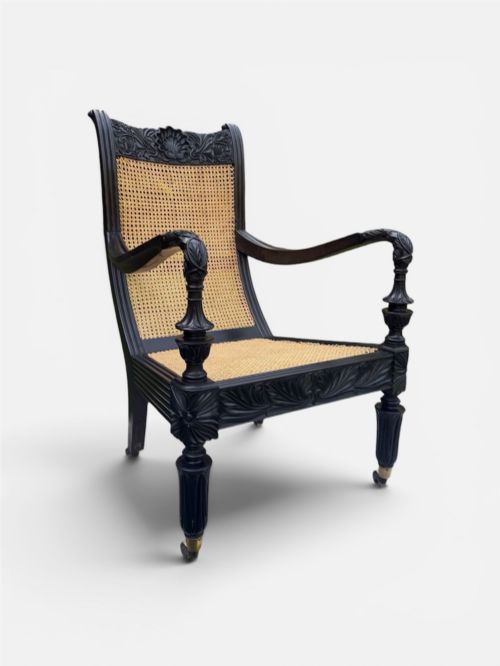
Buyers encounter examples shaped by regional traditions, including Anglo-Indian and Ceylonese workshops alongside French and English iterations. Pieces vary from compact children's chairs to large throne chairs and extensive dining sets.
Materials and Construction Techniques
Frames rely on dense hardwoods like mahogany, walnut, oak, rosewood, satinwood, and ebony, selected for their structural stability under carved ornamentation. Craftsmen shape these timbers using deep relief carving, particularly in styles referencing seventeenth-century motifs or French rococo curves.
Cane panels utilise natural rattan or peeled cane woven through holes drilled in the chair frame or fitted into a designated groove. Artisans secure the weave by plugging the channel with a reed spline, creating a flexible and supportive surface.
Carved Wood Cane Chair Retail Price Guide 2026
Typical asking prices for carved wood cane chair among the pieces listed under this phrase on Sellingantiques today, from the lower quarter to the upper quarter. They describe what is for sale here now, not the wider market.
Even miniature occupants needed style, as evidenced by the historic children's bergere chairs included in the collection.
Evaluating Craftsmanship and Depth of Design
Quality rests in the crispness and depth of the wood carving, where hand-chiseled details show distinct tool marks rather than soft, mass-produced machine moulding. The density and straightness of the timber grain also dictate the longevity of the frame.
The precision of the cane weaving determines structural resilience, with tight, uniform patterns indicating superior hand labour. Additionally, the integration of original joinery without modern reinforcement preserves the integrity of the piece.
The Carved Wood Cane Chair Glossary
- Cane
- Strips of peeled rattan used for weaving chair seats and backs. The material provides a resilient, breathable surface.
- Carolean
- A seventeenth-century English style characterised by rich walnut frames and elaborate scrollwork. It is frequently revived in later nineteenth-century furniture.
- Padouk
- A heavy tropical hardwood with a reddish hue used in colonial furniture. Anglo-Indian craftsmen utilised this timber for detailed open armchairs.
- Tub Chair
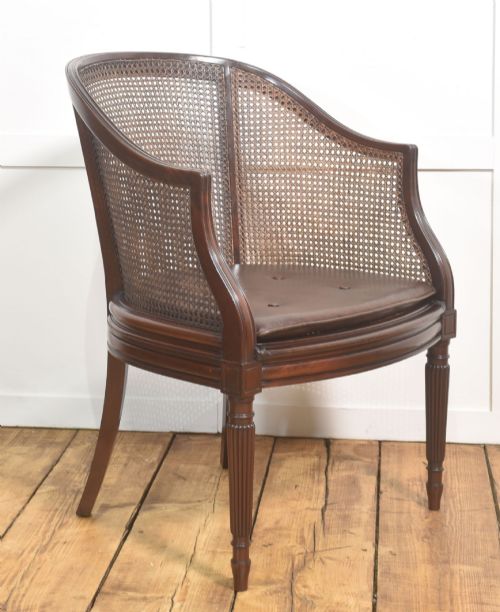
- A comfortable armchair with a rounded, curved back that wraps around the sitter. These often incorporate cane panels within Edwardian mahogany frames.
Carved Wood Cane Chair: Frequently Asked Questions
How do I care for cane seating?
Keep cane panels hydrated by occasionally wiping them with a damp cloth to prevent the natural fibres from becoming brittle. Avoid placing these chairs near direct heat sources.
Support the woven surfaces properly and avoid placing excessive weight on single points of the cane mesh.
Were these chairs used for dining?
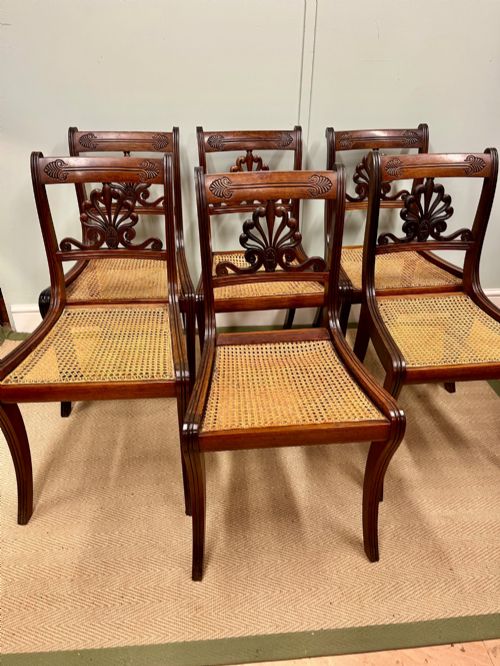
Many examples on this page form part of larger dining sets produced during the Regency and Edwardian periods. Others function as single accent pieces for studies and drawing rooms.
Armchairs and elbow chairs typically served as occasional seating rather than regular dining furniture.
How can I identify seventeenth-century pieces?
Early pieces from the seventeen-hundreds feature dense walnut construction, pronounced grain patterns, and hand-cut joinery unique to period workshops. They often display Carolean or Jacobean scroll carving.
Later revival pieces replicate these forms using nineteenth-century manufacturing methods and machine-assisted detailing.