
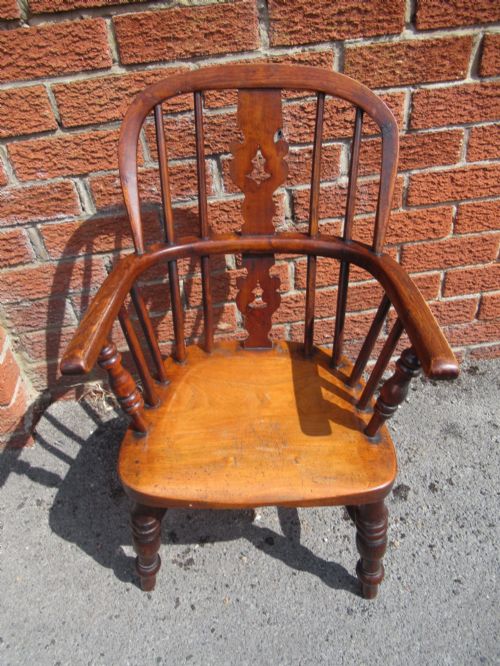
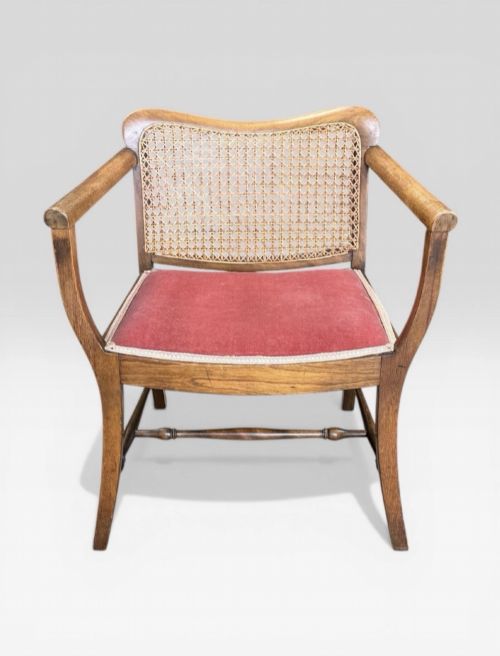


Brown Wood Child Chair
A brown wood child chair brings centuries of domestic history into a room through small-scale seating built with grown-up craft.
Brown Wood Child Chair
A brown wood child chair spans forms designed to seat the young, including Windsor armchairs, high chairs, rocking chairs, bergere seats with cane, and correction chairs. These pieces emerge across the Georgian, Victorian, and Edwardian periods, stretching from eighteen hundred into the early twentieth century.
The version most commonly met on this page is the traditional brown wood child Windsor chair, frequently fashioned from native timbers like yew, elm, and ash. Alongside these rural stick-back forms, buyers encounter mahogany and oak high chairs, folding seats, and occasional pairs originating from regional workshops.
Constructed for domestic utility, these smaller items mirror the prevailing furniture styles of their parent eras, from Georgian country pieces to Victorian formal adaptations and rustic folk art interpretations. Their survival reflects the enduring care given to diminutive household furnishings.
How these pieces were made
Cabinetmakers and rural bodgers utilised native hardwoods, turning spindles on lathes and bending green timber for hoops and arms while shaping solid seats from thick slabs of elm. Traditional joinery methods such as wedged tenons and through-joints secured the uprights and legs under daily use.
Lighter seating integrated woven cane panels into steam-bent frames of beech or mahogany, offering resilient support for a child. Artisans finished these surfaces with natural oils and wax, highlighting the grain of yew, fruitwood, and ash without heavy pigments.
Listings feature 19th-century, Georgian, Victorian, and Edwardian periods utilising elm, yew, ash, cane, wood, beech, oak, and mahogany.
What varies in quality
The distinction between standard utility items and exceptional examples lies in the choice of timber figurations, such as highly figured yew wood or rich burr elm seats. Superior pieces maintain balanced proportions scaled accurately from adult designs rather than clumsy reductions.
Original construction integrity separates surviving specimens, noting whether turned components, crinoline stretchers, and cane work retain their factory or workshop cohesion. Subtle refinements in arm scrolls and spindle turning elevate the status of individual examples.
James Shoolbred
The Brown Wood Child Chair Glossary
- Windsor chair
- A wooden chair built with a heavy solid seat into which the legs and back spindles are tenoned directly. This form relies on stick-back construction rather than a joined frame.
- Bergere chair
- An upholstered armchair featuring enclosed sides, frequently fitted with woven cane panels in the back and seat. Such pieces reflect French Louis influence adapted by British makers.
- Crinoline stretcher
- A curved metal or wooden brace connecting the legs of a Windsor chair beneath the seat. This addition provides structural rigidity while adding a characteristic decorative sweep.
- Correction chair
- A specialist 19th-century seat designed with a tall straight back intended to encourage upright posture for children. These items often feature cane seating and restrained proportions.
- High chair
- An elevated seating form raised on tall legs or a frame to allow a child to reach table height. Examples range from simple rustic elm formats to formal mahogany structures.
Brown Wood Child Chair: Frequently Asked Questions
How old are these child chairs?
The pieces span the Georgian period, the Victorian era, and early twentieth-century production around nineteen twenty. Dates range from the late eighteenth century through Edwardian times.
Craft methods and timber choices help assign objects to these broad periods alongside traditional regional workshop styles.
What woods were used?
Makers relied on native British hardwoods including yew, elm, ash, beech, and fruitwood, alongside mahogany and oak. These materials provided the necessary strength for small-scale domestic furniture.
Combinations of elm seats with yew or ash spindles appear frequently across rural Windsor forms.
Were these chairs meant for everyday use?
These items served practical domestic purposes in nurseries and parlours, functioning as high chairs, rockers, or writing and armchair seats for young children. Their sturdy construction ensured they survived generations of household life.
Specialist variants like exercise chairs and folding frames also met specific domestic needs.