
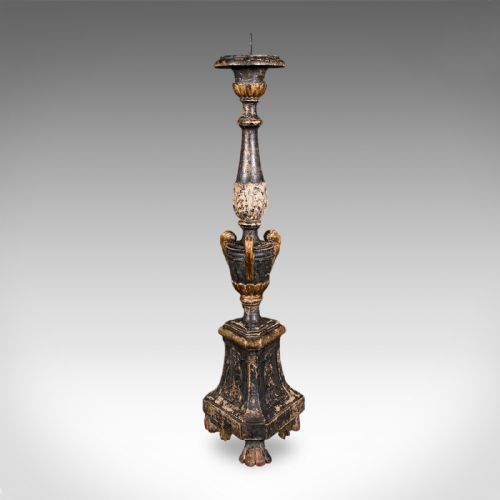


Carved Wood Candle Sticks
These carved wood candle sticks bring warmth and hand-carved character to a room, offering everything from rustic folk art to gilded Italian altar pieces.
Carved Wood Candle Sticks
When you search for carved wood candle sticks, you encounter a diverse group of objects spanning domestic lighting, treen, and ecclesiastical altar fittings. The selection includes pairs of open barley twist oak pieces, fruitwood designs with glass drip trays, and lignum vitae treen candlesticks.
Italian provincial and Neoclassical altar-style examples appear frequently, often finished in gilt-wood or silvered surfaces. Folk art pieces also feature strongly, ranging from simple turned forms to figural carvings such as poachers carrying game.
Periods represented across these listings stretch from the eighteenth century through the Victorian era and into the early twentieth century. Buyers often find variations adapted as table lamps alongside traditional pricket sticks designed for large candles.
How they were made
Makers shaped these items from various timbers including oak, mahogany, limewood, fruitwood, and dense lignum vitae, utilising traditional lathe-turning and hand-carving techniques. Carvers applied surface finishes such as gold leaf, gesso, ebonisation, and silvering to enhance the decorative impact of the wood.
Many altar-style pieces incorporate iron or brass sconces and prickets to secure the candles safely above the timber base. Structural joinery and detailed chiselling define the construction of both domestic George III style examples and elaborate Baroque altar sticks.
Some nineteenth-century folk art pieces depict cheeky poachers carrying game right beneath your candles.
What varies in quality
Quality rests upon the crispness of the hand-carving and the proportional balance of the turned shaft, whether in a barley twist or an architectural column. Finer pieces display careful selection of timber grain and well-preserved original surface treatments like gold leaf or ebonised polish.
The integrity of the structural joinery and the survival of original metal sconces or prickets influence the standing of an individual pair. Pieces retaining their original patination and uncompromised carved detail occupy the upper tier of the range.
The Carved Wood Candle Sticks Glossary
- Pricket stick
- A candlestick that holds a candle upon a sharp metal spike rather than inside a socket. This traditional form appears frequently on altar-style pieces.
- Treen
- Small handmade wooden domestic objects fashioned by turning or carving. Lignum vitae examples demonstrate the dense, heavy qualities favoured for everyday household items.
- Gesso
- A plaster-like mixture applied to wood surfaces to prepare them for gilding with gold leaf. It allows carvers to achieve sharp relief details beneath metallic finishes.
- Barley twist
- A spiral column turned on a lathe, resembling the twists of barley sugar. This decorative motif appears often on oak candlesticks.
- Ebonised
- Wood treated with a dark stain or finish to imitate ebony. This technique provides a formal, contrasting appearance on nineteenth-century pieces.
Carved Wood Candle Sticks: Frequently Asked Questions
How do I clean carved wood candle sticks?
Dust the carved surfaces gently with a soft, dry brush to prevent dirt from settling in the recesses. Avoid using liquid polishes or water, particularly on gilt-wood, silvered, or gesso finishes.
Test any maintenance approach on an inconspicuous area first. Preserving the dry patination remains essential for older wooden items.
Can these candle sticks hold modern candles?
Many older pieces feature spikes or narrower sockets that do not accommodate standard modern tapered candles. Pricket sticks require candles with a pre-drilled base to sit upon the metal spike.
Using dripless candles or appropriate adapters helps protect the wood from wax damage. Careful measurement of the sconce ensures a secure fit.
What is the difference between domestic and altar sticks?
Altar sticks generally stand taller and display more elaborate Baroque or Neoclassical carving, often finished in gilt-wood or silver. They were created for ecclesiastical settings rather than household use.
Domestic versions tend to be smaller and utilise timbers like oak, mahogany, or fruitwood. Folk art examples offer simpler, charming interpretations intended for everyday homes.
How do I date a wooden candlestick?
Examine the tool marks, timber choice, and surface treatments to determine the likely period of manufacture. Hand-turned grain patterns and eighteenth-century joinery methods differ visibly from early twentieth-century production.
Style indicators such as George III proportions or Victorian ebonisation provide further chronological clues. Comparing the piece with documented examples helps narrow down the decade.