
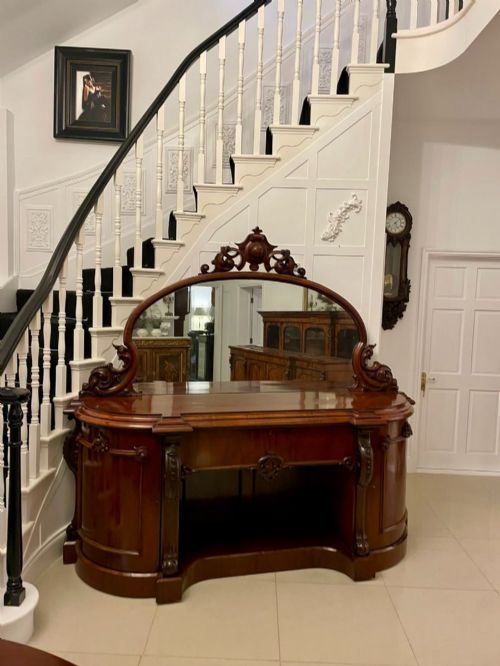
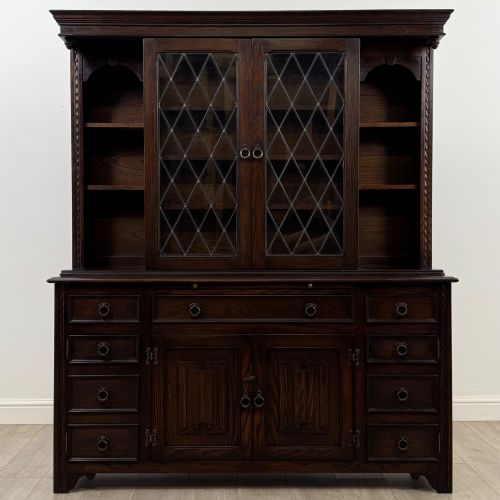
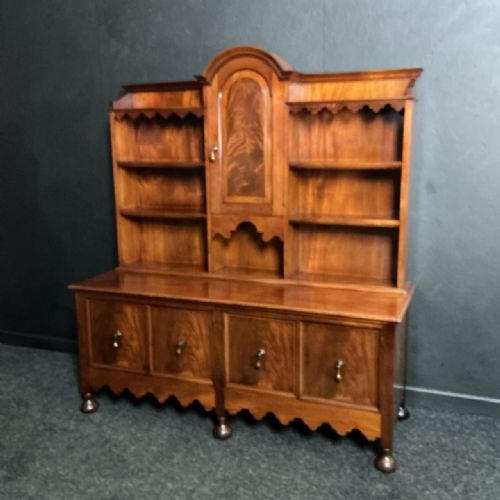
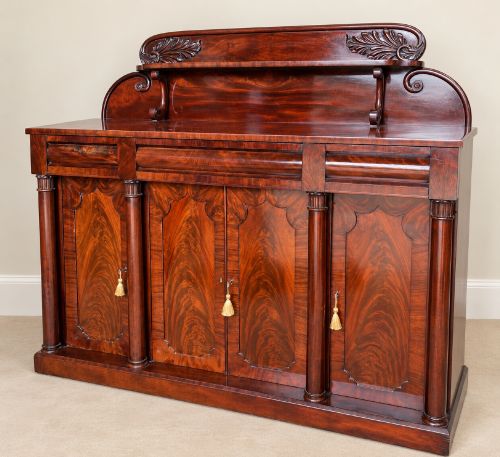
Carved Wood Buffet Dresser
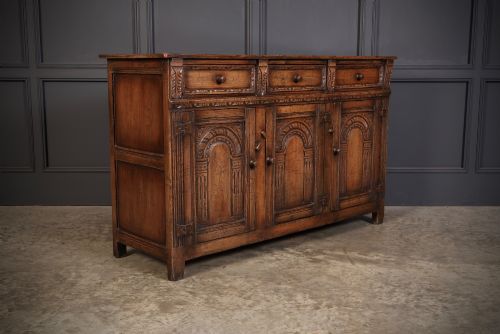
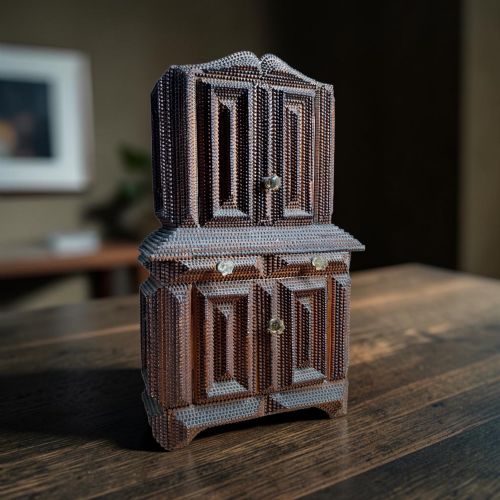
These carved wood buffet dresser pieces combine storage and display, offering substantial period character to any dining space.
Carved Wood Buffet Dresser
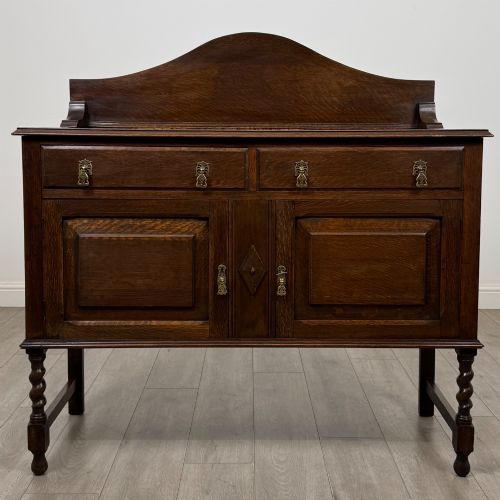
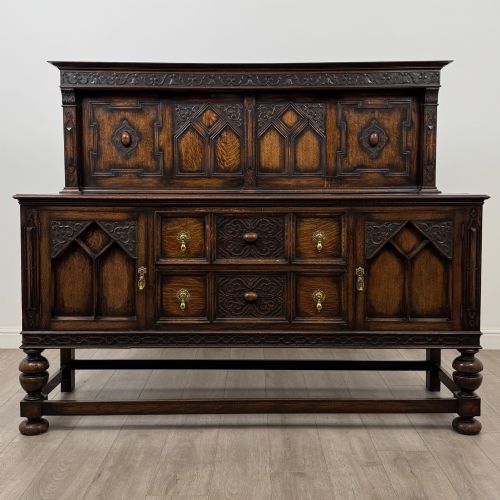
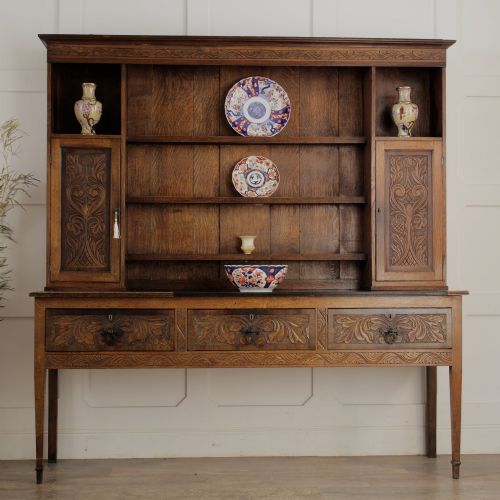
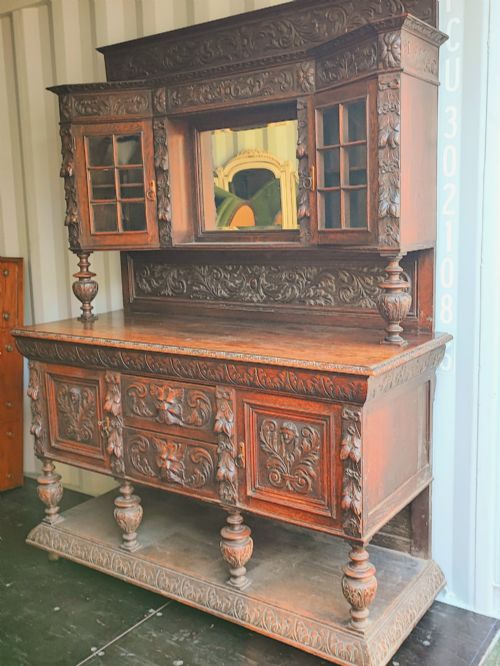
A carved wood buffet dresser serves as a primary storage and display surface in dining rooms, uniting cupboards, drawers, and sometimes plate racks or mirror backs. When searching for a carved wood buffet dresser, buyers encounter various forms including sideboards, court cupboards, and buffet deux corps originating from diverse periods.
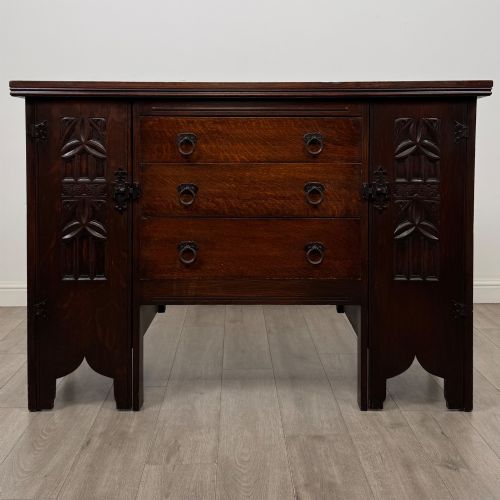
The pieces appearing on this page span the eighteenth, nineteenth, and early twentieth centuries, bringing together styles such as Jacobean Revival, Gothic Revival, and Arts and Crafts. Oak and mahogany dominate the selection, often complemented by walnut, ash, and elm timbers.
Victorian and Edwardian examples emerge most frequently, alongside earlier eighteenth-century vernacular bases and French provincial formats. These items range from compact potboard bases to large mirror-backed sideboards carved with deep relief panels and figural motifs.
How they were made
Joiners and cabinetmakers relied primarily on solid timbers such as oak, mahogany, and walnut, frequently utilising veneer for dramatic grain patterns like flame mahogany and burr elm. Structural elements often involved traditional mortise and tenon joinery, whilst drawer construction utilised hand-cut dovetails.
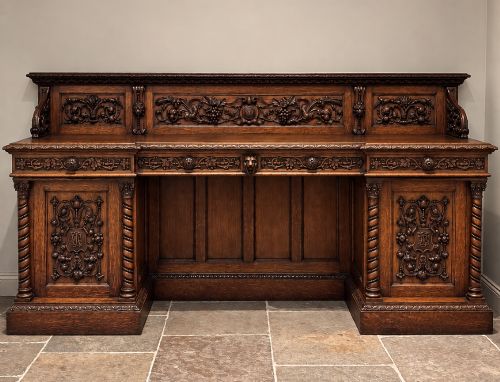
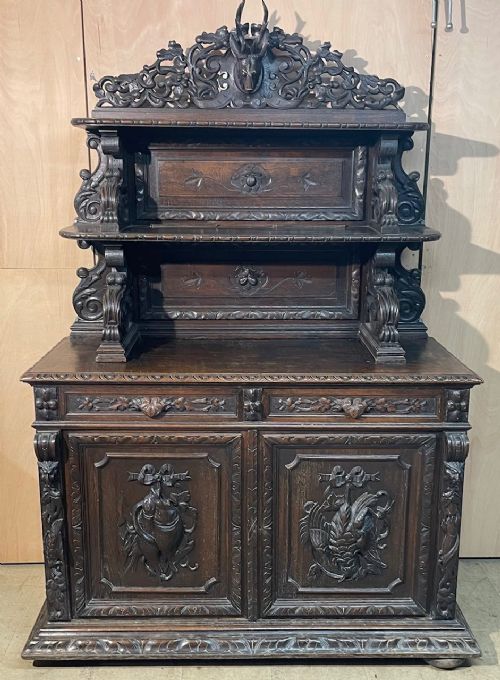
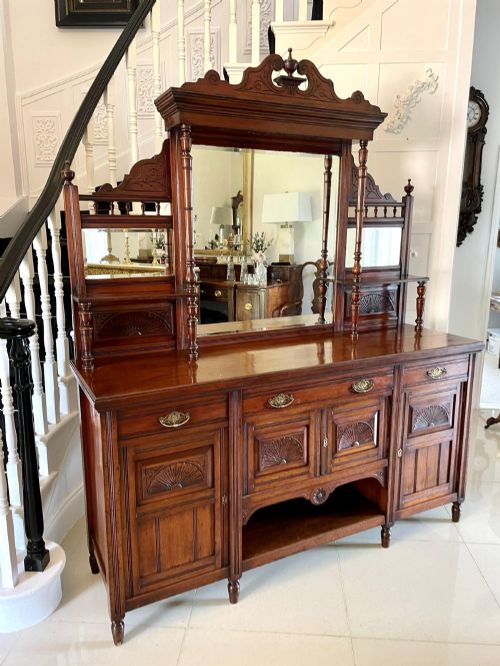
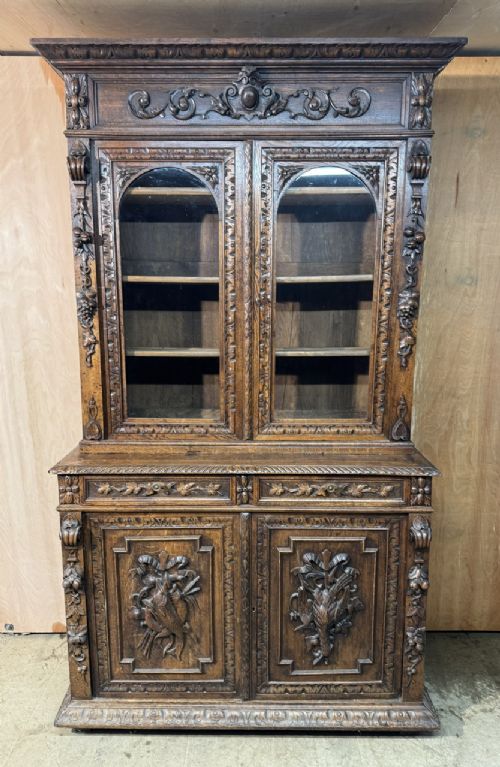
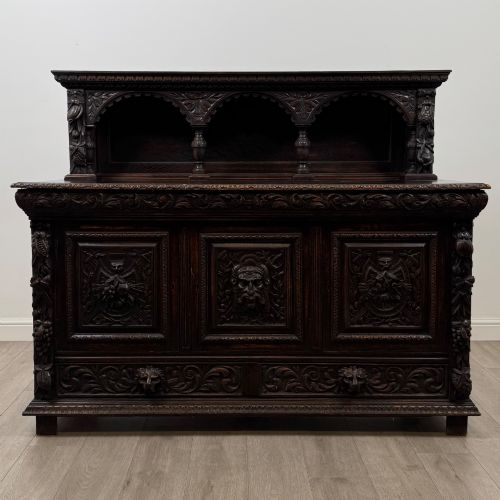
Surface enrichment relied heavily upon hand-carving techniques, producing deep relief foliage, geometric panels, and figural details like Green Man motifs. Hardware typically incorporated brass handles, escutcheons, and hinges, occasionally paired with mirrored glass plates in later Victorian and Edwardian iterations.
Several heavy oak sideboards proudly display watchful Green Man carvings peering out from dense foliage.
What varies in quality
The depth, crispness, and artistic execution of the hand-carving distinguish finer examples from simpler vernacular pieces. Superior items display well-proportioned timber selection, such as carefully matched flame mahogany or heavily figured oak, combined with robust internal construction.
The integrity of the original hardware, glass, and surface finishes maintains the visual harmony of the piece. More ambitious designs incorporate architectural elements, barley twist supports, or breakfront configurations that require greater joinery skill.
The Carved Wood Buffet Dresser Glossary
- Dresser
- A kitchen or dining room storage unit that originally held plates and food, often combining a lower cabinet base with upper shelving or a potboard.
- Buffet Deux Corps
- A tall French storage cabinet made in two distinct sections, where a smaller upper cupboard sits securely upon a deeper lower buffet base.
- Court Cupboard
- An antique English storage cabinet featuring recessed upper tiers supported by columns, traditionally used for displaying plate.
- Potboard
- An open lower shelf beneath a dresser or sideboard used historically for storing pots and pans. This utilitarian feature defines many country furniture forms.
- Green Man
- A sculptural architectural ornament depicting a human face surrounded by or entwined with foliage and vines, frequently seen on revival furniture.
Carved Wood Buffet Dresser: Frequently Asked Questions
How do I style a buffet dresser?
Position the piece against a principal dining room wall where it provides both functional storage and a visual focal point. Balance heavier items of tableware inside the lower cupboards while keeping the surface styled with ceramics or silver.
Allow sufficient clearance around the doors and drawers for comfortable access during dining. Pairing the wood tones with complementary seating enhances the overall interior cohesion.
What is a court cupboard?
A court cupboard is an early form of storage furniture consisting of an enclosed upper section supported by heavy posts above a lower cabinet. These pieces originated in Britain and served to store provisions and display valuable plate.
They are distinguished by their architectural proportions and deep relief carving. Placing one in a hallway or dining room immediately introduces historical character.
How do I care for antique oak?
Maintain antique oak by dusting regularly with a soft, dry cloth and avoiding modern silicone sprays. Apply a quality beeswax periodically to nourish the dry timber and preserve the natural grain.
Keep the furniture away from direct heat sources and strong sunlight to prevent timber shrinkage or fading. Consistent indoor humidity levels protect the ancient joinery from movement.
Are these pieces suitable for modern kitchens?
These sideboards and dressers offer robust storage solutions that integrate well into contemporary spaces looking for rustic warmth. The deep drawers and cupboards accommodate modern kitchenware and dining accessories easily.
Ensure you measure the available wall space and ceiling height carefully before placement, as many antique proportions are substantial. Their solid timber construction handles daily domestic use reliably.