


Carved Wood Bonsai Table
These carved wood bonsai table selections offer low stands and pedestal supports designed to elevate plants and display vessels.
Carved Wood Bonsai Table
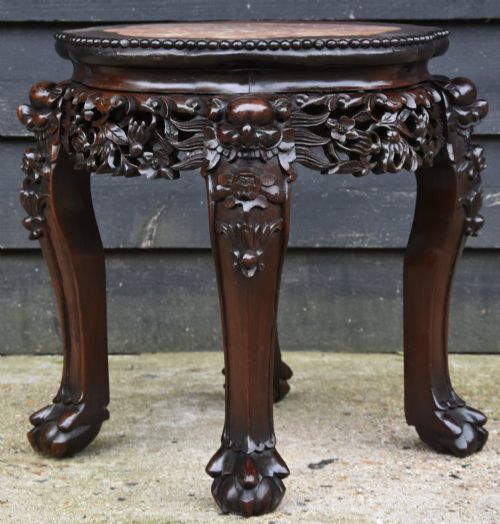
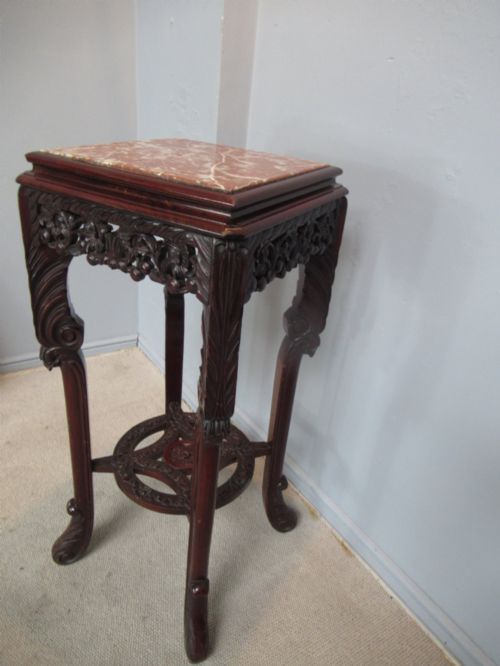
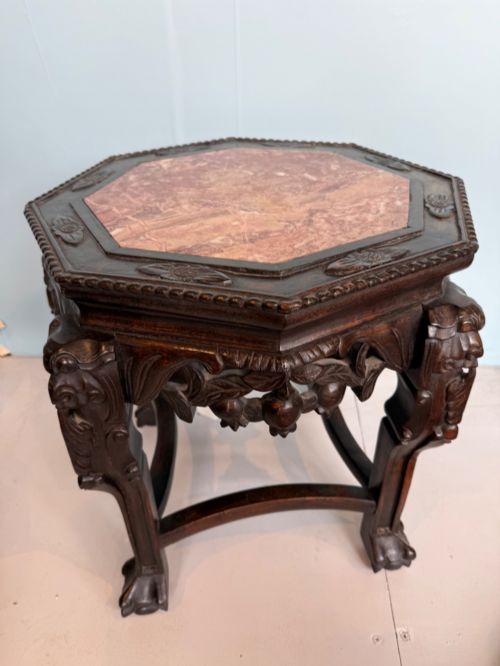
A carved wood bonsai table serves primarily as a plant stand, jardiniere stand, or urn stand to elevate decorative flora and ceramic vessels. When you search for a carved wood bonsai table, you encounter low tables, occasional tables, and pedestal supports designed for display.
The pieces appearing on this page span the nineteenth century, the Victorian era, and the early twentieth century, incorporating Japanese Meiji and Taisho periods alongside Chinese Qing Dynasty and Chinese Export origins. Hardwood forms dominate the selection, frequently featuring inset marble tops.
Makers and retailers such as Liberty of London appear alongside traditional Oriental workshops. Forms range from single-tier vase stands to two-tier hongmu pedestals and square coffee table stands.
Materials and construction methods
Carpenters utilised dense tropical hardwoods including rosewood, padouk, hongmu, and huali wood to construct these stands. These heavy timbers provided the structural integrity required to support weighty marble inserts and ceramic planters.
Artisans applied intricate hand carving to frames, aprons, and legs, often adopting Qing Dynasty styles and Oriental motifs. Certain examples also feature ebonised wood surfaces.
Masons inset rouge marble and other stone slabs directly into the timber tops to create smooth, cooling display surfaces for plants.
Factors determining quality
The depth and crispness of the hand carving distinguish finer examples from simpler production. Workmanship that maintains sharp relief and clean undercutting demonstrates superior craftsmanship.
The selection of timber grade and the quality of the marble insert dictate overall caliber. Dense hardwoods like hongmu and rosewood with well-figured grain paired with intact, unblemished marble slabs represent the upper end of the range.
Liberty of London
The Carved Wood Bonsai Table Glossary
- Jardiniere stand
- A tall or low table specifically constructed to hold a decorative ceramic plant pot or jardiniere. These pieces frequently incorporate marble tops to protect the wood from moisture.
- Hongmu
- A category of dense, dark Chinese hardwoods often translated as red wood. Artisans utilised hongmu for high-status furniture and display stands.
- Padouk
- A heavy, durable tropical timber with a reddish hue favoured for carved Oriental stands. It resists warping and takes intricate hand carving exceptionally well.
- Meiji Period
- A Japanese historical era spanning from eighteen sixty-eight to nineteen twelve. Pieces from this time often show refined craftsmanship intended for export markets.
Carved Wood Bonsai Table: Frequently Asked Questions
What is a carved wood bonsai table used for?
These pieces function primarily as plant stands, vase pedestals, and occasional tables for displaying decorative objects.
Historically, makers designed them to elevate bonsai trees, jardiniere bowls, and floral arrangements within domestic interiors.
How do I identify Chinese Qing Dynasty stands?
Qing Dynasty stands typically employ dense hardwoods such as hongmu, padouk, or rosewood with intricate hand-carved motifs.
Many incorporate inset marble tops and follow traditional forms spanning the nineteenth century.
Where were these plant stands made?
The pieces originate predominantly from Chinese workshops during the Qing Dynasty and Chinese Export periods, alongside Japanese Meiji and Taisho period production.
Certain examples were retailed through European stores like Liberty of London during the early twentieth century.