
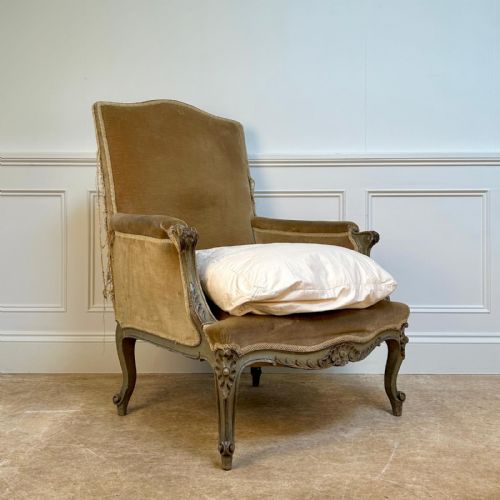
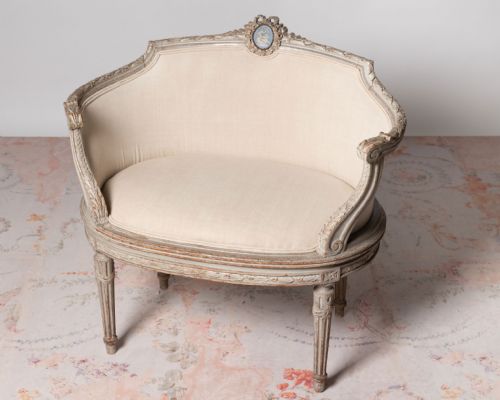


Carved Wood Bergere
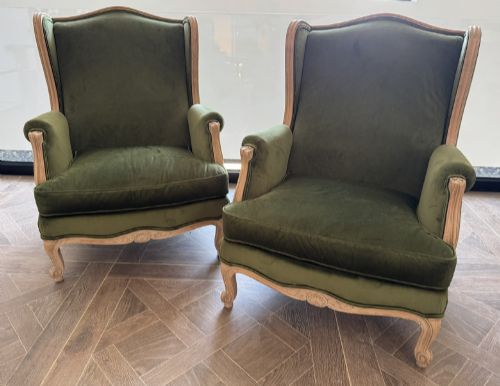
A carved wood bergere brings enclosed seating into a room, offering deep comfort through upholstered cushions and woven panels.
Carved Wood Bergere
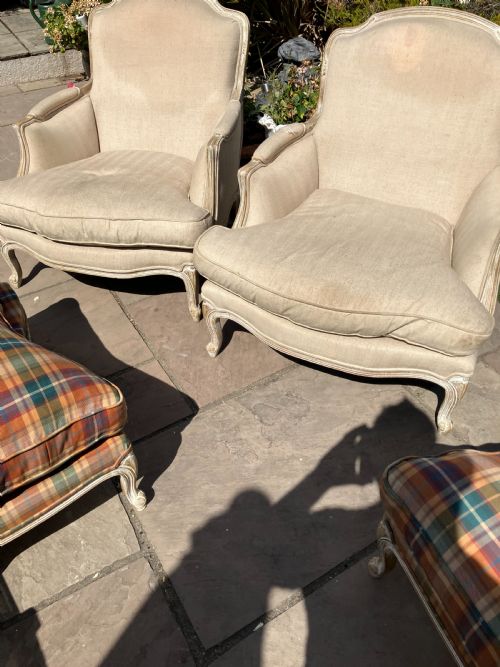
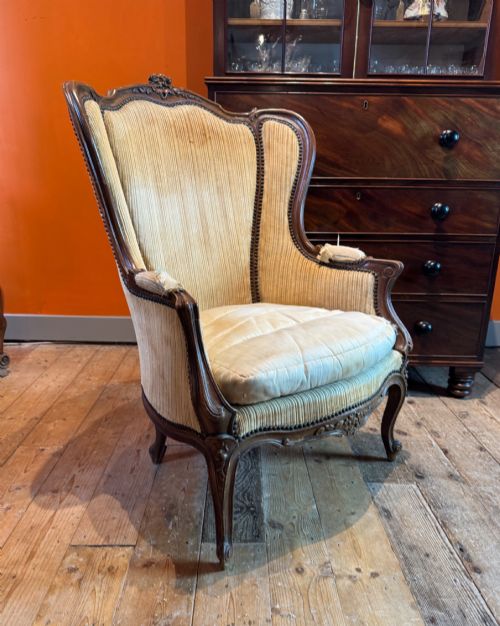
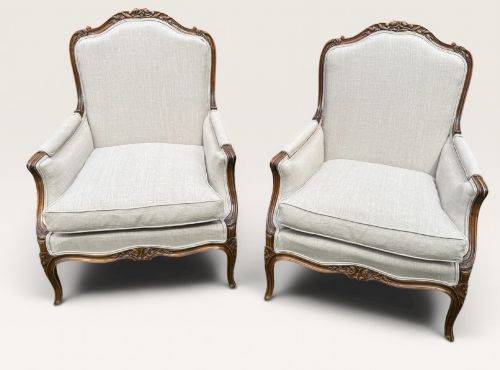
When you search for a carved wood bergere, you are looking at upholstered seats with enclosed sides and backs, most frequently appearing in French Louis XV and Louis XVI styles from the nineteenth century. These armchairs and sofas combine formal carved frames with deep seating, often supplied with loose feather or fabric cushions for daily use.
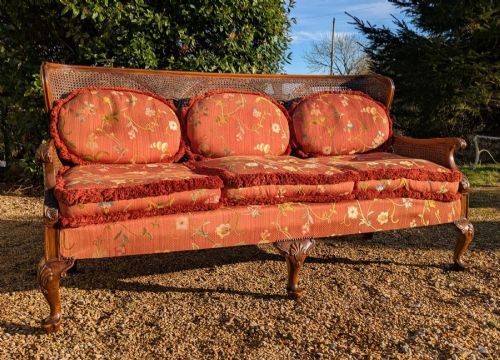
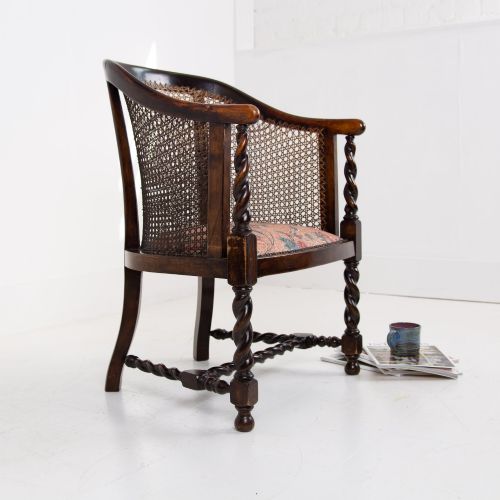
The selection on this page ranges from nineteenth century giltwood and painted examples to Edwardian mahogany frames and early twentieth century pairs. You will also encounter related forms such as caned settees, daybeds, and occasional stick stands utilising the same characteristic woven panels.
Materials and construction
Frames are shaped from solid timbers like walnut, beech, and mahogany, alongside gilded or painted hardwood surfaces. Skilled cabinetmakers carved floral motifs, scrolls, and structural details directly into the wood before finishing.
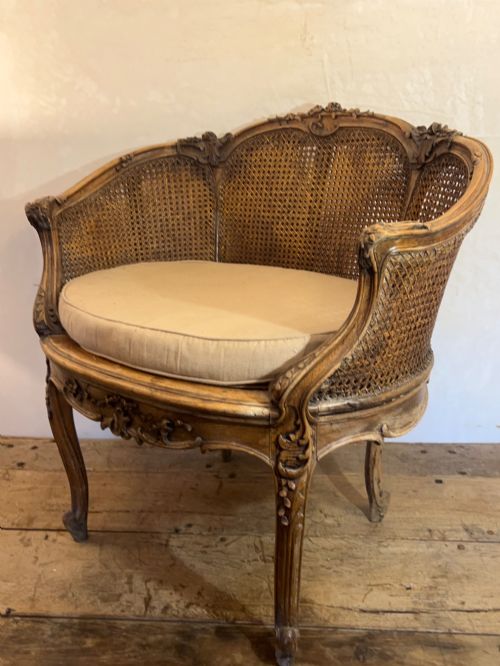
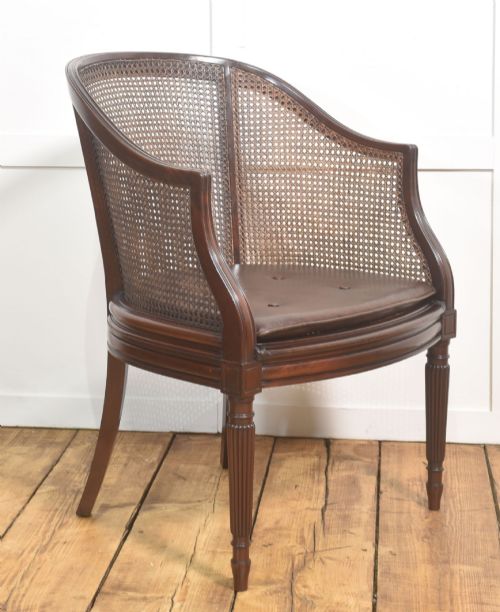
The distinctive enclosed sides and backs rely on cane panels woven tightly through drilled frame holes. These wooden and cane structures are then paired with upholstered elements in fabric, velvet, or leather, supported by internal cushioning.
Listings feature beech, walnut, and giltwood frames combined with cane, fabric, and velvet materials across nineteenth and twentieth century periods.
What separates fine examples
Quality rests in the crispness and depth of the wood carving, where hand-tooled details on walnut or giltwood frames show distinct definition. Lesser pieces often feature soft or mechanical moulding that lacks individual character.
The integrity of the woven cane work and the weight of the underlying timber determine the structural longevity of the seat. Superior frames maintain rigid joinery and even tension across all caned and upholstered surfaces.
The Carved Wood Bergere Glossary
- Bergere
- An enclosed upholstered armchair featuring solid sides filled with cane or upholstery. These chairs typically include a loose seat cushion and date across nineteenth and twentieth century periods.
- Canapé
- A decorative French sofa or settee built on a matching scale to the armchairs. It shares the carved wooden frame and caned or upholstered panels characteristic of the seating style.
- Giltwood
- Timber coated with a thin layer of gold leaf over a prepared base. This finish appears frequently on formal nineteenth century salon chairs.
- Louis XV Style
- A Rococo revival aesthetic defined by curved cabriole legs and asymmetrical floral carving. Frames from this design tradition prioritize flowing lines over straight geometry.
- Duchesse Brisee
- A multi-piece daybed or chaise longue arrangement combining an armchair with an extension stool. These pieces allow for reclining while maintaining formal carved frame details.
Carved Wood Bergere: Frequently Asked Questions
How do I care for cane panels?
Keep cane panels clean by dusting them gently with a soft brush and preventing them from drying out in direct sunlight. Avoid placing heavy loads against the woven sides to maintain structural tension.
Applying a little moisture to the underside of old cane periodically can help maintain flexibility, but avoid soaking the surrounding wooden frame.
Are these chairs comfortable for daily use?
Many bergere armchairs feature deep seats and soft cushions, making them well suited for reading or relaxation. The enclosed upholstered arms provide solid side support compared to open arm designs.
Comfort levels often depend on the thickness of the modern or period cushions used within the frame, as well as the height of the backrest.
What is the difference between Louis XV and Louis XVI styles?
Louis XV style frames feature curved cabriole legs, serpentine seat rails, and asymmetrical organic carvings. The overall aesthetic emphasises flowing movement and Rococo curves.
Louis XVI style shifts toward neoclassical symmetry, displaying straight fluted legs, rectangular backrests, and geometric carvings inspired by classical antiquity.
Can these chairs be re-upholstered?
Frames can be recovered in new fabrics or velvets to match modern interiors while preserving the historic timber structure. Traditional upholstery techniques use webbing and springs appropriate to the period of the frame.
When planning new upholstery, consult a restorer familiar with historic furniture construction to protect the exposed carved wood edges.