




Carved Wood Bar Cabinet
A carved wood bar cabinet brings period character to hosting, offering dedicated storage for bottles and glassware.
Carved Wood Bar Cabinet
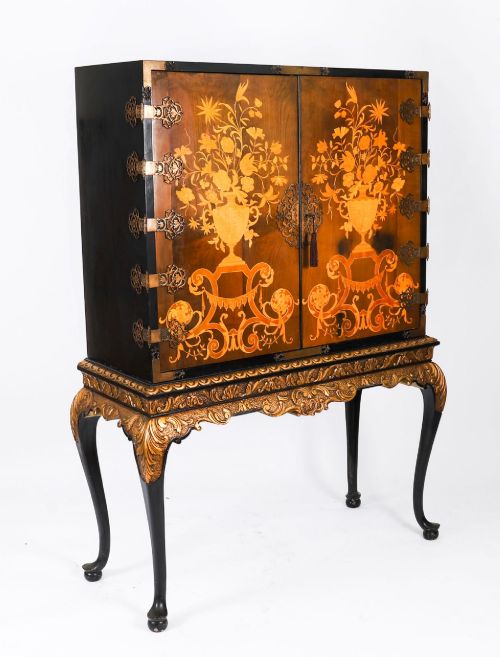
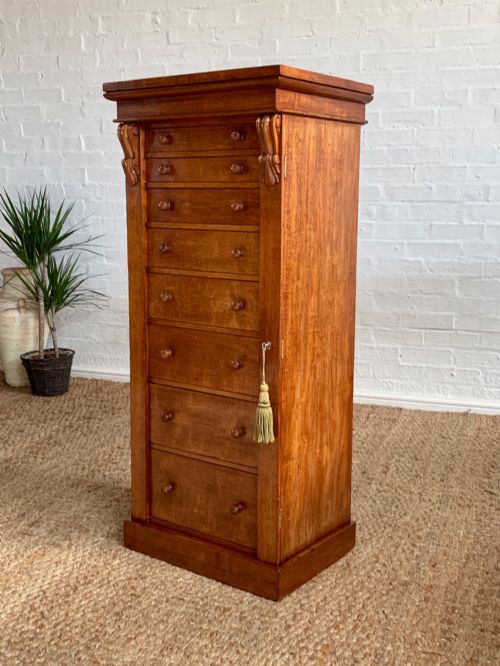
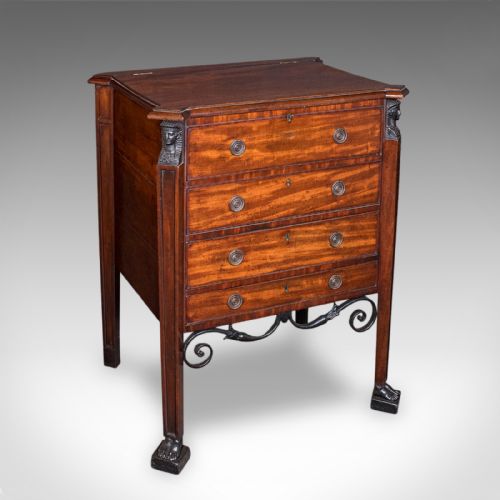
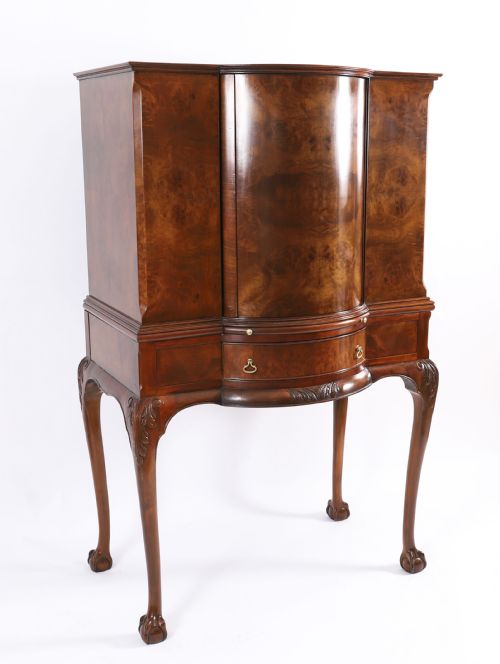
The selection ranges from burr walnut revolving dry bar cabinets and oak designs to elaborate Chinoiserie and Egyptian Revival pieces. Alongside dedicated cabinets, listings include related storage forms such as Wellington chests, corner cupboards, and chiffonier sideboards adapted for hospitality.
Origins span English workshops, continental revivals, and colonial production, incorporating specific regional timbers like teak alongside traditional European hardwoods. Each piece reflects the social habits of its era, from formal Victorian entertaining to the cocktail culture of the 1920s and 1930s.
How they were made
Cabinet makers utilised dense hardwoods including mahogany, oak, and walnut, frequently selecting burr walnut veneers for striking figured grain patterns. These timbers provided the structural strength required for heavy bottle storage and intricate exterior carving.
Surface decoration combined fine woodworking techniques such as marquetry inlay and lacquering, supplemented by carved detailing in styles ranging from Queen Anne to Egyptian taste. Interiors often incorporated mirrored panels, glass shelving, and brass hardware to complete the functional drinking space.
Carved Wood Bar Cabinet Retail Price Guide 2026
Typical asking prices for carved wood bar cabinet among the pieces listed under this phrase on Sellingantiques today, from the lower quarter to the upper quarter. They describe what is for sale here now, not the wider market.
A nineteenth-century teak gin cabinet from Ceylon brings tropical colonial hospitality straight to the English corner cupboard.
What varies in quality
Quality rests in the selection of timber veneers and the crispness of the carved ornamentation applied to the cabinet exterior. Finer examples display carefully matched burr walnut or detailed marquetry that wraps seamlessly around the proportions of the piece.
Internal fitting and hardware differentiation separates standard production from superior workshops. Original brass fixtures, fitted glass mirrors, and thoughtful internal compartment design indicate higher-tier craftsmanship during manufacture.
Epstein
The Carved Wood Bar Cabinet Glossary
- Burr walnut
- A prized timber veneer harvested from walnut tree growths, notable for its swirling, organic grain patterns. It frequently covers the exterior surfaces of 1920s and 1930s cocktail cabinets.
- Marquetry
- The art of applying pieces of veneer to a structure to form decorative patterns and pictures. Skilled artisans use different coloured woods to create intricate surface designs.
- Chiffonier
- A low sideboard or cabinet featuring shelves and cupboards, sometimes adapted for hospitality use. Victorian examples in mahogany appear within these drinks storage listings.
- Egyptian Revival
- A decorative style drawing inspiration from ancient Egyptian motifs, architecture, and symbols. Victorian pieces occasionally incorporate these distinctive architectural elements.
- Wellington chest
- A tall, slender chest of drawers secured by a hinged locking side stile. The listed Victorian examples demonstrate how traditional bedroom furniture served alternative storage roles.
Carved Wood Bar Cabinet: Frequently Asked Questions
What is a cocktail cabinet?
A cocktail cabinet is a specialised piece of furniture designed for preparing and storing alcoholic drinks, glassware, and mixing accessories. They became particularly popular during the 1920s and 1930s.
These pieces typically feature drop-front writing surfaces that act as mixing shelves, alongside internal glass mirrors, lighting provisions, and dedicated bottle racks. The exterior often displays decorative veneers like burr walnut or oriental lacquer work.
How do I date a drinks cabinet?
Dating a drinks cabinet involves examining the timber species, construction methods, hardware, and stylistic revival influences. Pieces from the Georgian period show different joinery and timber choices compared to 1930s Epstein productions.
Secondary woods inside drawers, the type of mirror glass used, and the presence of original locks or handles provide reliable clues. Stylistic markers such as Queen Anne cabriole legs or Egyptian Revival motifs further anchor the piece to a specific era.
How do I care for antique wood?
Antique wood cabinets require stable indoor humidity levels and protection from direct heat sources to prevent timber splitting or veneer lifting. Regular dusting with a soft, dry cloth preserves the finish.
Occasional applications of appropriate wax maintain the lustre of mahogany, oak, and walnut surfaces without building up heavy residues. Avoid using modern silicone-based polishes that can penetrate and damage historic finishes.