
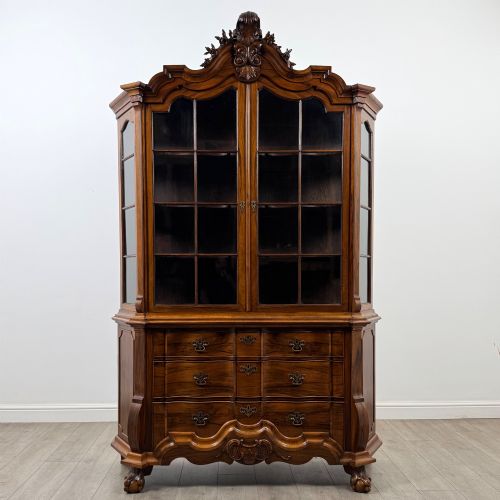
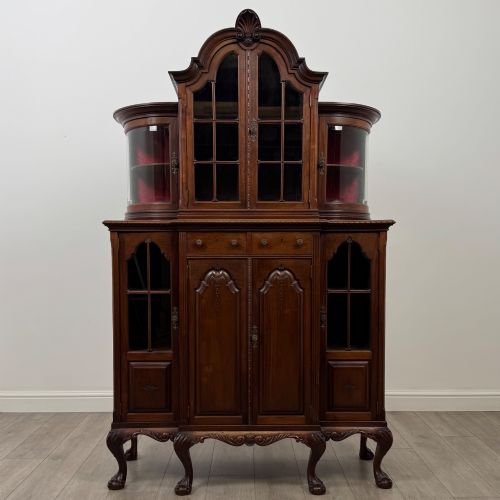
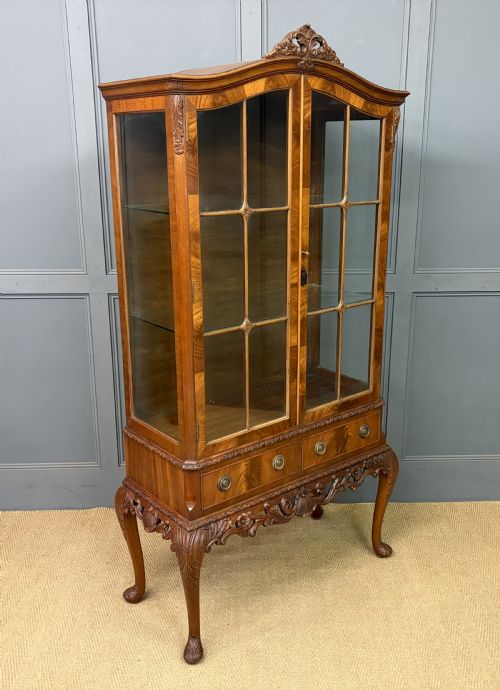
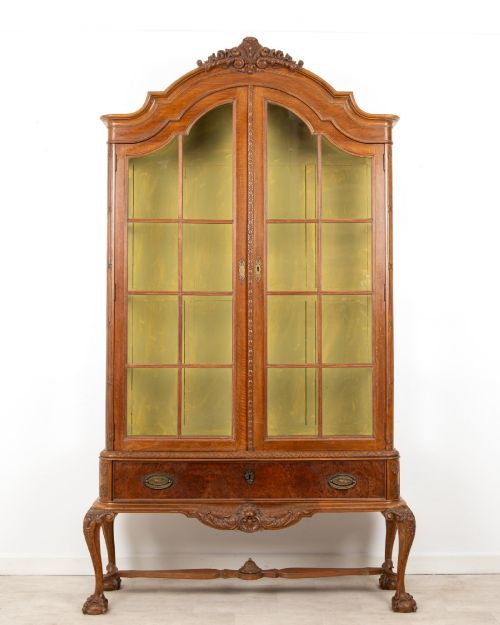


Carved Walnut Vitrine
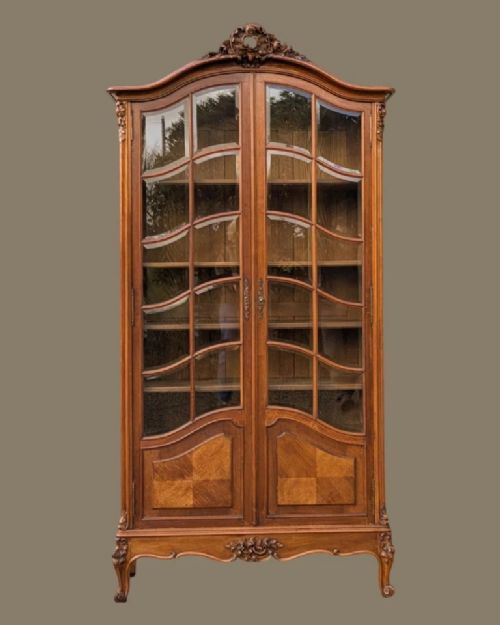
A carved walnut vitrine is a stately display cabinet designed to showcase precious collections behind glass.
Carved Walnut Vitrine
When you search for a carved walnut vitrine, you enter a field defined by rich timber and glazed display space. The pieces appearing here span centuries from the eighteenth to the twentieth, encompassing styles such as Queen Anne Revival, Dutch Baroque, and French Provincial.
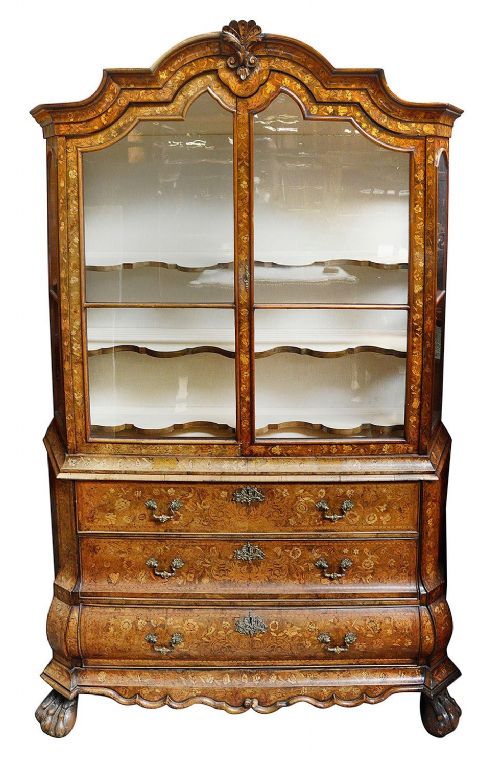
You will encounter various formats ranging from tall bookcases with glass doors to bombé marquetry cabinets and low side cabinets. Walnut and burr walnut dominate the material record, often paired with fruitwood, oak, and brass hardware.
Origins stretch across England, France, Italy, America, and particularly the Netherlands, where marquetry inlay reached a high art. The form serves primarily as a refined stage for porcelain, silver, and curiosities within the home.
How they were made
Cabinetmakers constructed these pieces using solid walnut and figured burr walnut veneers applied to secondary woods like oak and pine. Marquetry and inlay required meticulous hand-cutting of contrasting timbers and fruitwoods to create floral or geometric patterns across the surfaces.
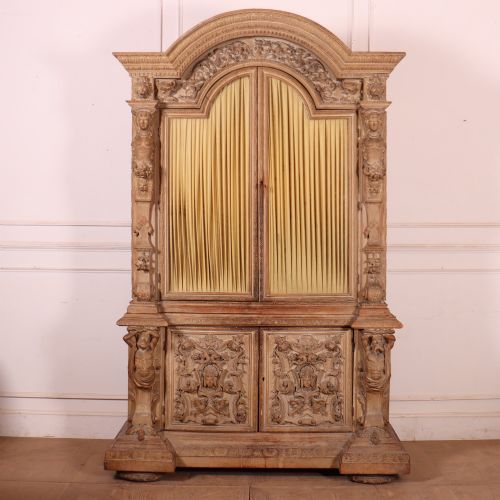
Carving was executed by hand, shaping cabriole legs, crests, and moulded frames in styles reflecting Louis XV Revival or Italian Renaissance influences. Glass panes were fitted into timber doors, sometimes with arched or astragal glazing bars dividing the view.
Listings feature walnut, burr walnut, fruitwood, and oak across pieces originating from the eighteenth to the twentieth century.
What varies in quality
Quality rests in the selection of the timber, particularly the symmetry and depth of burr walnut veneers and the intricacy of marquetry work. Finer examples display crisply hand-carved details and harmonious proportions rather than mechanical repetition.
Construction methods also set pieces apart, seen in the choice of secondary woods, the weight of the brass mounts, and the integrity of the joinery across doors and drawers. Exhibition pieces show a superior standard of finish that survives across centuries.
Maple & Co.·Arthur Reynolds Of Ludlow
The Carved Walnut Vitrine Glossary
- Vitrine
- A glass-fronted cabinet designed for displaying fine objects and porcelain. The form prioritises visibility through glazed doors and often glazed sides.
- Marquetry
- Decorative inlay using thin veneers of wood, bone, or ivory to form pictorial or geometric designs. Artisans carefully fit these pieces into a contrasting background veneer.
- Burr walnut
- Timber taken from a tree growth that produces swirling, highly figured grain patterns. Cabinetmakers prize this wood for creating striking decorative surfaces on cabinet doors.
- Bombé
- A swelling, outward-curved furniture shape associated with continental European cabinetmaking. This voluminous contour demands advanced woodworking skill to execute cleanly.
- Astragal
- A small moulding profile used to divide glass panes within a door frame. These bars create geometric divisions across the viewing area.
Carved Walnut Vitrine: Frequently Asked Questions
What is a carved walnut vitrine used for?
These cabinets were originally built to display prized porcelain, silver, and curiosities while protecting them from dust. The glazed doors and sides allowed owners to showcase their collections to visitors.
Today, they serve the same purpose in domestic interiors, acting as focal points that combine storage with visual display.
How do I date a walnut vitrine?
Dating relies on examining construction techniques, timber choices, and stylistic markers such as Queen Anne cabriole legs or Dutch marquetry patterns. Eighteenth-century pieces often show hand-cut joinery and specific regional proportions.
Later Victorian and Edwardian revivals emulate these earlier epochs but utilise nineteenth- or twentieth-century manufacturing methods and hardware.
Where should I place a vitrine in my home?
A vitrine requires a stable environment away from direct sunlight and dramatic temperature fluctuations to protect the walnut timber and any veneered surfaces. Placing the cabinet against an interior wall ensures structural stability.
Consider room lighting so that interior shelves receive adequate illumination through the glass panels.
What is the difference between a vitrine and a bookcase?
While both feature glass doors, a vitrine is specifically designed for display with potential glass side panels and adjustable shelves meant for decorative objects. Bookcases prioritise sturdy wooden shelving for heavy volumes.
Many period pieces blur this distinction, appearing in records as interchangeable bookcases and display cabinets.