



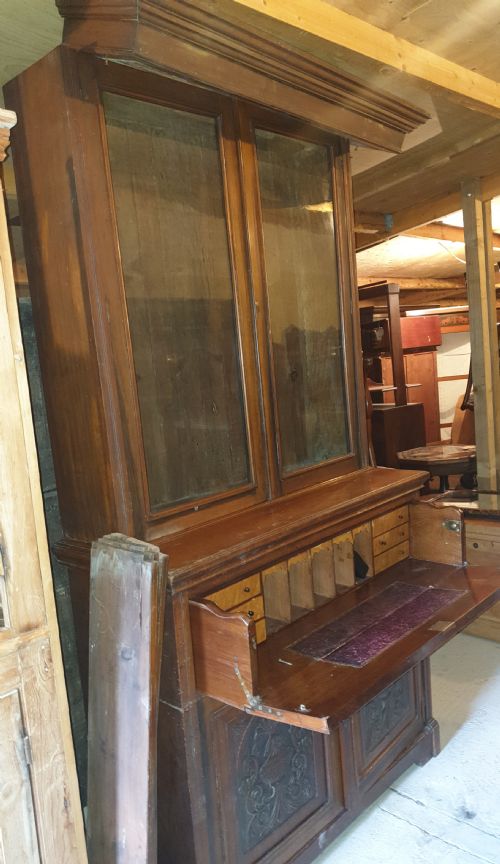


Carved Walnut Secretary Desk
A carved walnut secretary desk is a complex writing cabinet with a drop-front or lifting writing surface, offering concealed compartments and stately timber grain for any study.
Carved Walnut Secretary Desk
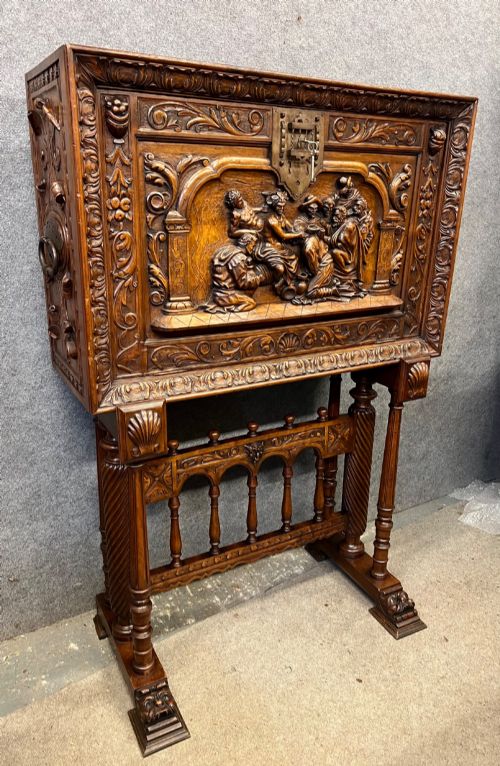
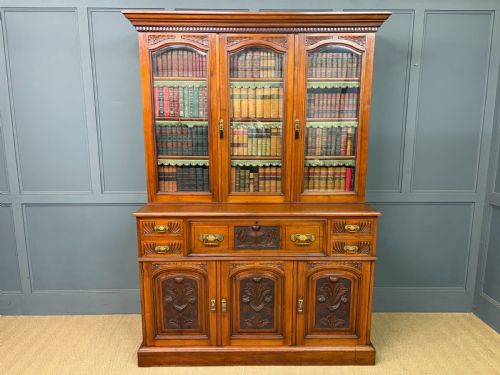
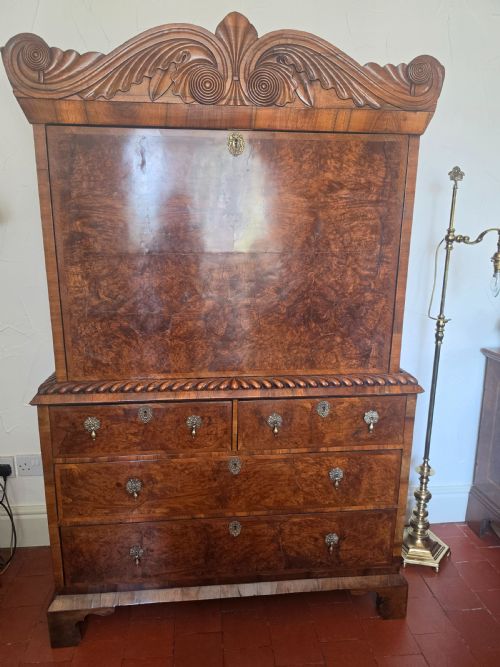
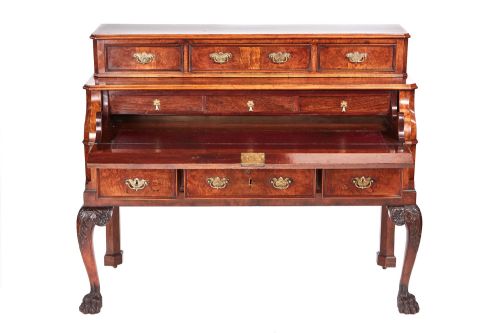
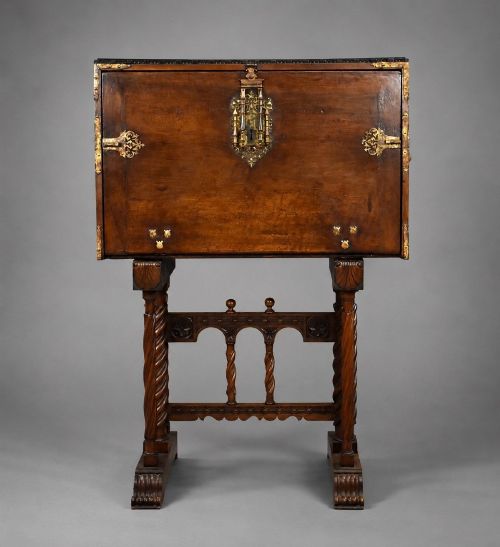
A carved walnut secretary desk combines a functional writing surface with enclosed storage, frequently appearing on this page in Victorian, 18th century, and 17th century iterations. These pieces span robust Spanish and Italian bargueño cabinets, Dutch burr walnut bombe bureaux, and tall English escritoires.
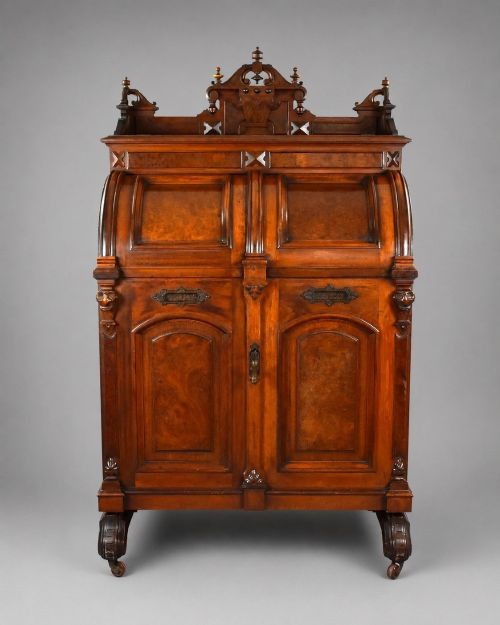
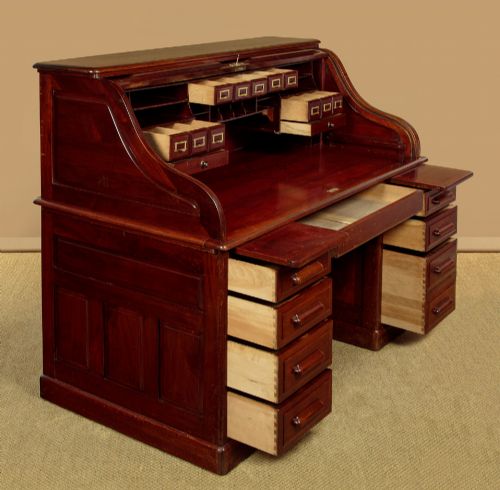
The forms range from compact lady's writing desks and freestanding davenports to massive bureau bookcases and cylinder roll tops fitted with glass doors. Walnut is the primary timber here, often enhanced by burr figuring or intricate marquetry inlay.
Regional variations dominate the selection, moving from French Empire and Louis XVI styles to robust Spanish Renaissance Revival and Dutch Rococo interpretations. Buyers encounter everything from early Georgian manner pieces to late Victorian secretaire bookcases.
Assessing quality in carved walnut
Quality rests heavily on the depth and crispness of the hand-carving, especially on pieces influenced by Spanish Baroque or Dutch Rococo traditions. Sharp, well-defined motifs show superior craftsmanship compared to soft or mechanical surface ornamentation.
The choice and matching of timber veneers dictate visual hierarchy, where symmetrical burr walnut grain patterns elevate a bureau significantly. Superior interior joinery, including secret drawers and well-fitted pigeonholes behind the fall-front, also separates standard production from exceptional cabinetwork.
Carved Walnut Secretary Desk Retail Price Guide 2026
Typical asking prices for carved walnut secretary desk among the pieces listed under this phrase on Sellingantiques today, from the lower quarter to the upper quarter. They describe what is for sale here now, not the wider market.
Materials recorded across the inventory include solid walnut, burr walnut, oak, brass handles, glass doors, and leather writing inserts.
Wiggers
The Carved Walnut Secretary Desk Glossary
- Bargueño
- A traditional Spanish chest cabinet with a drop-front writing surface concealing numerous small drawers and compartments. These often rest on sliding supports or dedicated stand bases.
- Escritoire
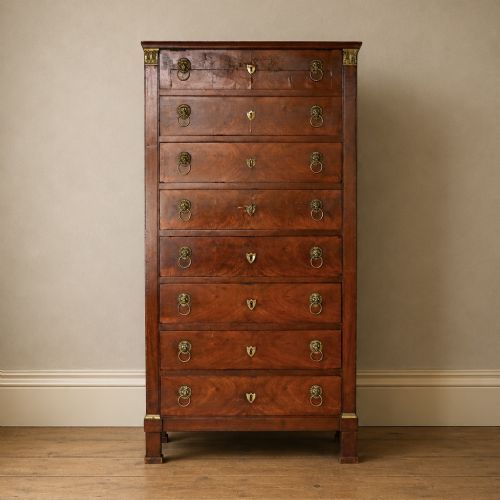
- A tall writing cabinet or desk featuring a fall-front writing flap that encloses an organised interior of pigeonholes and small drawers. This form frequently incorporates upper bookcase storage.
- Bombe
- A distinctive furniture shape characterised by convex, outward-curving sides and fronts. This style is particularly prevalent in Dutch walnut and marquetry pieces.
- Davenport
- A compact pedestal desk with a sloping, hinged writing surface and drawers opening to the side. Victorian examples in walnut often incorporate fine inlay and small brass galleries.
- Marquetry
- The art of applying pieces of veneer to a structure to form decorative patterns and pictures. Dutch cabinetmakers utilised floral and pictorial marquetry extensively on walnut bureau cabinets.
Carved Walnut Secretary Desk: Frequently Asked Questions
What is a secretary desk?
A secretary desk is a piece of furniture that combines a set of drawers with a desk compartment, typically featuring a hinged writing flap that pulls down or drops forward.
Inside, these desks house an arrangement of small drawers, pigeonholes, and sometimes secret compartments, while many larger versions include a bookcase or display cabinet above.
How do I use a secretary desk today?
These desks serve well as compact home workstations, providing a dedicated writing surface that can be closed up to hide laptop computers and paperwork when not in use.
The interior compartments offer practical storage for stationery, while the upper bookcase sections on taller bureau models accommodate books and display items.
How do I tell different periods apart?
Dating relies on stylistic clues and construction methods, such as the heavy carving and architectural forms typical of 17th century Spanish and English pieces. Later Victorian and Edwardian examples often blend earlier revivals like Queen Anne or Louis XVI with distinct hardware and internal layouts.
Burr walnut veneers and marquetry inlay also shift in execution across centuries, moving from the restrained William and Mary style to exuberant Dutch bombe and floral designs.
Are these desks freestanding?
Many secretary desks and bureau bookcases are designed with finished backs and sides, allowing them to sit out in the open within a room rather than strictly against a wall.
Specific compact forms like davenports were traditionally engineered as freestanding units, whilst taller architectural bookcases often required placement against a solid wall for stability.