
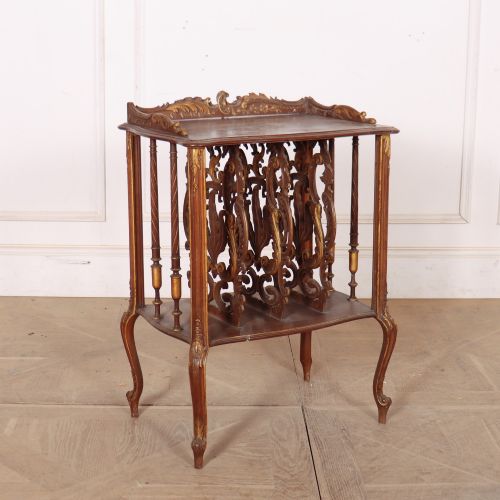


Carved Walnut Music Rack
A carved walnut music rack brings both structured organisation and rich grain to a room, offering a sturdy place for scores and periodicals.
Carved Walnut Music Rack
When you search for a carved walnut music rack, you encounter practical nineteenth-century furnishings designed to hold folios, sheets, and periodicals. The selections on this page span the Victorian period and Regency eras, with many pieces originating around the mid-to-late nineteenth century.
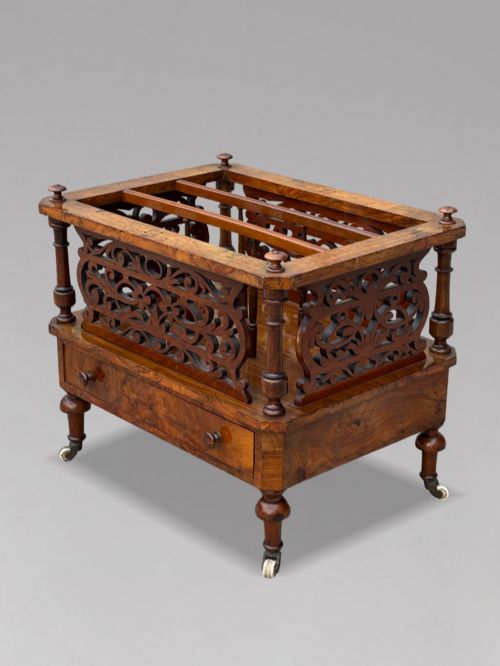
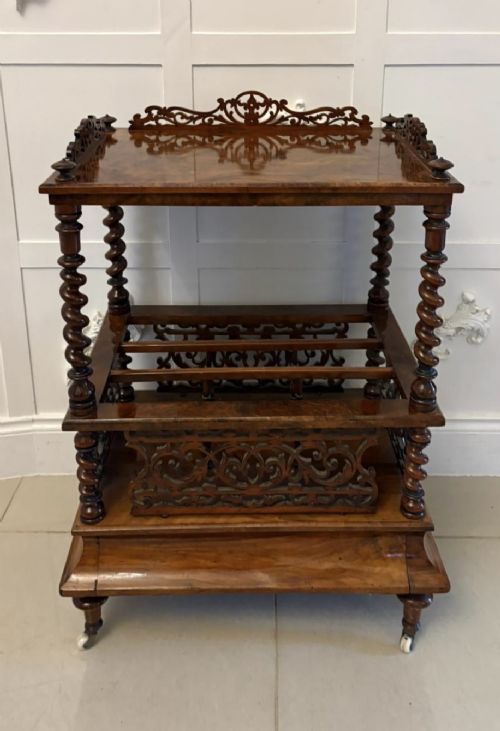
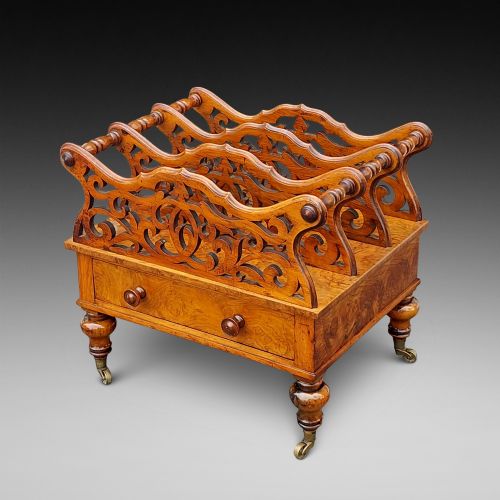
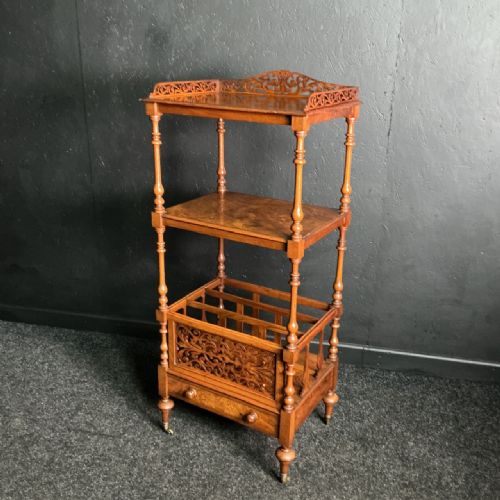
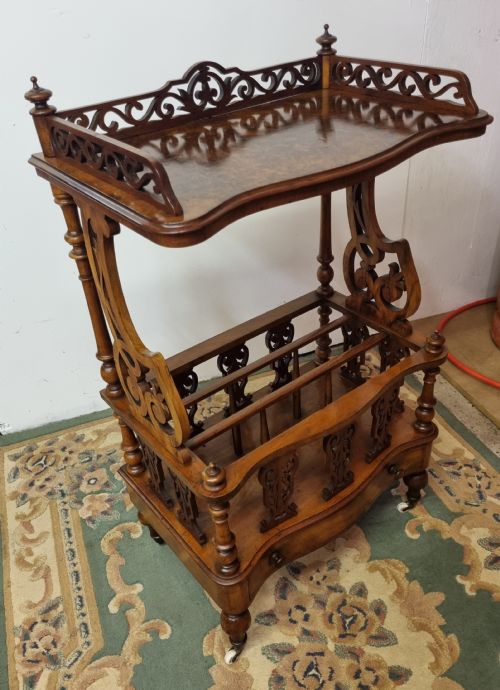
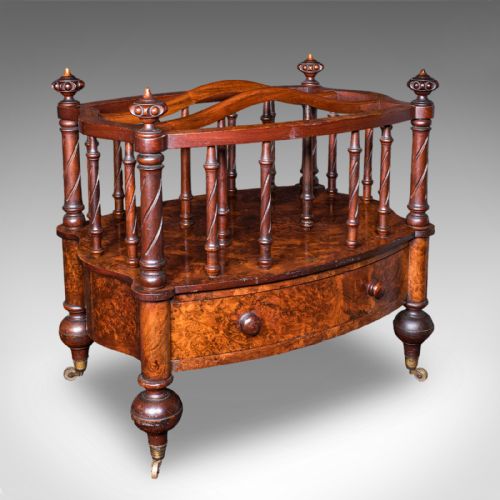
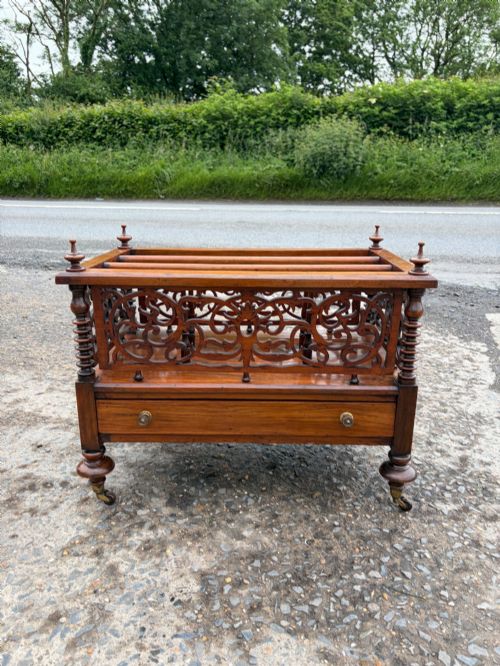
The most common form you will meet is the Canterbury, often combined with a whatnot or occasional table top, featuring divisions for papers and sometimes a lower drawer. Alongside these stands, you will find music stands, magazine racks, and portfolio stands representing styles from French Rococo Revival to Black Forest carving.
How they were made
Cabinet makers utilised solid walnut and decorative burr walnut veneers, applying wood inlay and fretwork to enhance the timber surfaces. Many examples incorporate brass fixtures, ceramic elements, porcelain, and gilt metal details to accent the timber structure.
Carving defines the decorative character, particularly on Victorian and Black Forest pieces where foliage and scrolls emerge directly from the wood. Turned supports, serpentine shapes, and fitted drawers demonstrate precise joinery and construction typical of nineteenth-century workshops.
Carved Walnut Music Rack Retail Price Guide 2026
Typical asking prices for carved walnut music rack among the pieces listed under this phrase on Sellingantiques today, from the lower quarter to the upper quarter. They describe what is for sale here now, not the wider market.
Some Black Forest stands managed to hold heavy musical portfolios while simultaneously looking like they belonged in a dense woodland grove.
What varies in quality
The distinction between standard examples and superior pieces rests on the choice of timber and the depth of craftsmanship. Highly figured burr walnut veneers and crisp, deep hand-carving elevate a piece far above plain timber surfaces and mechanical decoration.
Proportion and structural complexity also determine the grade of the item. Pieces that combine multiple functions, such as a Canterbury with a serpentine whatnot top and an integrated drawer, display greater ambition in design and execution.
The Carved Walnut Music Rack Glossary
- Canterbury
- A low stand with upright divisions, originally designed for holding sheet music and folios. It frequently includes a drawer at the base and is often mounted on castors.
- Whatnot
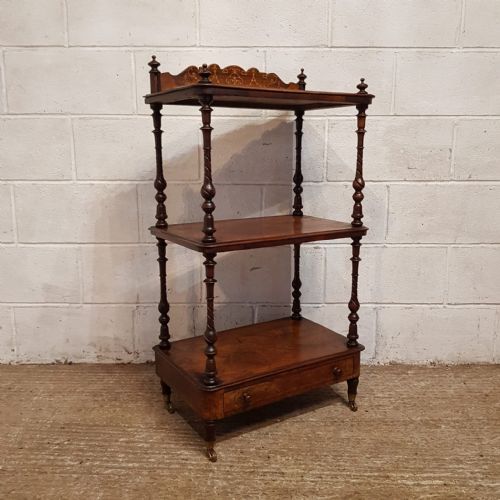
- A piece of open shelving supported by pillars, used for displaying ornaments or holding books. It often forms the upper section of a combined Canterbury table.
- Burr walnut
- A prized timber veneer showing swirling growth knots and intricate grain patterns. Cabinet makers selected it for prominent surfaces to create visual depth.
- Serpentine
- A curved line bending outward and inward in a wave-like form. This contour appears on the shelves and edges of finer nineteenth-century tables.
- Fretwork
- Ornamental openwork pattern created by piercing wood. It provides delicate textural detail on panels and partitions.
Carved Walnut Music Rack: Frequently Asked Questions
Where were these racks placed in a Victorian home?
These items occupied drawing rooms and music rooms, positioned near pianos or seating areas where sheet music and periodicals were frequently used.
They served as both accessible storage and decorative occasional tables for holding small lamps or ornaments.
How do I care for burr walnut wood?
Keep walnut furniture away from direct sunlight and heat sources to prevent the burr veneer from drying out or splitting. Dust regularly with a soft, dry cloth and apply a quality beeswax sparingly when the timber appears dull.
Are these racks suitable for modern magazines?
The vertical partitions easily accommodate modern periodicals, newspapers, and large books alongside traditional sheet music collections. Their sturdy timber construction handles daily use just as it did in the nineteenth century.