
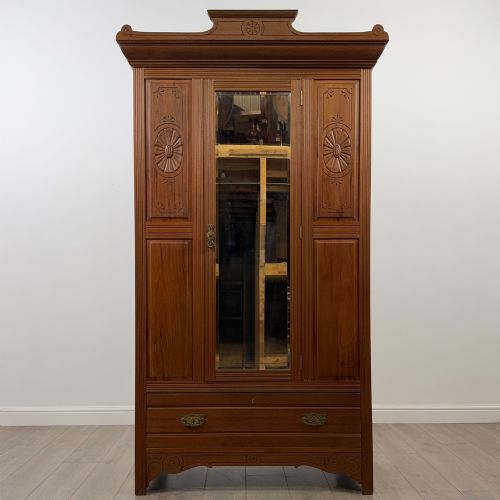
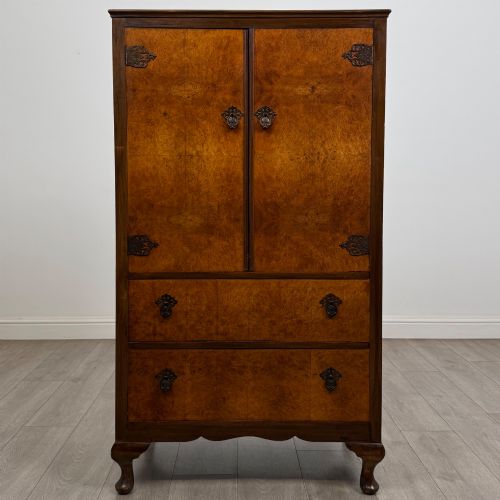
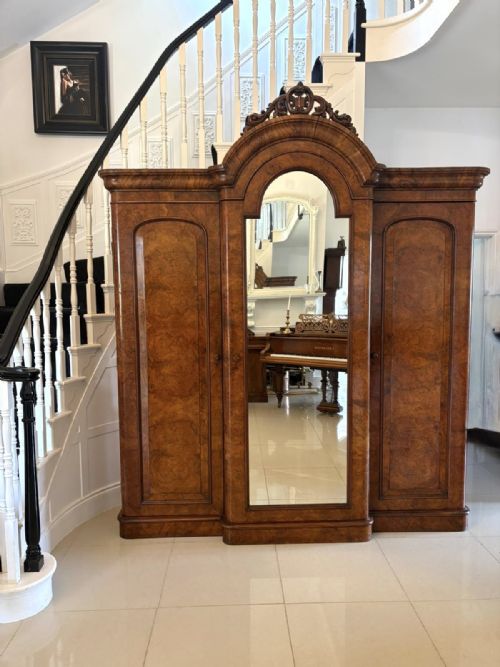
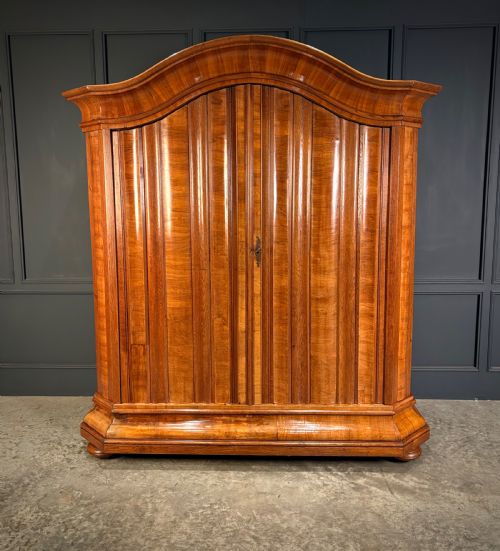
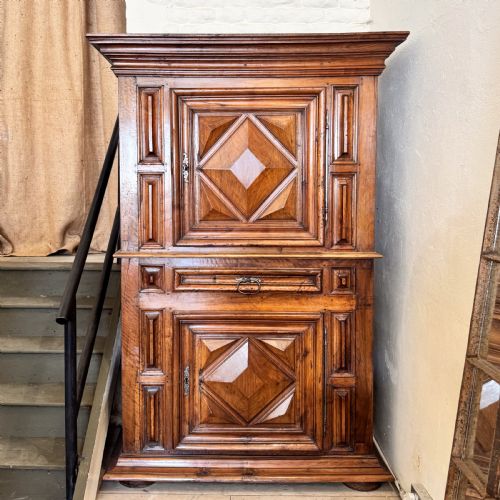
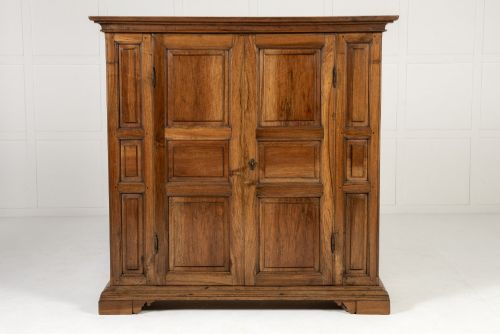
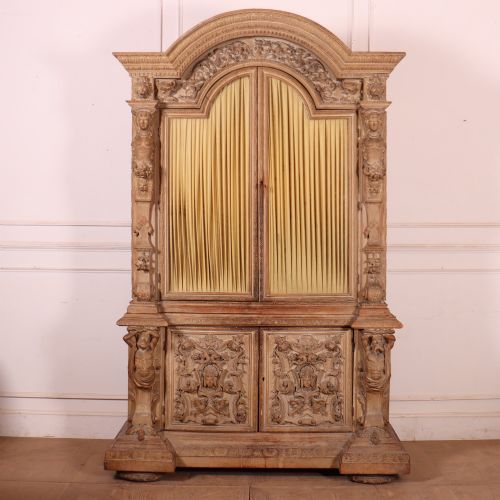
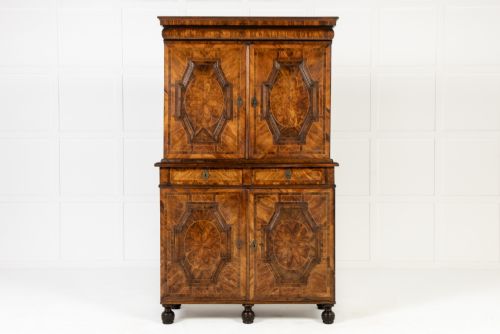
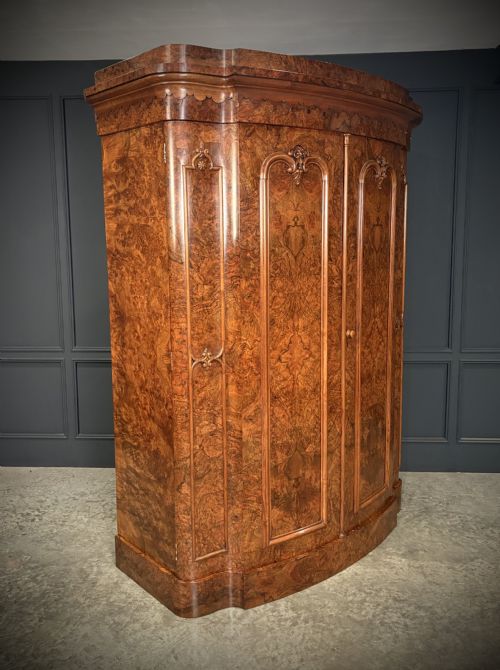


Carved Walnut Linen Press
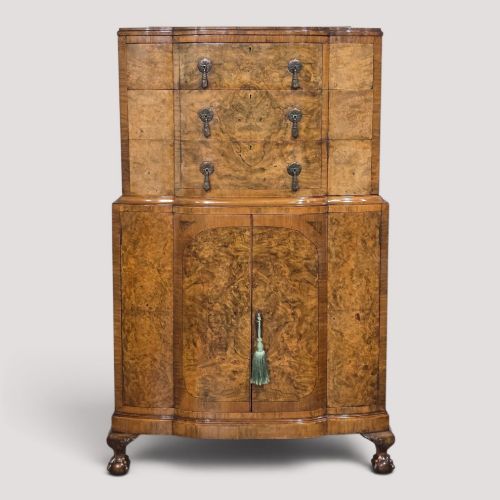
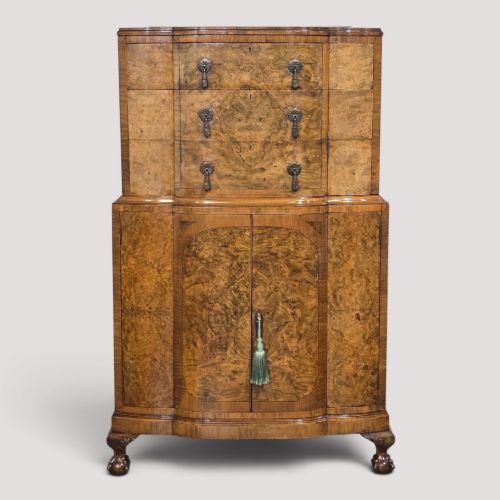
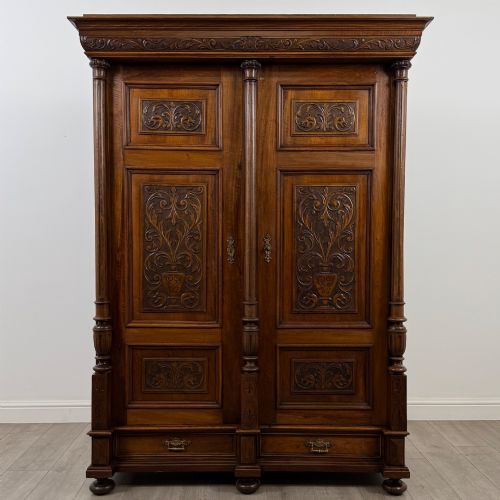
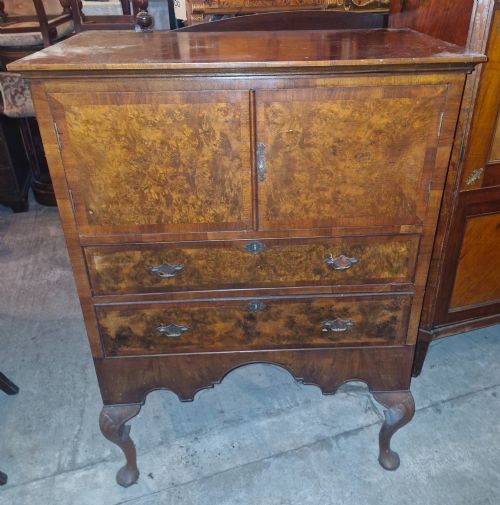
These pieces of carved walnut linen press storage deliver traditional domestic utility combined with the rich grain and deep colour of walnut timber.
Carved Walnut Linen Press
A carved walnut linen press provides substantial storage capacity within architectural timber frameworks that span multiple centuries. The selection ranges from eighteenth-century Continental armoires and cupboards to nineteenth-century Victorian and Edwardian wardrobes, compactums, and combination pieces.
Buyers encounter numerous regional interpretations in this search phrase, including French armoires, Dutch cabinets, and Italian cupboards. Walnut and burr walnut dominate the structural and decorative elements, accompanied by occasional oak or mixed fruitwood framing.
Materials and construction
Cabinet makers utilise solid walnut and figured burr walnut veneers applied to secondary woods to create richly patterned door panels and cornices. Structural integrity relies on traditional joinery methods, supplemented by brass hardware, iron hinges, and occasional mirrored glass or ormolu mounts.
Surface ornamentation frequently incorporates hand carving, marquetry inlay, and polished finishes that emphasise the natural grain patterns of the timber. Internal configurations utilise timber shelving and hanging compartments designed for domestic storage.
Listings include eighteenth-century French cupboards, Victorian burr walnut compactums, and early twentieth-century Edwardian wardrobes incorporating brass and mirror glass.
Gradations of quality
Quality is determined by the selection of timber figures, particularly the vibrancy and symmetry of burr walnut veneers across large panel surfaces. The execution of hand carving and the integration of architectural mouldings separate standard utilitarian pieces from exceptional cabinet work.
Originality of hardware, stability of structural joints, and the retention of period finishes dictate the standing of individual examples within the market.
Shapland and Petter
The Carved Walnut Linen Press Glossary
- Burr walnut
- A veneer sliced from the irregularly grained growth warts of a walnut tree. It produces highly decorative swirling patterns prized by cabinet makers.
- Armoire
- A large freestanding wardrobe or cupboard with one or more doors. Traditional Continental versions often feature deep internal storage and pronounced cornices.
- Compactum
- A multi-compartment wardrobe combining hanging space, drawers, and shelving within a single unified piece of furniture. These efficient designs became popular during the Victorian and Edwardian periods.
- Marquetry
- The art of applying decorative pieces of veneer to a structural structure to form pictorial or geometric designs. Craftsmen utilise various woods to achieve tonal contrast.
Carved Walnut Linen Press: Frequently Asked Questions
What is a linen press?
A linen press is a tall storage cabinet traditionally designed for storing folded garments and household linens on internal sliding trays or shelves. Over time, many examples have been adapted for hanging clothes.
These pieces typically feature double doors enclosing upper storage compartments, positioned above a base section containing drawers. The configuration provides substantial capacity for domestic organisation.
How do I date a walnut cupboard?
Dating involves examining construction techniques, timber preparation, and stylistic characteristics such as pediment shapes and moulding profiles. Eighteenth-century pieces often display hand-cut joinery and pegged frames, whereas Victorian and Edwardian versions utilise machine-sawn components and factory-produced hardware.
Secondary woods visible inside the cabinet also offer clues to the geographical origin and manufacturing period of the piece.
Where should I place a large armoire?
A large armoire requires adequate wall space and sufficient ceiling clearance to accommodate its architectural cornices. Placing the piece away from direct heat sources and strong sunlight protects the walnut timber and burr veneers from drying out or fading.
Because these structures are heavy and often do not dismantle completely, planning the delivery route through hallways and doorways is essential.
How do I care for walnut furniture?
Maintenance requires regular dusting with a soft, dry cloth and the occasional application of traditional beeswax to nourish the polished timber surface. Avoid using silicone-based sprays or chemical polishes that can degrade historical finishes over time.
Maintaining stable indoor humidity levels prevents the solid walnut and applied veneers from warping or cracking in fluctuating environments.