
Carved Walnut High Back
These carved walnut high back pieces span centuries of dense timberwork, offering commanding vertical presence and rich grain variation for period interiors.
Carved Walnut High Back
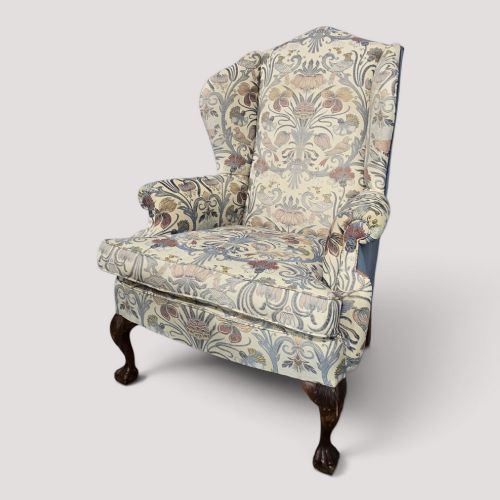
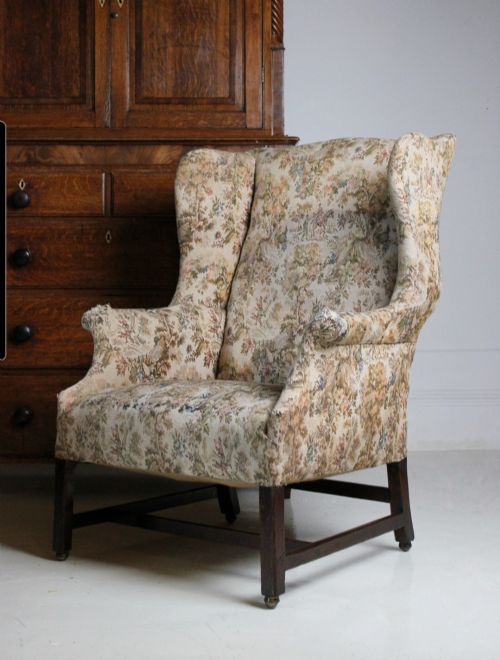
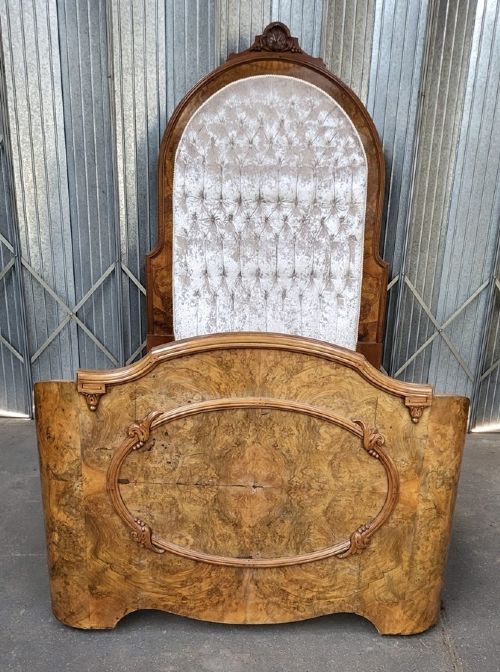
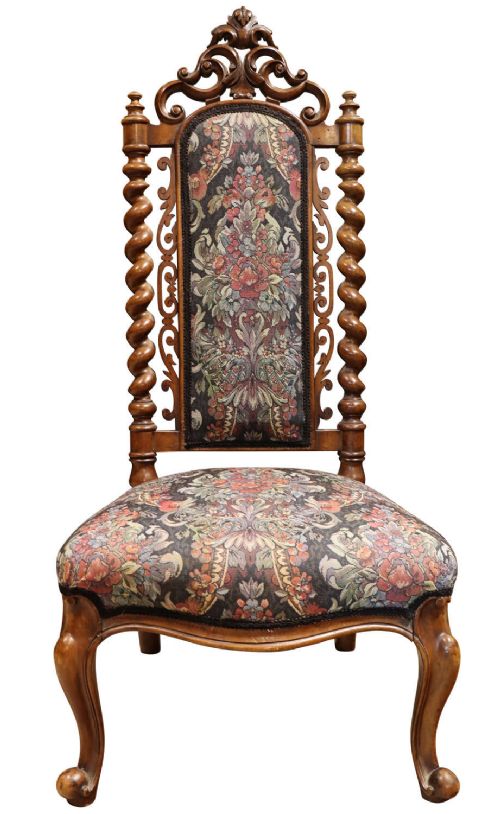
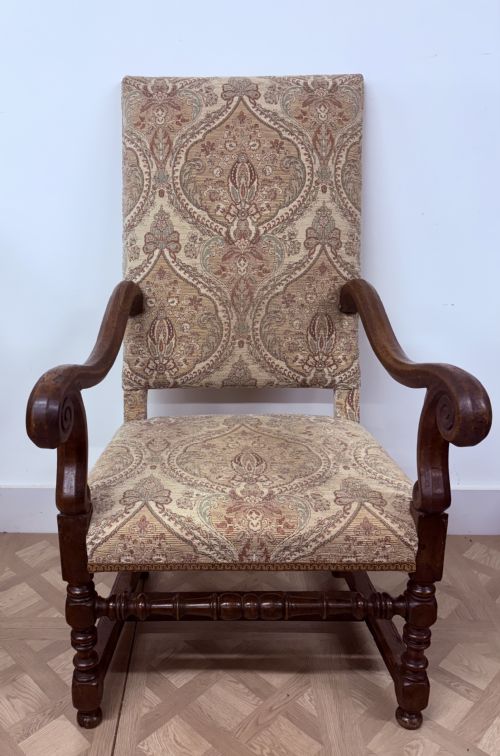
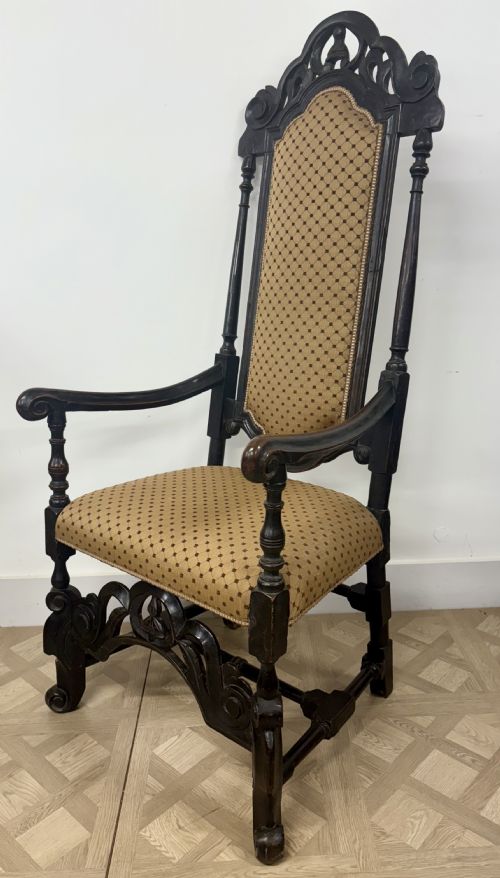
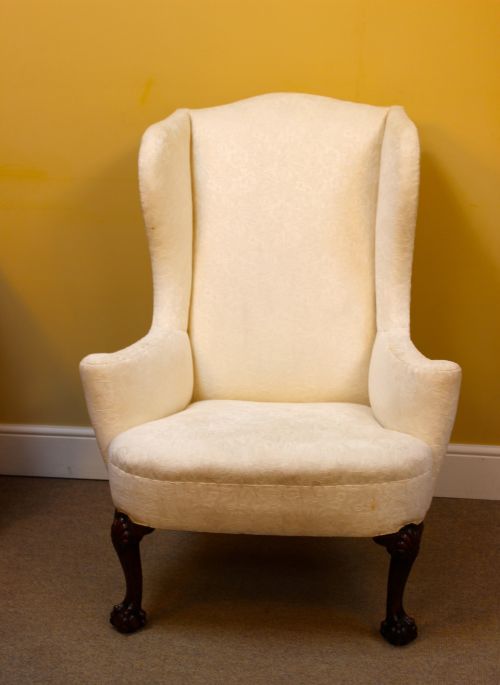
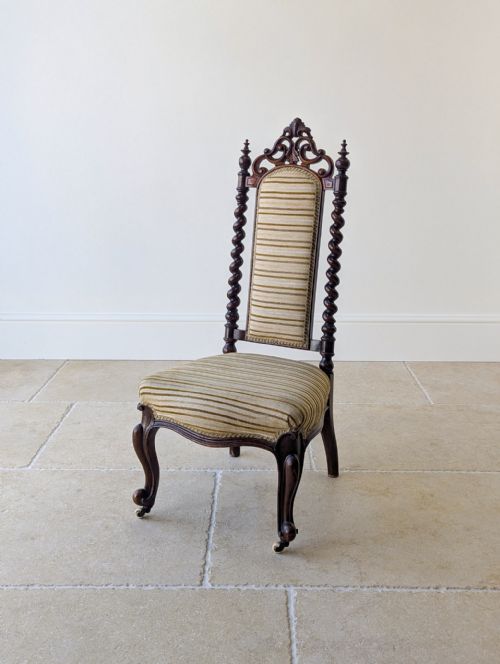
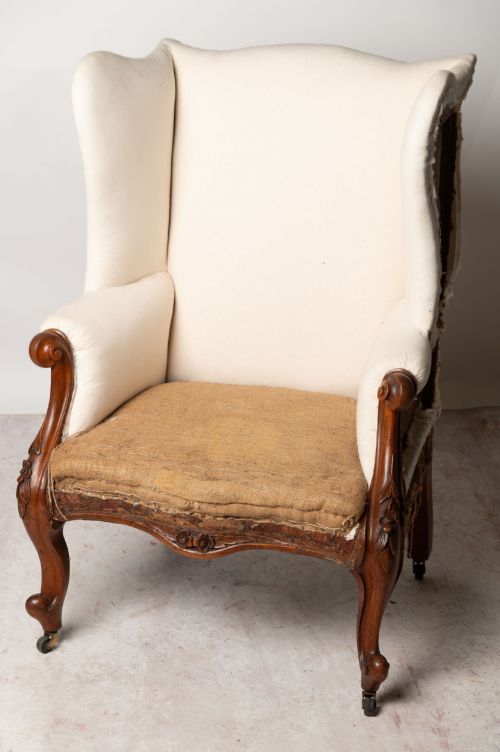
When searching for carved walnut high back pieces, a buyer encounters a lineage of formal seating spanning the seventeenth century through the Victorian revival eras. The form primarily manifests as imposing armchairs, dining chairs, and parlor chairs, alongside occasional settees and bed frames designed to anchor a room.
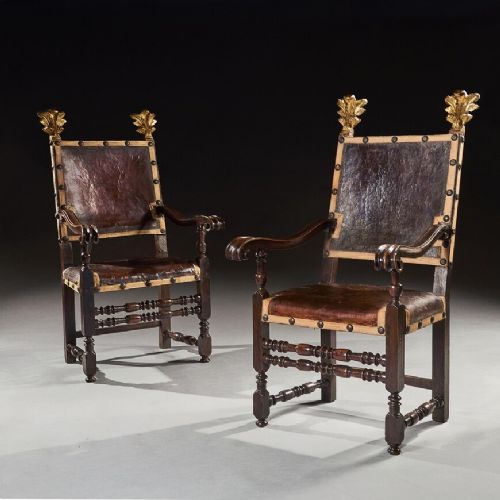
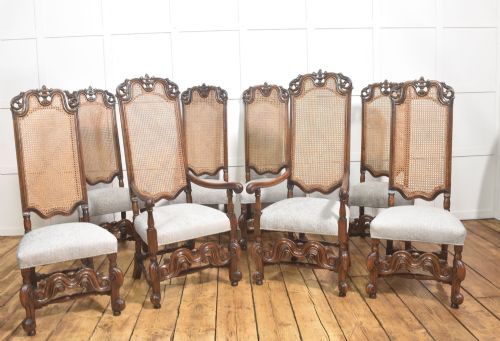
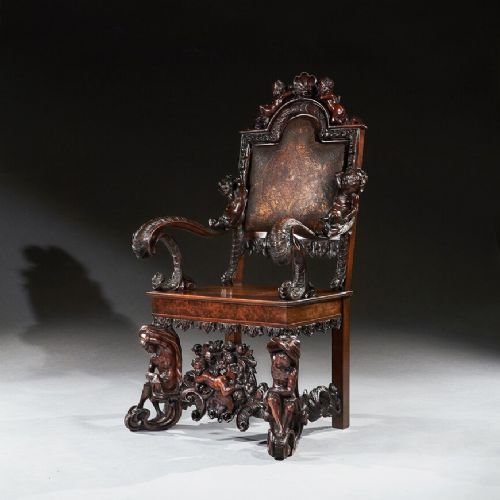
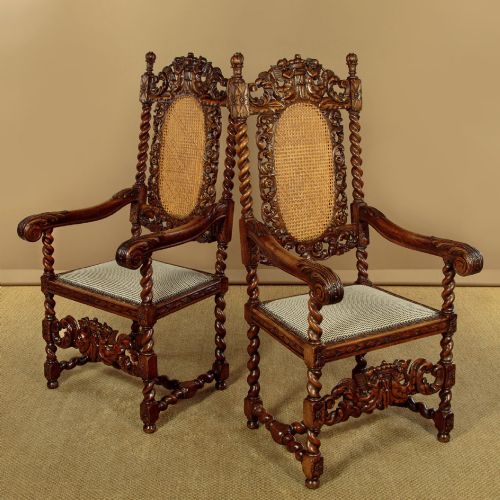
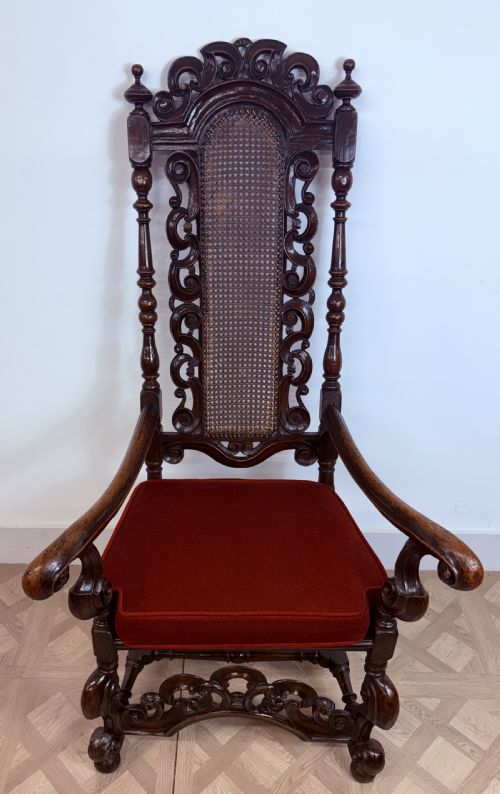
The dominant examples on this page reflect historical revivals, particularly Carolean, William and Mary, and Italian Baroque styles. These pieces replicate the lofty crest rails and attenuated proportions intended to project status and provide substantial back support.
Materials and Construction
Makers utilised dense walnut timber, prized for its stable grain and deep natural colour, which tolerated intricate, deep-relief chisel work along the crest rails and stretchers. This primary wood frequently accompanied secondary supports in beech or oak on structural elements.
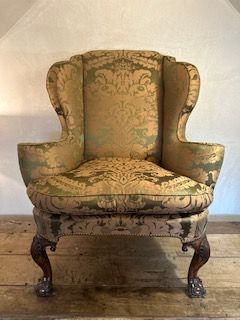
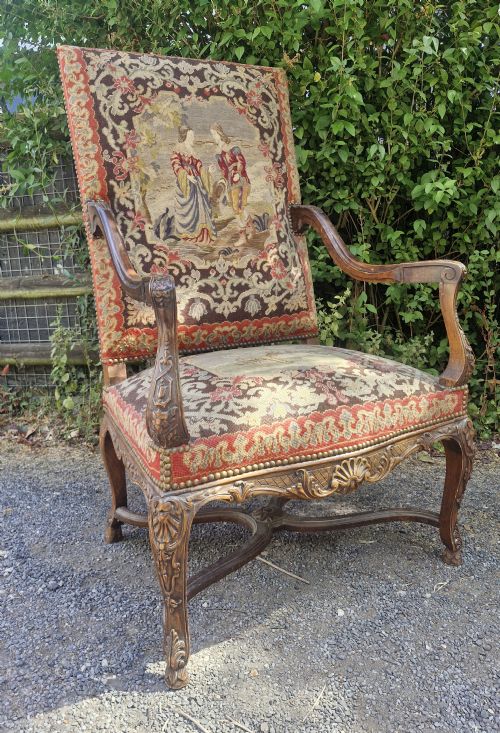
Upholstery and structural suspension relied on traditional stuffing fixed beneath leather, velvet, tapestry, or needlework textiles, secured with brass tacks. Alternatively, seating surfaces utilised woven cane panels threaded through drilled frames.
Several dining sets arrive complete with eight matching chairs, ensuring nobody has to sit on the piano stool.
Evaluating Execution
The distinction between tiers rests on the depth and crispness of the hand-carving along the crest rail and legs, where sharp undercutting signals skilled joinery rather than shallow mechanical stamping. Timber selection also divides the range, with burr walnut veneers or dense, unblemished solid boards commanding greater presence.
Structural integrity through period joinery methods, such as pegged mortise and tenon joints, determines longevity. Pieces retaining original surface patination without aggressive chemical stripping hold higher integrity.
Howard And Sons·Waring And Gillow
The Carved Walnut High Back Glossary
- Carolean
- Pertaining to the reign of Charles II, characterised by lavishly carved scrollwork, crown motifs, and cane panels.
- Barley twist
- A turned wooden furniture leg or stretcher carved in a helical spiral resembling barley sugar.
- Crest rail
- The top horizontal member of a chair back, frequently carved with scrolls, foliage, or coats of arms.
- Cane
- Woven split rattan used to form resilient, breathable seat panels and chair backs.
- Parcel-gilt
- Woodwork partially decorated with thin layers of gold leaf to highlight specific carved details.
Carved Walnut High Back: Frequently Asked Questions
What periods do these chairs represent?
The selection encompasses authentic seventeenth-century antiques alongside nineteenth-century revival pieces modelled after Carolean and Baroque designs.
Buyers find late nineteenth-century interpretations sharing floor space with genuine period seating from earlier centuries.
How were high back chairs used originally?
These commanding seats functioned as status objects in formal rooms, placing important sitters beneath elaborate carved crest rails.
The height provided draught protection in large, cold halls before the widespread adoption of modern heating.
Are cane panels original or replaced?
Many surviving pieces have undergone re-caning during their long histories to maintain usable seating surfaces.
Close inspection of the drilling and strand gauge reveals whether the weaving dates to the original period or later restoration.
How do I distinguish revival styles from originals?
Nineteenth-century revival items often display machine assistance in the turnings and standardised timber seasoning compared to seventeenth-century work.
Tool marks, timber shrinkage patterns, and peg construction help separate authentic seventeenth-century pieces from Victorian copies.