
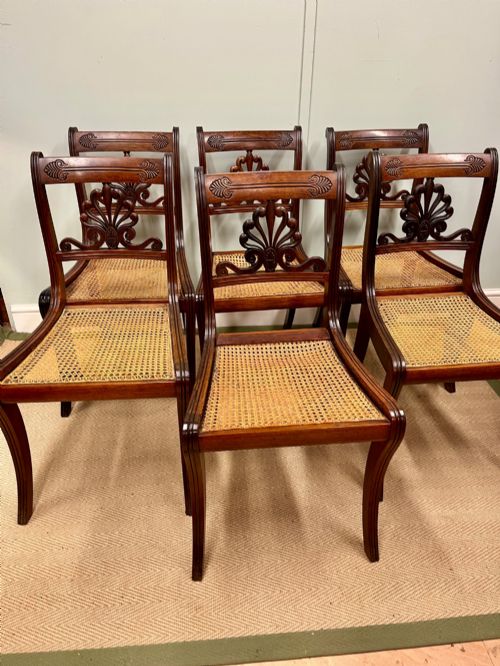
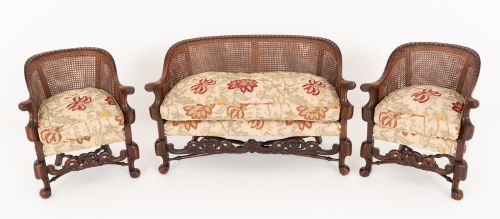
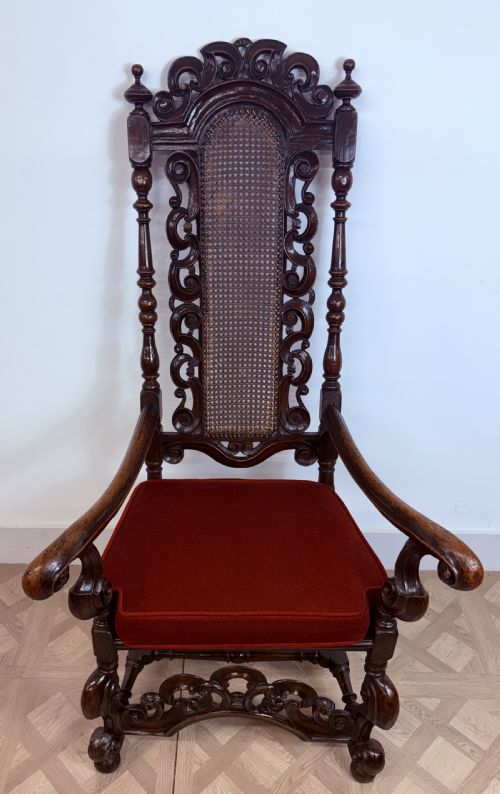
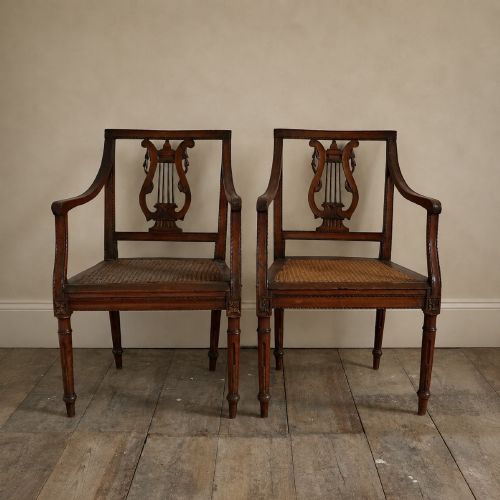
Antique Cane Back Chairs
These antique cane back chairs bring tactile texture and timeless framework into any room, shaped by centuries of skilled woodworking.

Identifying antique cane back chairs
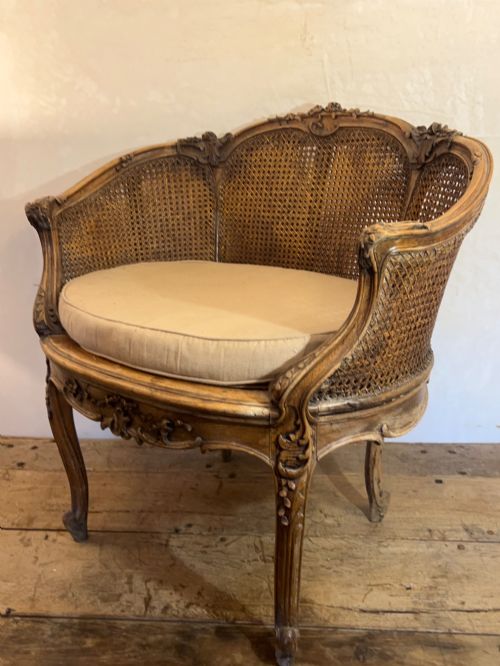
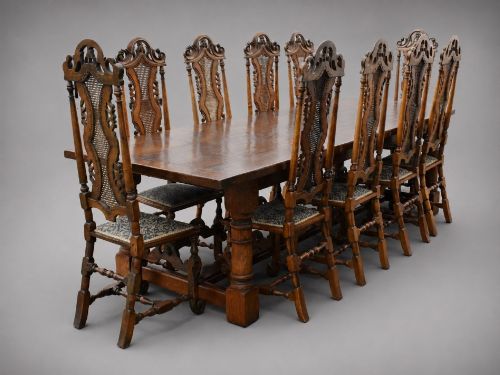
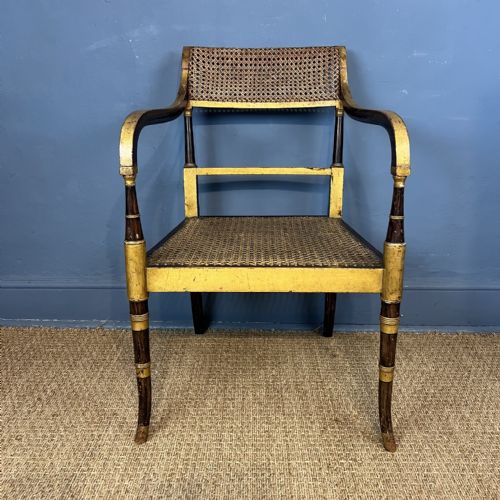
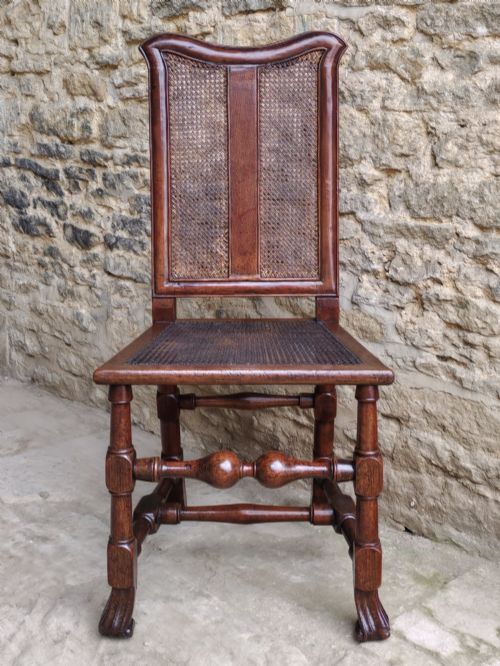
When you search for antique cane back chairs, you encounter a refined selection spanning dining sets, single bedroom chairs, and drawing room seating. The pieces originate from diverse periods such as the Edwardian era, the nineteenth century, and earlier centuries.
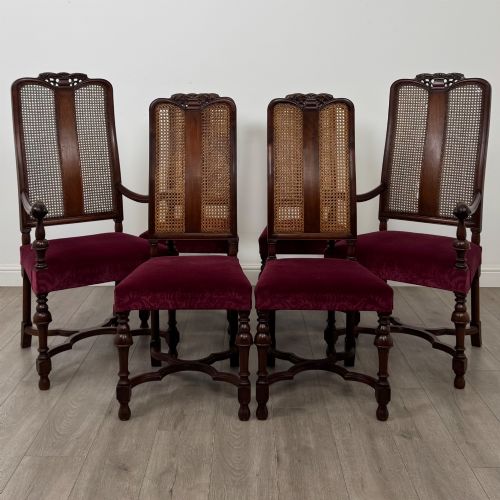
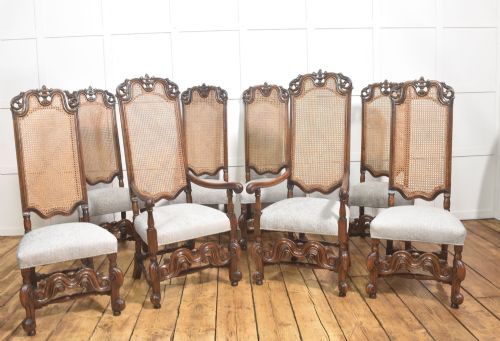
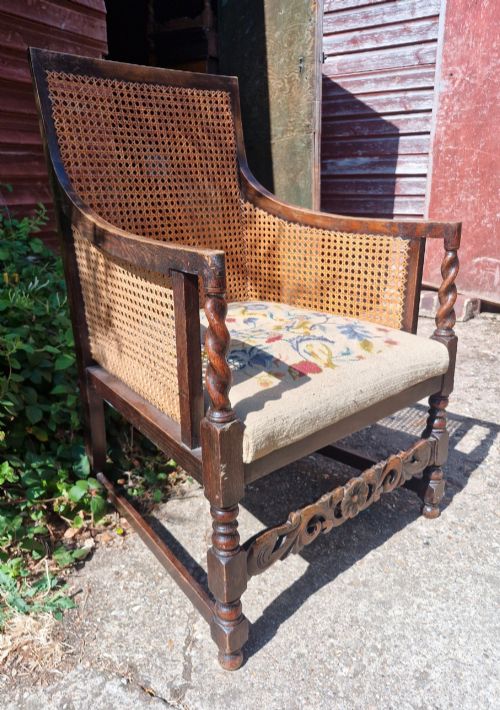
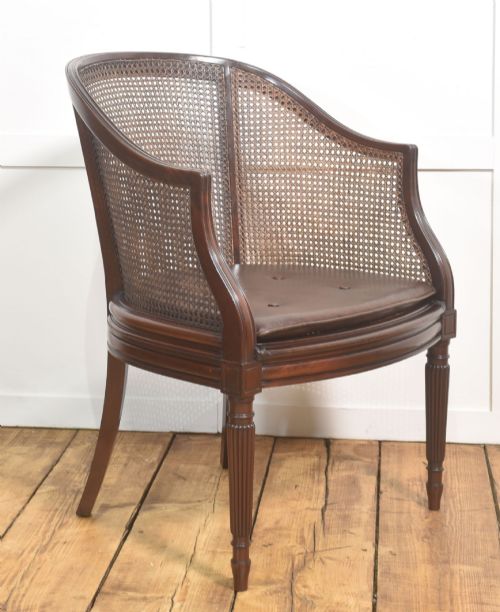
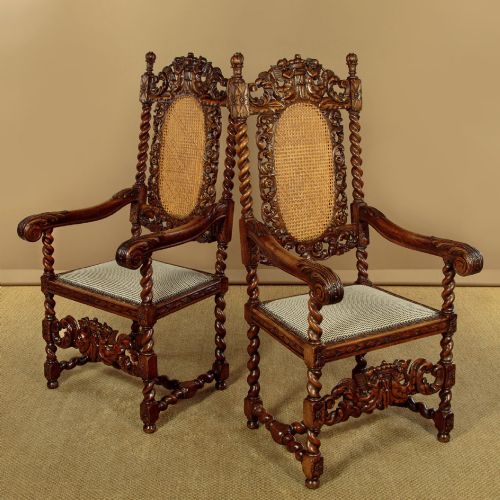
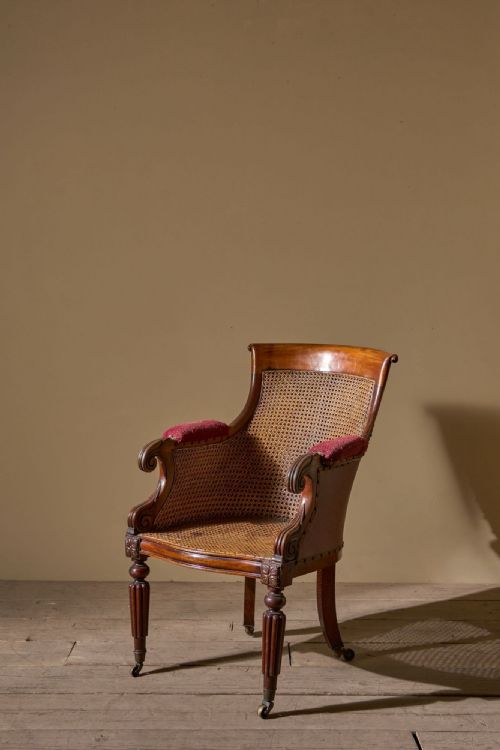
You are most likely to meet walnut and mahogany dining chairs or side chairs on this page. These seating options incorporate woven cane panels alongside carved wood frames and upholstered seats.
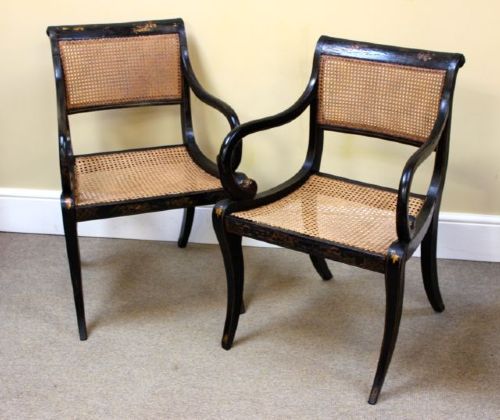
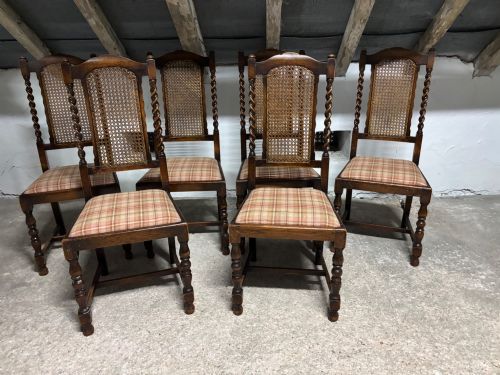
Forms range from sets of six dining chairs to smaller pairs and individual drawing room chairs. Styles stretch across Carolean Revival, Grand Regency, Victorian, and Portuguese Baroque aesthetics.
Materials and construction
Craftsmen built these frameworks using solid timbers like walnut, mahogany, and oak, occasionally applying paint finishes or bone inlay for decorative effect. The structural frames support woven cane panels set into the woodwork.
Upholstered elements frequently utilise fabric, velvet, or embossed leather for seat pads, paired with carved details on the wooden structures.
Retail Price Guide 2026
Typical UK retail prices for cane back chairs, calculated from the Sellingantiques database of over a million retail prices indexed since 2003. This retail price guide relies exclusively on Sellingantiques data; no external sources or auction records are used, so the figures do not describe the wider market.
Early craftsmen wove these intricate cane panels by hand while listening to the village gossip drift through open workshop windows.
Assessing quality and craftsmanship
Quality reveals itself in the intricacy of the carved woodwork and the tightness of the woven cane panels. Finer examples display meticulous hand-carving across walnut or mahogany frames, whereas simpler versions show more restrained execution.
The choice of primary timber and decorative additions, such as bone inlay or sophisticated revival styling, distinguishes standard functional seating from superior decorative examples.
The Antique Cane Back Chairs Glossary
- Cane
- Woven plant material used to create open-work panels in chair backs. It provides a lightweight yet durable structural surface.
- Carolean Revival
- A historicist style imitating late seventeenth-century English design. It typically incorporates rich carving, twisted members, and cane panels.
- Side chair
- A light, un-armed chair designed for dining or occasional use around a room. These pieces move easily and cluster around tables.
Frequently Asked Questions
How do I clean cane backs?
Maintain woven cane panels by dusting them gently with a soft brush and wiping them periodically with a damp cloth. Avoid soaking the plant material to prevent weakening the fibres.
Keep the humidity balanced in the room where the chairs sit to ensure the cane remains pliable and secure within its wooden groove.
Are these chairs suitable for daily dining?
Many of these pieces function well for regular dining, particularly sturdy mahogany or oak sets. Ensure the woven panels and joints remain robust before daily use.
Adding appropriate seat cushions protects the upholstery and provides extra comfort during long meals.
How do I date a cane chair?
Examine the wood species, tool marks, and stylistic indicators such as Carolean Revival or Victorian design motifs. Construction methods often reveal the period of origin.
Compare the framing details and the weave pattern against known historical examples from the same era.
Can I reupholster the seats?
Reupholstering the drop-in or fixed pad seats is straightforward and allows you to match modern interiors. Choose fabrics or leathers that complement the existing wood finish.
Retaining traditional materials during reupholstery preserves the character of older seating.