
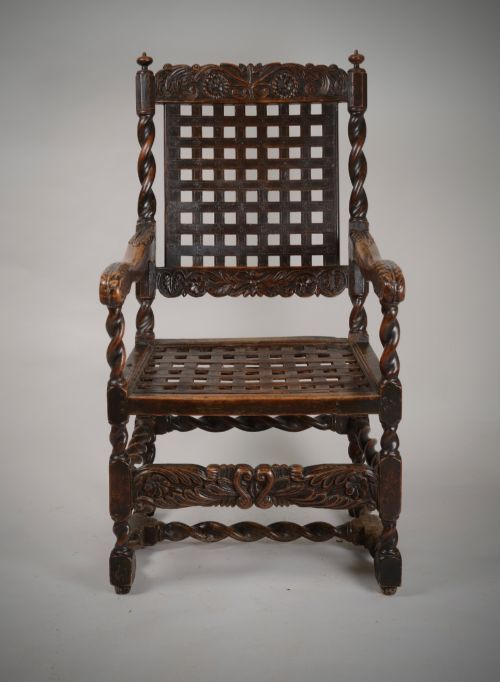
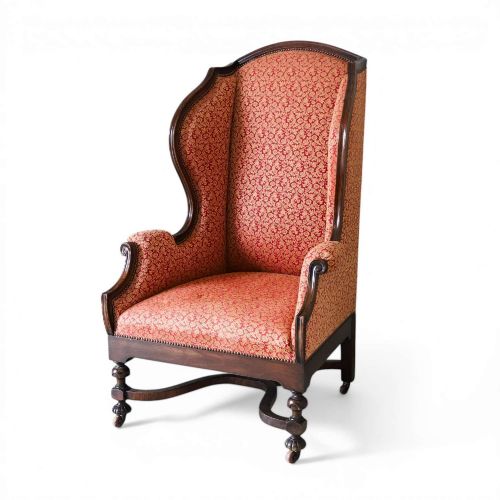

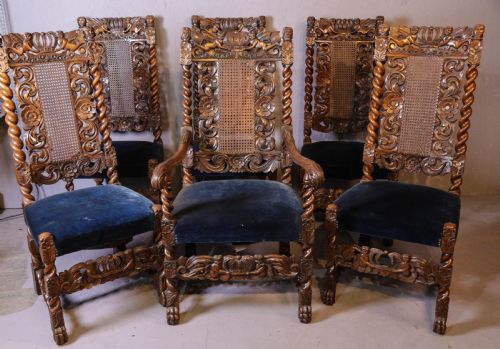


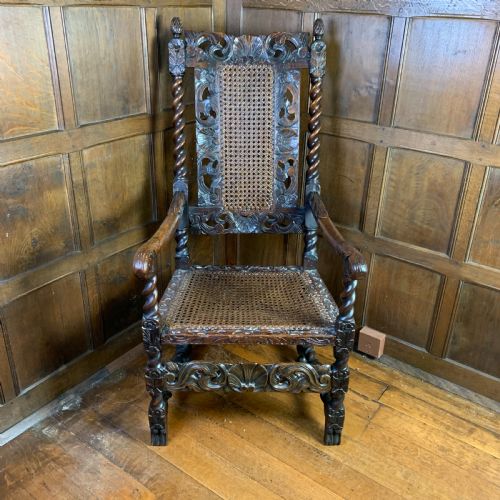

Charles II Walnut Chair
These charles ii walnut chair examples bring seventeenth-century joinery and rich timber grain straight into a modern interior.
Charles II Walnut Chair
A charles ii walnut chair combines sturdy seventeenth-century frames with the deep, warm tones of walnut timber. These pieces range from authentic period examples to later nineteenth-century revivals.
Armchairs, elbow chairs, and side chairs appear alongside sets for dining and matching settees. Caned panels and heavily carved woodwork define the visual weight of these furnishings.
Period pieces sit alongside Victorian interpretations built in the Carolean style. Walnut, cane, oak, and damask upholstery form the primary vocabulary of these seats.
Materials and construction
Makers utilised solid walnut and oak to build heavy timber frames capable of supporting intricate hand-carved ornamentation. Caning formed flexible backrests and seats, often paired with wooden structural supports.
Upholstery materials such as velvet, damask, and woven fabric added comfort to elbow chairs and armchairs. Brass details occasionally secured fabric edges and joints.
Carving reached deep into the timber to create scrolling motifs and figurative elements across the crest rails and stretchers.
Listings span the seventeenth century, the Victorian era, and the year 1800, featuring walnut, oak, brass, and damask upholstery.
Evaluating craftsmanship and condition
The depth and crispness of the hand carving distinguish finer examples from simpler production. Wood selection plays a role, with rich grain patterns elevating the presence of the timber.
Original caning and period upholstery fragments indicate higher preservation value within seventeenth-century pieces. Structural integrity across joints and carved stretchers remains paramount for daily use.
Revival pieces from the nineteenth century display varying degrees of fidelity to the original Carolean aesthetic. Heavier carving and substantial proportions mark the more ambitious nineteenth-century interpretations.
The Charles II Walnut Chair Glossary
- Carolean
- The art and style associated with the reign of Charles II, marked by lavish wood carving and ornate scrolling.
- Caned
- Woven rattan or cane strips forming seats or back panels, allowing lightweight flexibility within a heavy wooden frame.
- Elbow chair
- An armchair designed with shorter arms, historically used at a desk or dining table.
- Damask
- A reversible figured fabric traditionally woven from silk, wool, or linen, utilised for upholstery.
- Stretcher
- A horizontal timber connecting the legs of a chair to provide structural rigidity.
Charles II Walnut Chair: Frequently Asked Questions
How do I spot a true seventeenth-century chair?
Examine the timber joints, hand-cut joinery marks, and the natural oxidation of the walnut over centuries. Tool marks left by early craftsmen differ significantly from later machine methods.
Compare the wear patterns on the footings and stretchers with the overall patina of the carved backrest to ensure consistent age.
Are these chairs suitable for daily dining?
Many side chairs and elbow chairs serve well around a dining table, provided the timber frame and joinery remain stable. Historic caning requires gentle treatment during everyday seating.
Consider adding subtle support beneath fragile cane seats if you plan to use the chairs regularly.
What is the difference between original and revival pieces?
Original pieces date from the seventeenth century, carrying the wear, timber shrinkage, and construction methods of that era. Revival pieces emerge from the nineteenth century, mimicking the Carolean style with Victorian tools.
Both categories use walnut and heavy carving, but the underlying construction methods reveal the true period of manufacture.
How should I care for antique walnut woodwork?
Maintain stable indoor humidity levels to prevent the walnut timber and cane panels from drying out or splitting. Avoid direct sunlight and harsh chemical polishes that strip the historic finish.
Apply a microcrystalline wax occasionally to nourish the wood surface and protect the grain.