





Restoration Cane Chair
A restoration cane chair brings historic timber and intricate woven seating together for interiors that demand strong character.
Restoration Cane Chair
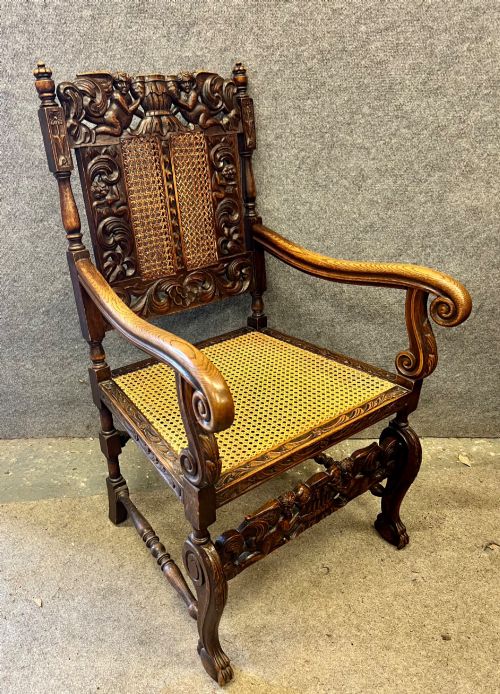
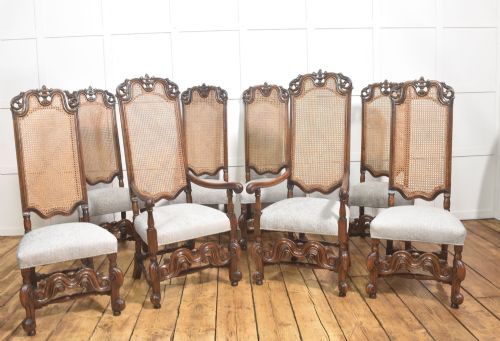
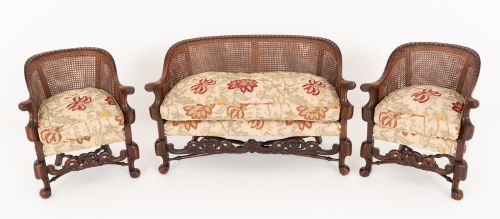
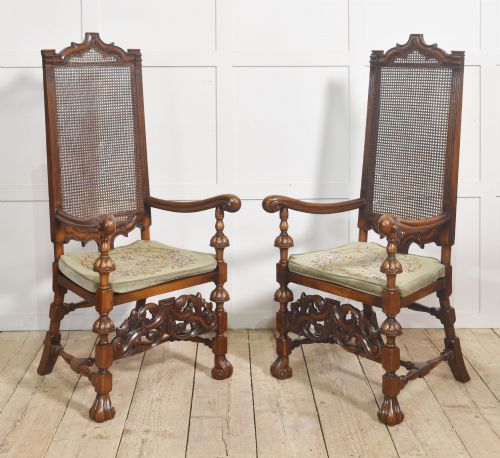
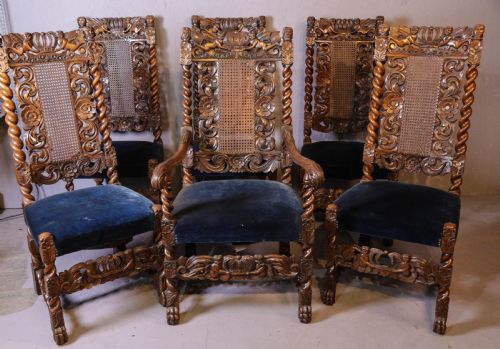
A restoration cane chair encompasses seating built from the seventeenth century onward, often reflecting Carolean, Jacobean, or William and Mary styles. These pieces range from single side chairs and armchairs to complete dining sets and settees.
Buyers frequently encounter interpretations spanning original seventeenth-century examples to nineteenth-century revivals and early twentieth-century reproductions. Walnut and oak form the predominant wooden framework for these historic designs.
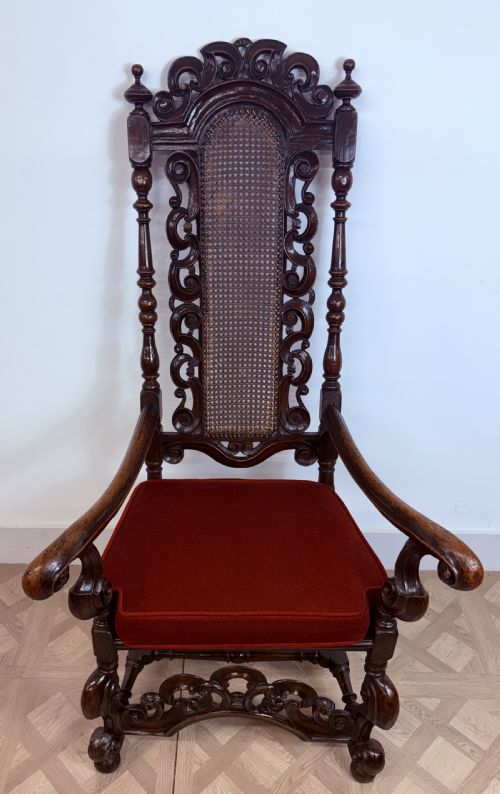
The defining characteristic remains the woven cane panel integrated into the backrest or seat, sometimes paired with upholstered fabric or tapestry elements.
How they were made
Carpenters shaped sturdy frames from walnut or oak, employing heavy carving techniques to create elaborate scrolls and cresting rails. Beech also appears in select seventeenth-century frames.
Artisans wove natural cane by hand into open mesh patterns across the backrests and seats, creating resilient yet flexible support. Paint finishes sometimes supplemented the exposed timber surfaces.
Restoration Cane Chair Retail Price Guide 2026
Typical asking prices for restoration cane chair among the pieces listed under this phrase on Sellingantiques today, from the lower quarter to the upper quarter. They describe what is for sale here now, not the wider market.
Listings feature oak and walnut frames paired with woven cane, spanning the seventeenth century through to the early twentieth century.
What varies in quality
The depth and crispness of the hand-carved wooden ornament set individual pieces apart, separating basic production from accomplished craftsmanship. Heavy, solid timber construction provides greater stability than lighter alternatives.
The tightness and regularity of the cane weave dictate the standard of the seating panel. Original period examples demand meticulous joinery, while revival pieces rely on period-correct proportions.
Waring and Gillow
The Restoration Cane Chair Glossary
- Cane
- Woven material produced from the outer skin of rattan palms, utilised for flexible seating panels. It offers both breathability and structural support.
- Carolean
- A decorative style associated with the reign of Charles II, characterised by rich wood carving and scrollwork. This aesthetic forms the basis for many revival seating designs.
- Bergere
- An enclosed upholstered armchair with wooden framing, sometimes incorporating cane panels. These pieces offer comfortable lounging within formal reception rooms.
- Settee
- A long wooden bench with an upholstered or caned back and seat designed for multiple occupants. They match larger dining or drawing room suites.
Restoration Cane Chair: Frequently Asked Questions
How do I care for cane seating?
Keep woven cane panels away from direct heat sources to prevent the natural material from drying out and snapping. Light dusting and occasional damp wiping maintain the tension and flexibility of the weave.
Position the chair in stable indoor environments with moderate humidity. Avoid placing excessive heavy loads on fragile historic cane surfaces.
Are these chairs comfortable for daily use?
Historic seating designs prioritise upright posture and formal presentation rather than deep lounging comfort. Many feature supportive cane panels and carved wooden armrests suited for dining or reading.
Adding loose cushions can improve comfort for extended seating. Original frames require careful handling during daily movement around a room.
How do I date a carved wooden chair?
Examine the timber species, construction joinery, and the style of the carving. Seventeenth-century originals display specific tool marks and wood oxidation absent in later nineteenth-century revival pieces.
Compare the scrollwork and stretcher placement against known period benchmarks. Revivals often utilise softer or heavier wood turning characteristic of later Victorian workshops.
Can damaged cane panels be repaired?
Skilled craftspeople can re-weave damaged cane panels using traditional hand-caning techniques. This preserves the historic integrity of the wooden frame while restoring structural usability.
Replacement involves clearing old binding material and threading new natural cane through pre-drilled holes in the frame.