


Caned Walnut Side Chair
These caned walnut side chair examples combine sturdy timber with woven seats and backs, offering both historic character and reliable seating.
Caned Walnut Side Chair
When searching for a caned walnut side chair, buyers encounter pieces spanning from the seventeenth century through revival periods like Victorian and Edwardian interpretations. The selection ranges from single antique survivors to matched sets suitable for dining or drawing room use.
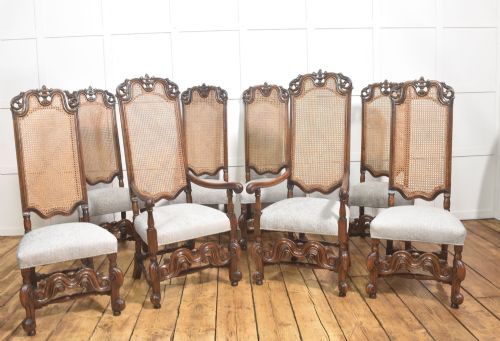
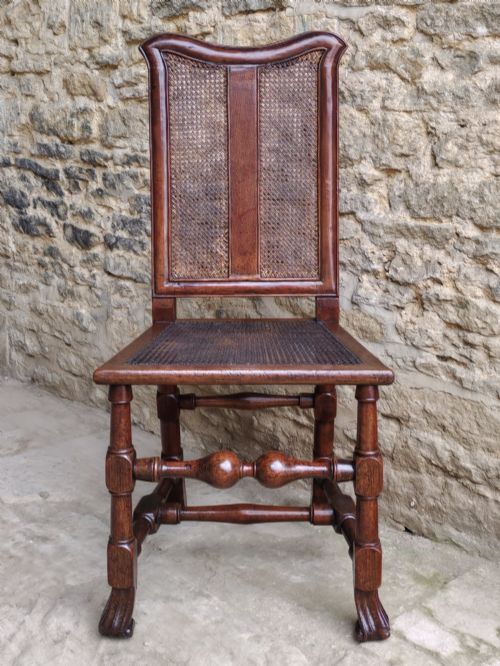
Most examples met on this page showcase walnut frames paired with woven cane panels in the seat or backrest. Forms vary from high-back dining chairs to bedroom and salon chairs, incorporating styles such as William and Mary, Carolean, and Louis XV.
How they were made
Construction relies heavily on solid walnut timbers, sometimes complemented by secondary woods like oak, shaped through traditional joinery and detailed carving. Skilled artisans integrated woven cane into the frames to create flexible, breathable seating surfaces.
Certain periods introduce additional decorative elements such as bone inlay or giltwood highlights to enhance the visual impact of the walnut frame. Upholstery fabric, leather, or tapestry fabric also appear on related seating variants within the material record.
Victorian correction chairs make an appearance, reminding us that nineteenth-century seating posture came with its own strict architectural enforcement.
What varies in quality
The sophistication of the carved detail and the crispness of the turning on the walnut legs set finer examples apart from simpler production. Stylistic execution in revival pieces often reflects the dedication of the workshop behind the construction.
The integrity of the structural joinery and the neatness of the cane weaving influence the overall standard of the piece. Material selection, including the grain pattern of the walnut and the inclusion of bone inlay, marks the distinction between standard and exceptional tiers.
Waring and Gillow
The Caned Walnut Side Chair Glossary
- Cane
- Woven material made from the outer bark of rattan palms, used historically for resilient chair seats and backs.
- Walnut
- A dense, dark hardwood prized for its rich grain and strength in seventeenth and eighteenth-century furniture making.
- Carolean
- A seventeenth-century English stylistic period spanning the reign of Charles II, noted for lavish carving and cane panels.
- Bone inlay
- Decorative technique embedding small pieces of bone into the wooden surface to create geometric or floral patterns.
- Giltwood
- Timber treated with gold leaf or gold paint to give a luxurious metallic finish to the carved frame.
Caned Walnut Side Chair: Frequently Asked Questions
How do I identify a seventeenth century piece?
Early pieces typically exhibit specific joinery techniques, distinct patination on the walnut timber, and characteristically aged cane panels.
Examining the construction methods and stylistic motifs helps distinguish genuine early period examples from later nineteenth and twentieth century revivals.
Can I use these chairs for everyday dining?
Many examples are structurally robust enough for regular use, provided the cane and wooden joints remain stable.
It is sensible to assess the weight capacity and cane condition of each individual chair before committing it to daily dining service.
What is the difference between revival styles?
Revival pieces produced in the nineteenth and twentieth centuries emulate earlier aesthetics like William and Mary or Carolean designs.
These later interpretations often utilise contemporary machine methods while retaining the classic silhouette and cane details of the originals.
How do I care for antique cane?
Cane requires moderate humidity to prevent the natural fibres from becoming brittle and snapping under pressure.
Cleaning should involve gentle dusting and occasional damp wiping to keep the material supple over years of use.