

Carved Walnut Dressing Stool
These walnut dressing stools offer solid timber frames and traditional upholstery, bringing practical period seating to a bedroom or dressing room.
Carved Walnut Dressing Stool
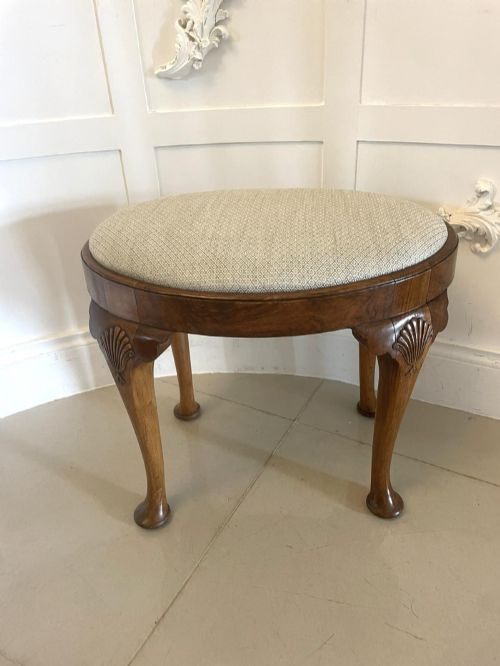
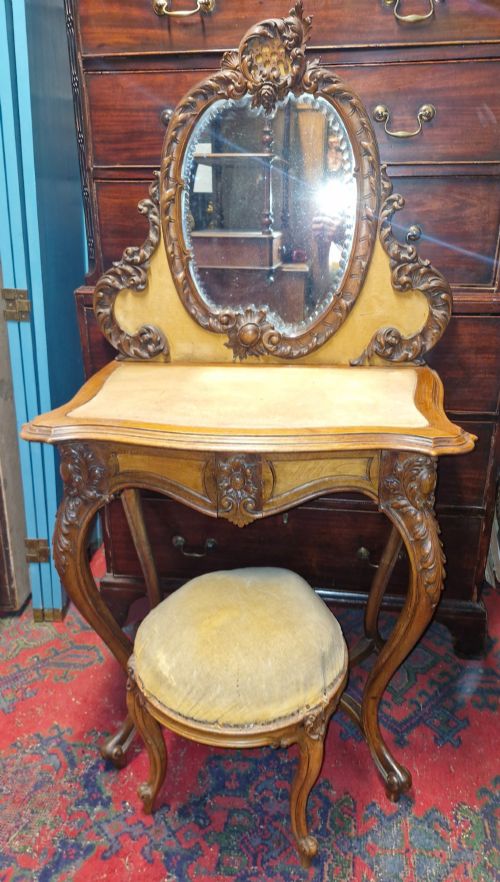
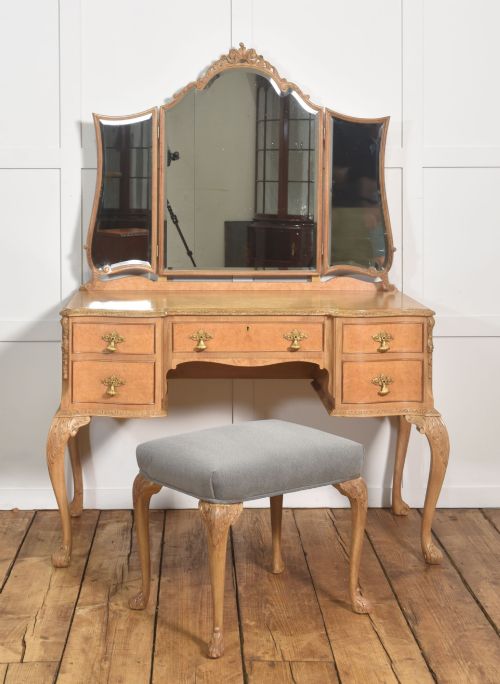
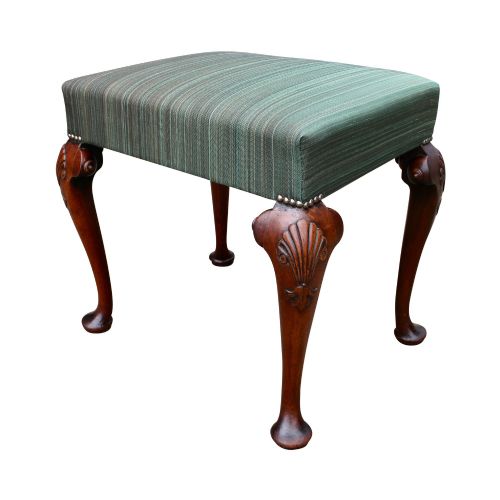
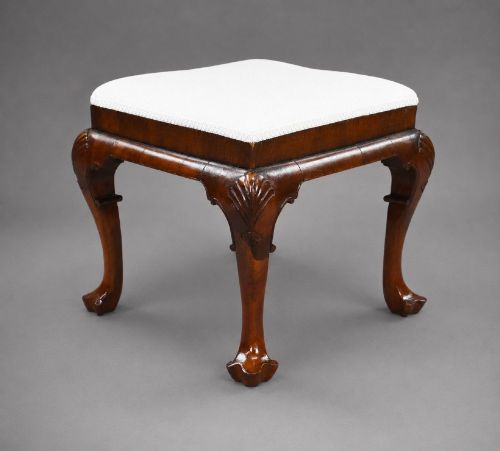
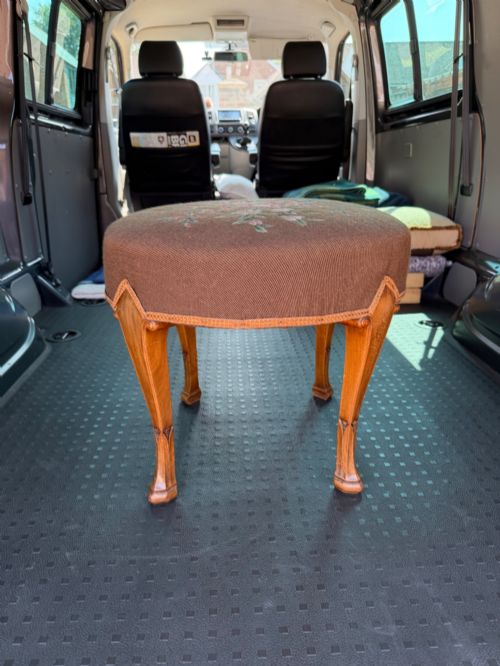
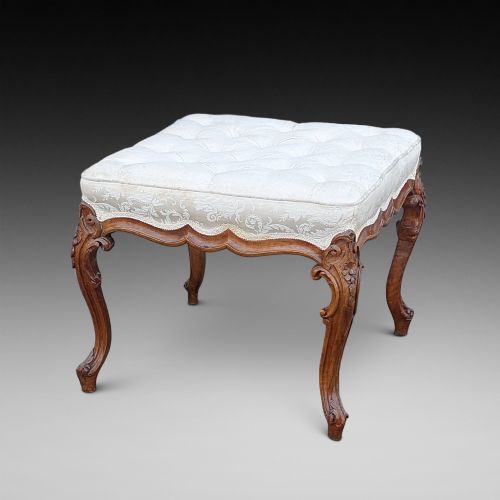
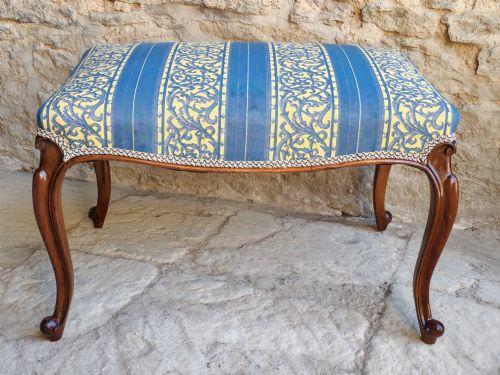
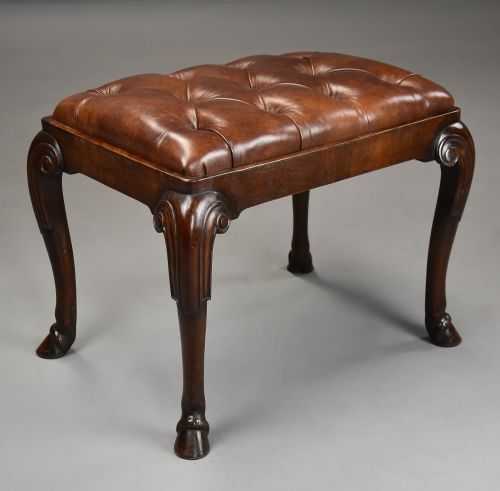
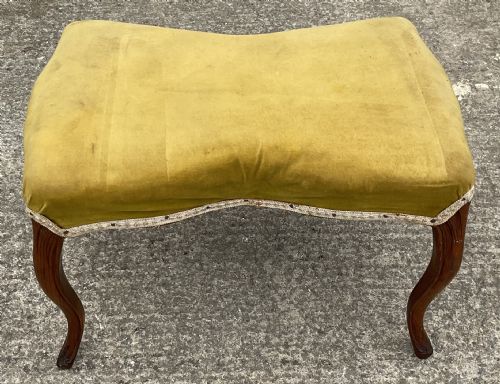
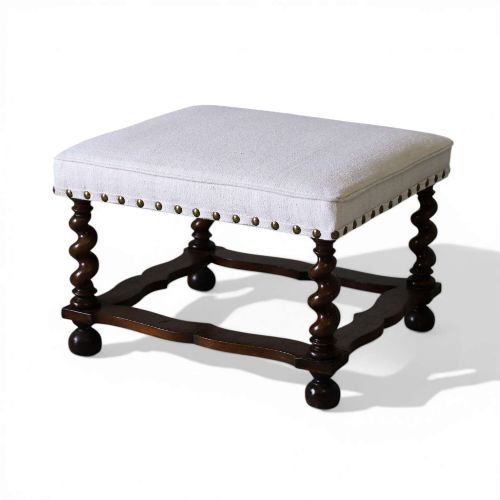
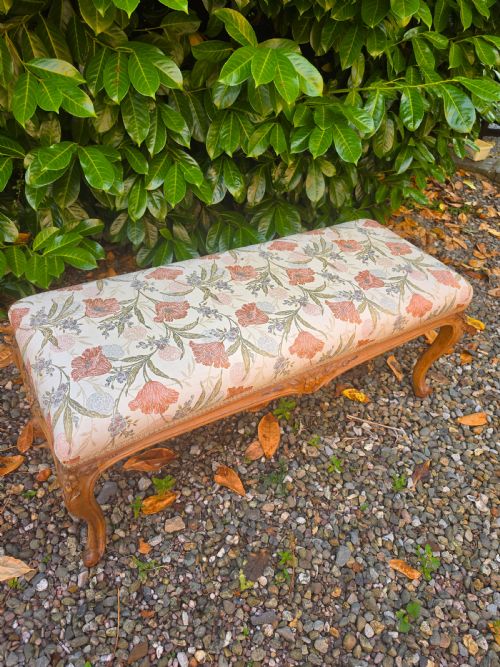
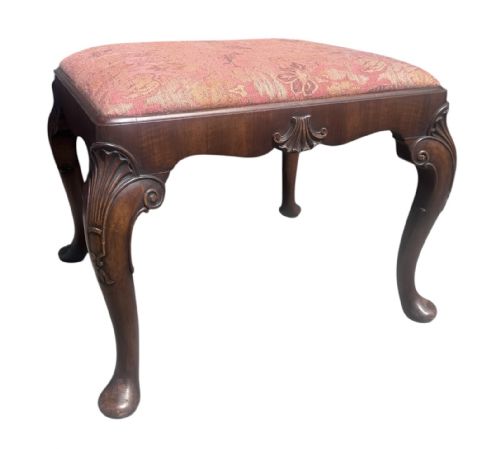
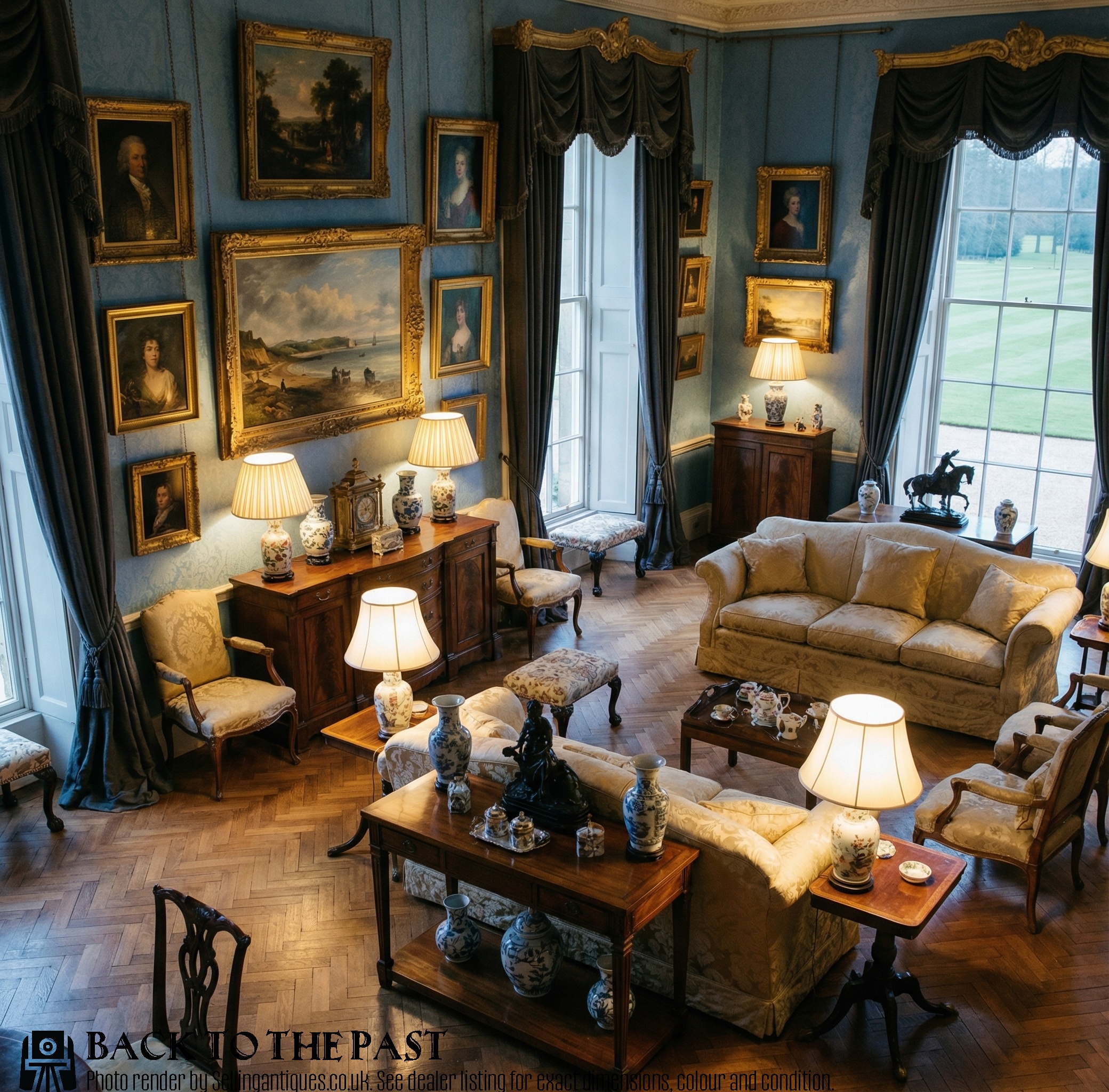
A carved walnut dressing stool sits beneath a vanity table or serves as a standalone seat, appearing frequently in Victorian and early twentieth-century interpretations of Queen Anne and Georgian designs. You will encounter rectangular and oval frames resting on cabriole legs, alongside occasional examples utilising barley-sugar or twisted rope supports.
The material record spans the nineteenth century through the 1930s, drawing heavily on Victorian production methods and revival aesthetics. These pieces range from simple low footstools and dressing table benches to adjustable rise-and-fall music and vanity seats.
Timbers and Upholstery Techniques
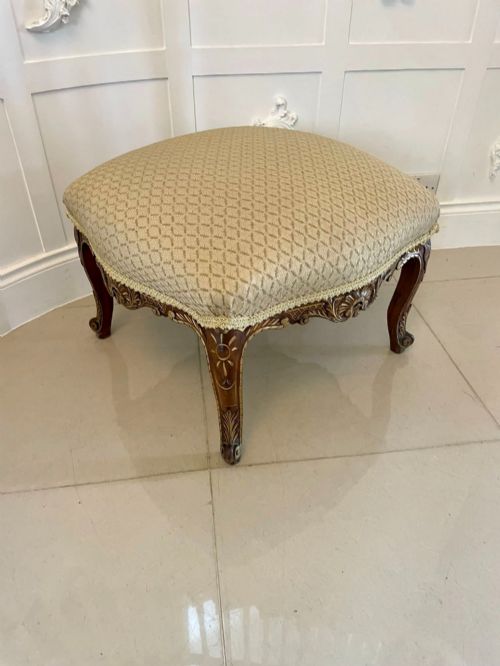
Makers shaped the structural framework from solid walnut, often employing carved cabriole legs with decorative knee motifs or spiral turning. Timber frames provide the rigid skeleton required for seating support.
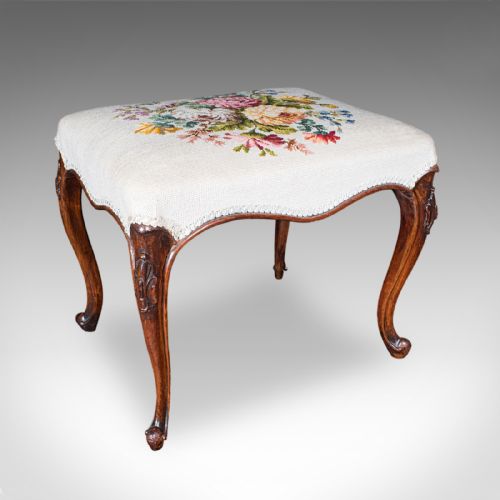
Textile coverings such as needlepoint, tapestry, wool, velvet and leather complete the top surface, frequently fastened over traditional padding. Brass components occasionally appear in adjustable mechanisms or decorative mounts.
Some Victorian dressing stools cleverly double as piano seats, proving that nineteenth-century vanity involved a fair amount of musical multitasking.
Evaluating Construction and Carving
The depth and crispness of the timber carving set superior examples apart from plainer production. Sharp hand-carved details on cabriole legs indicate a higher grade of craftsmanship than shallow machine-milled work.
The integrity of the walnut frame and the fidelity of revival styles dictate overall value. Pieces retaining their original structural joinery alongside period-appropriate textile work represent the upper tier of the range.
The Carved Walnut Dressing Stool Glossary
- Cabriole leg
- A furniture leg that curves outward at the knee and tapers inward toward the foot, mimicking animal limbs. This form appears frequently on walnut dressing stools influenced by Queen Anne and Georgian design.
- Needlepoint
- A type of counted thread embroidery stitched onto canvas, commonly used for the upholstered tops of period stools. It provides a durable and decorative surface for daily seating.
- Oyster veneer
- Slices of branch wood laid to create an oyster-shell pattern across a wooden surface. This decorative technique surfaces on seventeenth-century revival frames.
- Rise and fall
- An adjustable mechanism allowing the seat height to alter for different users or dressing table heights. These moving parts are often found on combined piano and dressing stools.
Carved Walnut Dressing Stool: Frequently Asked Questions
How do I date a walnut stool?
Dating relies on matching the leg profile, timber characteristics, and upholstery style to known manufacturing periods. Revival pieces often borrow earlier motifs like cabriole legs while retaining nineteenth-century construction traits.
Examining the underside for tool marks, screw types, and timber ageing helps separate Victorian production from later twentieth-century interpretations.
Were these stools made only for dressing tables?
While many served as dressing or vanity seats, walnut stools also functioned as piano benches, bedroom seats, and occasional footstools. Their compact dimensions made them versatile furniture for multiple rooms.
Adjustable heights and sturdy frames allowed the same basic form to adapt for musical accompaniment or personal grooming.
Can I use a antique stool daily?
Solid walnut frames offer robust structural support suitable for everyday seating in a modern bedroom. Regular use requires checking the joints and ensuring the upholstery foundation remains stable.
Upholstered surfaces can be maintained or recovered in traditional textiles without compromising the historic wooden frame underneath.
What styles are most common?
Victorian and Queen Anne revival styles dominate the available selection, reflecting nineteenth-century preferences for historical forms. Cabriole-legged designs and needlepoint upholstery appear across multiple decades.
Simpler Edwardian and later 1930s variations also occur, showing how cabinetmakers adapted the form for changing domestic interiors.