


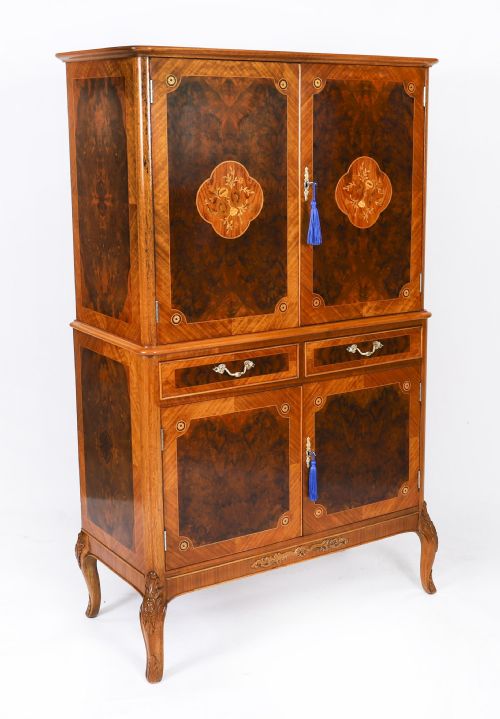


Carved Walnut Bar
These carved walnut bar pieces combine timber and brass into functional storage and wall instruments for entertaining and daily utility.
Carved Walnut Bar
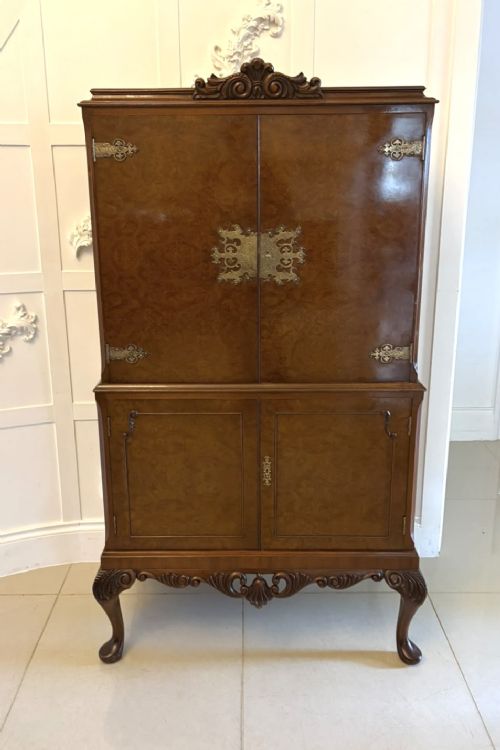
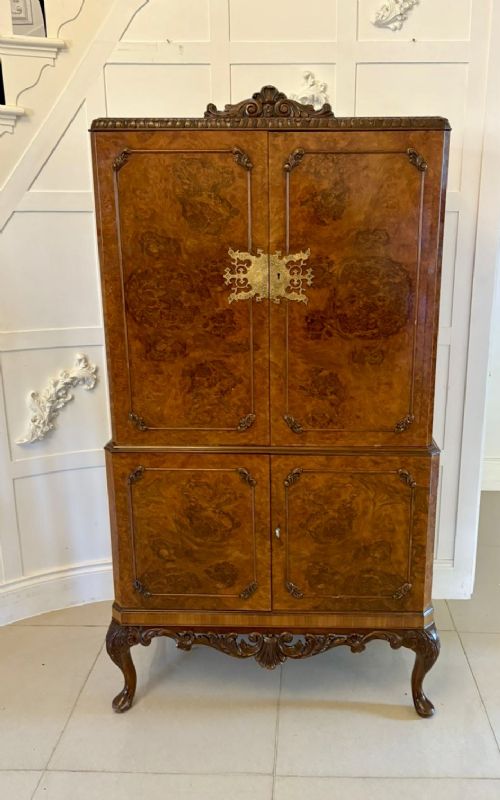
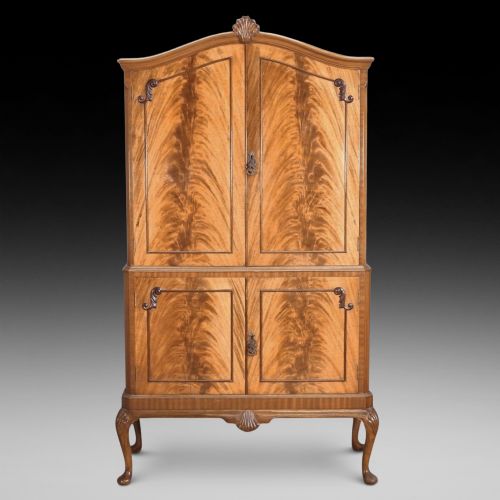
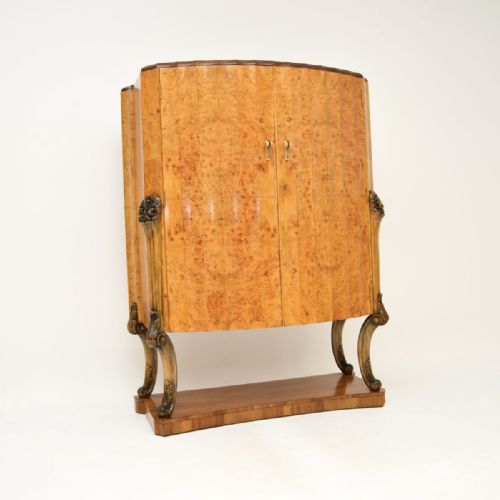
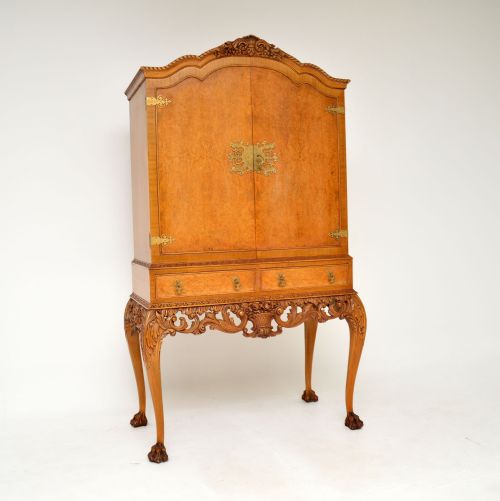
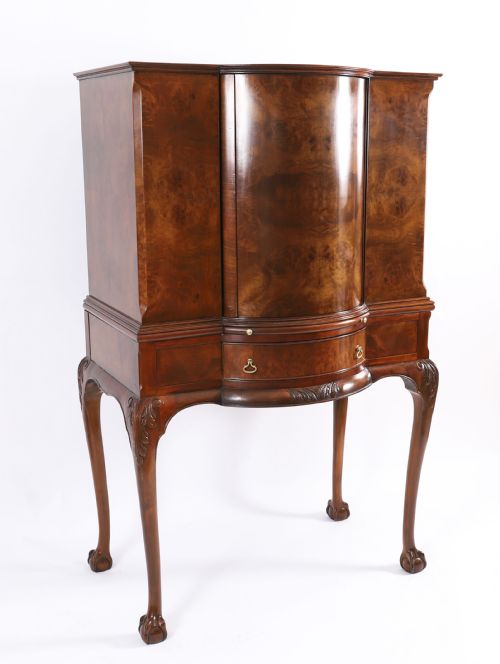
A carved walnut bar search brings together two distinct historical forms: mid-century drinks cabinets and Victorian wall barometers. The drinks cabinets, dating chiefly from the 1920s and 1930s, take the form of cocktail chests, revolving dry bars, and double bow-front cabinets designed for entertaining. Alongside these sit nineteenth-century weather instruments housed in intricately carved wooden surrounds.
The cocktail cabinets dominate current availability, showcasing prominent grain patterns and specialised interior compartments for glassware and bottles. The barometers range from banjo and wheel configurations to skeletonised aneroid dials mounted in solid timber frames. Both categories reflect domestic luxury from the Victorian era through the interwar period.
Materials and construction
Cabinet makers utilised solid walnut alongside flame and burr walnut veneers to create rich, figured exterior surfaces. These wooden carcases incorporate secondary timbers such as oak, while glass, mirror panels, and brass hardware complete the internal fittings and handles.
The barometer surrounds display deep manual foliage carving and turned wooden details executed in solid walnut. Instrument faces feature silvered dials and glass bezels, housing sensitive aneroid mechanisms calibrated for atmospheric measurement.
Carved Walnut Bar Retail Price Guide 2026
Typical asking prices for carved walnut bar among the pieces listed under this phrase on Sellingantiques today, from the lower quarter to the upper quarter. They describe what is for sale here now, not the wider market.
Some nineteenth-century barometers feature carved mythical dogs guarding the dial.
Judging the range
Quality rests on the selection and matching of burr or flame veneers across the cabinet doors and drawer fronts. Superior examples exhibit continuous grain flow and meticulous marquetry inlay, whereas simpler iterations rely on plain timber surfaces.
Internal engineering distinguishes standard production from exceptional workshop output. Cabinets featuring complex folding mechanisms, sliding shelves, and revolving compartments demonstrate advanced joinery compared to static storage boxes.
Epstein·Liberty's of London·W Johnson·Maple and Co·James Pitkin London
The Carved Walnut Bar Glossary
- Burr walnut
- A figured wood grain taken from the wart-like growths on walnut trees, prized for its swirling pattern. It appears extensively on 1920s and 1930s cocktail furniture.
- Banjo barometer
- A weather instrument housed in a vertical wooden case shaped like a banjo. These pieces frequently feature carved foliage and a central dial.
- Aneroid barometer
- A device that measures atmospheric pressure without using liquid mercury, relying on a flexible metal box. Many Victorian examples pair this mechanism with carved walnut surrounds.
- Marquetry
- The art of applying pieces of veneer to a structure to form decorative patterns. Craftsmen use this technique on cabinet doors to create geometric or floral scenes.
- Demi-lune
- A half-moon shape used for the footprint of specific cabinet designs. This curved form allows the furniture to sit flush against a wall while offering interior storage.
Carved Walnut Bar: Frequently Asked Questions
What is a cocktail cabinet?
A cocktail cabinet is a specialised piece of furniture designed to store spirits, mixers, and glassware for home entertainment. These units gained popularity during the interwar period.
Inside, you typically find mirrored surfaces, glass shelving, and pull-out preparation trays for mixing drinks. Exterior styling often emphasises figured wood veneers like burr walnut.
How do aneroid barometers work?
An aneroid barometer measures changes in barometric pressure using a small, flexible metal capsule that expands or contracts as pressure shifts. This movement connects mechanically to a pointer on a dial.
Victorian craftsmen housed these sensitive mechanisms inside heavily carved walnut frames, combining scientific utility with domestic decoration.
Where were these cabinets placed?
Interwar drinks cabinets occupied prominent positions in reception rooms and drawing rooms as social focal points during evening gatherings. Their decorative exteriors allowed them to blend with standard living room furniture.
Barometers were traditionally hung in hallways or studies where household members checked the weather before heading outdoors.
How do I care for walnut veneer?
Walnut veneer requires protection from direct sunlight and extreme humidity fluctuations to prevent the wood from fading or lifting. Regular dusting with a soft, dry cloth preserves the finish.
Avoid using silicone-based polishes or harsh chemical cleaners, as these substances can damage the historical polish and the underlying timber surface.