


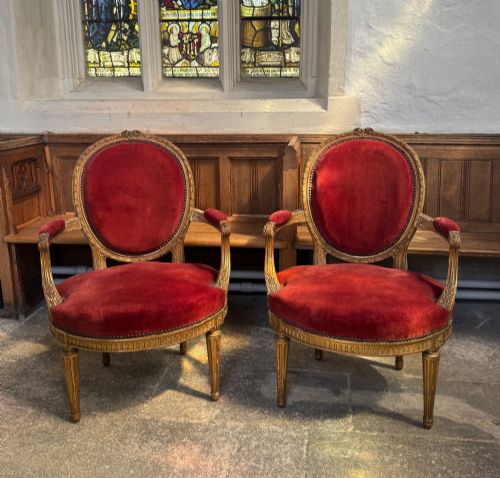
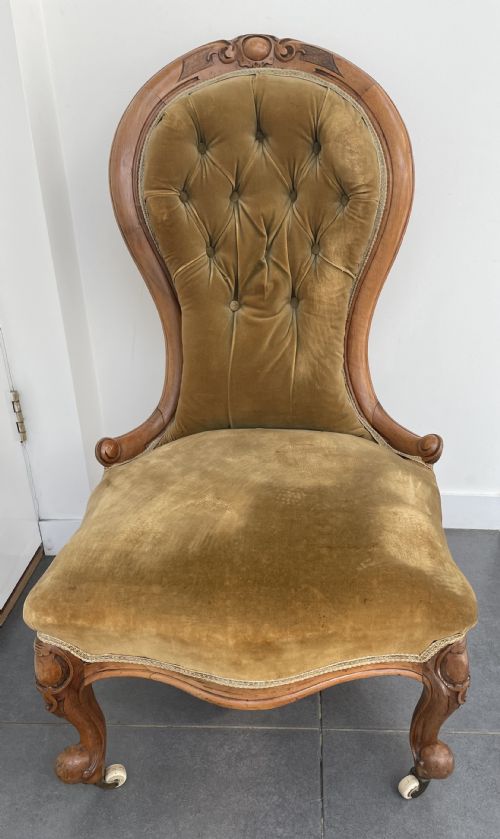
Carved Velvet Armchairs
Carved velvet armchairs bring tactile warmth and solid timber frames into a room, offering supportive seating shaped by centuries of stylistic revival.
Carved Velvet Armchairs
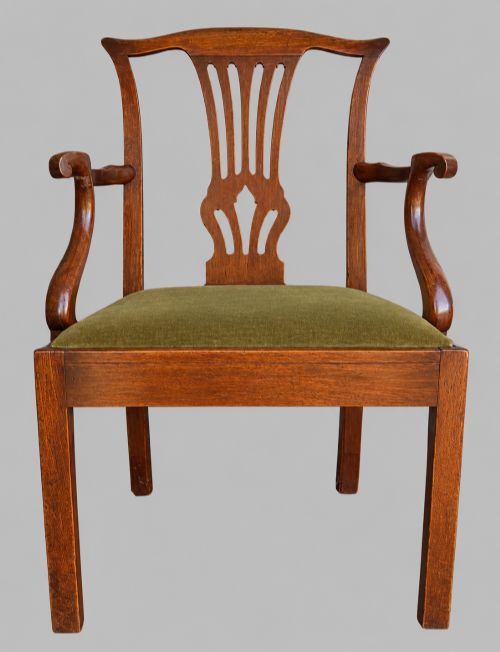
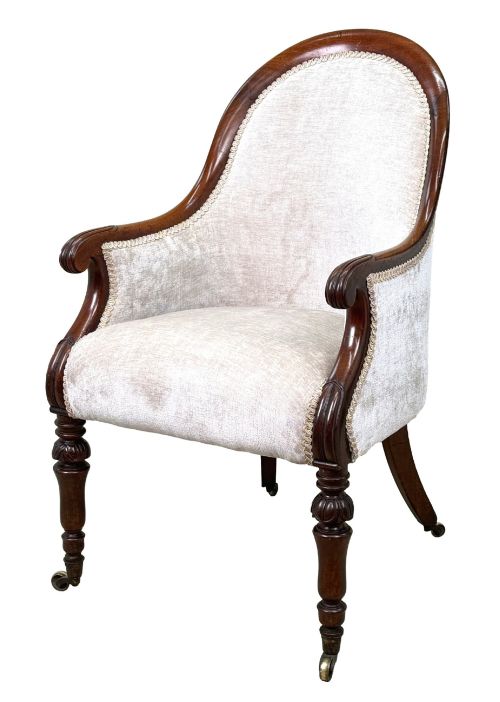
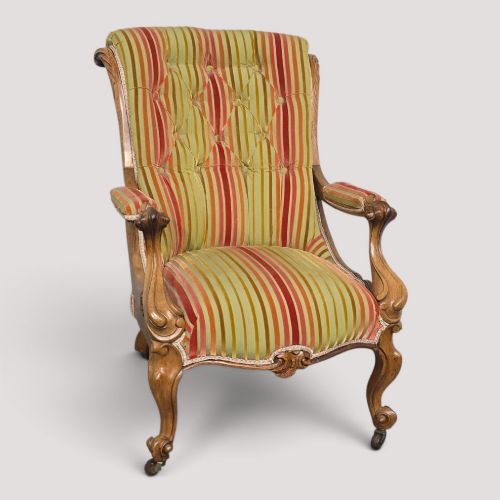
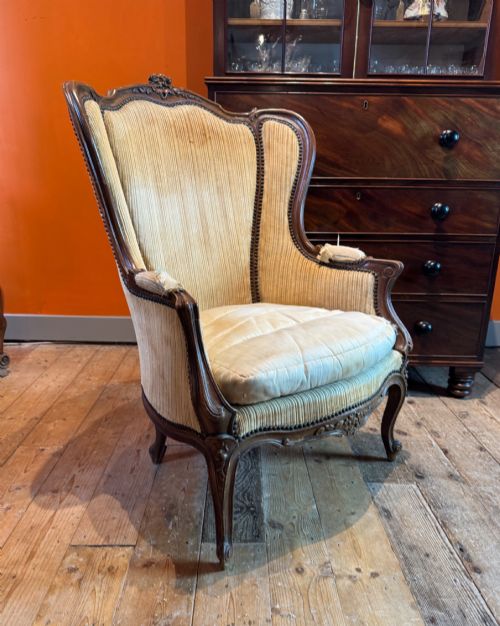
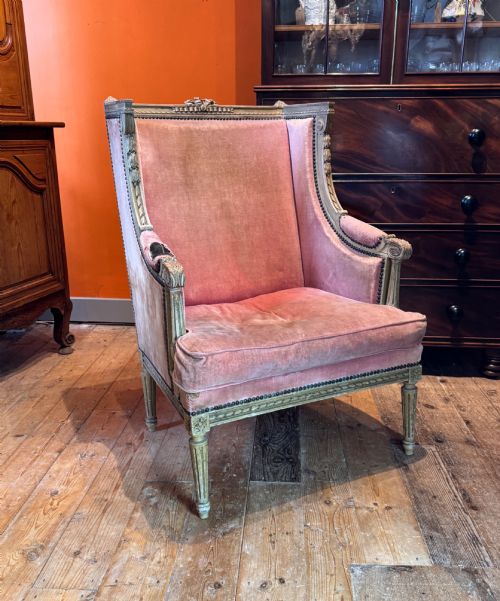
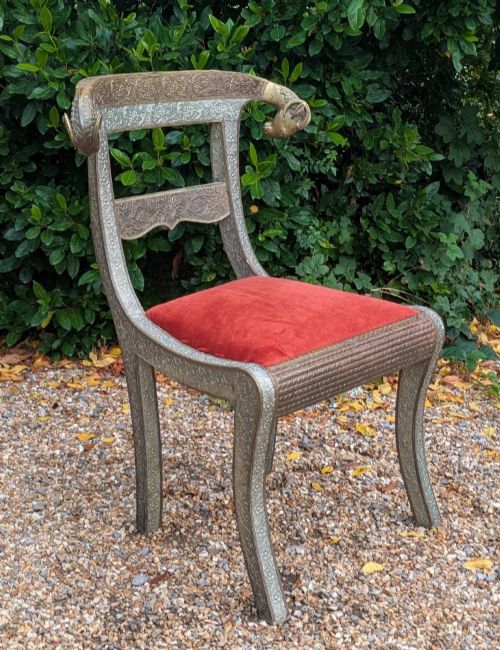
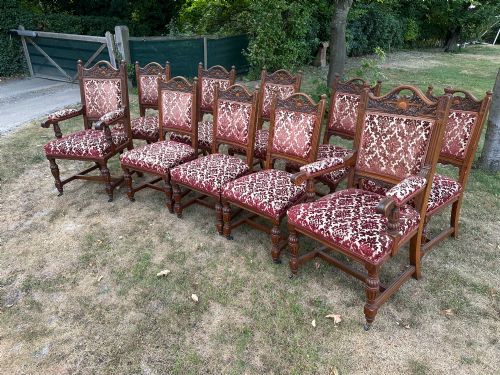
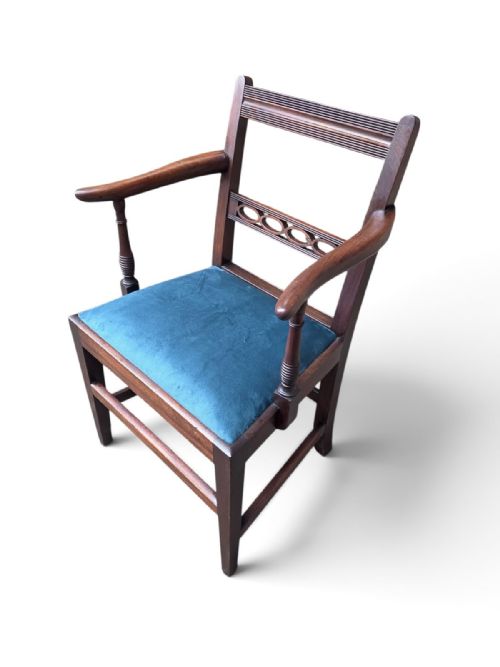
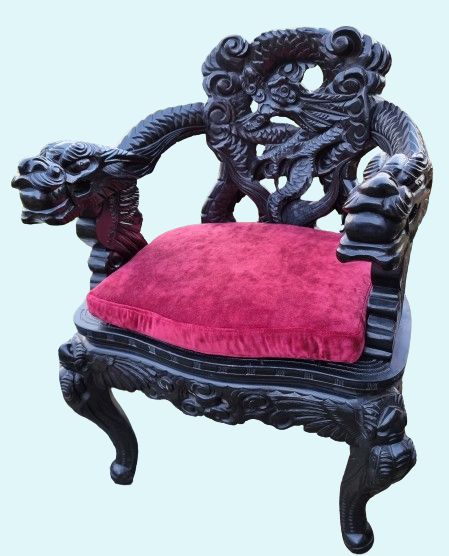
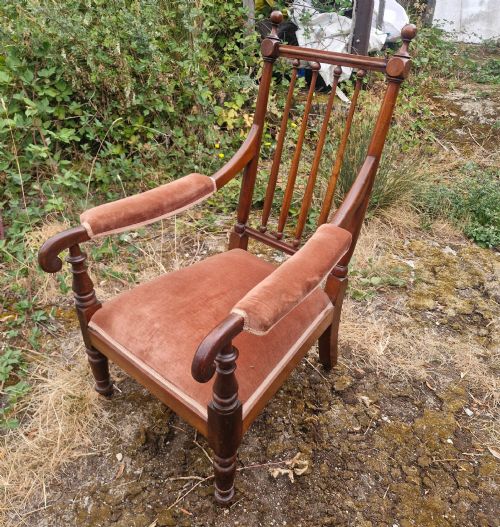
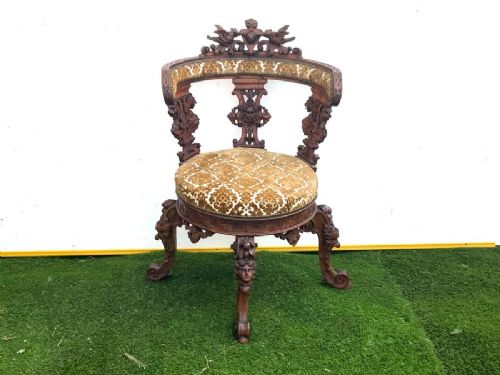
Carved velvet armchairs encompass a diverse range of seating forms, from library armchairs and wingbacks to occasional chairs and dining carvers. Buyers seeking carved velvet armchairs encounter numerous pieces originating across the nineteenth century alongside Edwardian and later twentieth-century interpretations.
The selection ranges from French bergères and Louis-style giltwood armchairs to English mahogany and walnut library seats. These pieces combine structural timber frames with tactile textile upholstery to provide functional seating with decorative presence.
How they were made
Frames rely on dense hardwoods including mahogany, walnut, oak, rosewood, and giltwood, selected for their structural stability and capacity for intricate hand-carving. Artisans shaped these timbers into stylistic forms reflecting Regency, Victorian, and continental European design traditions.
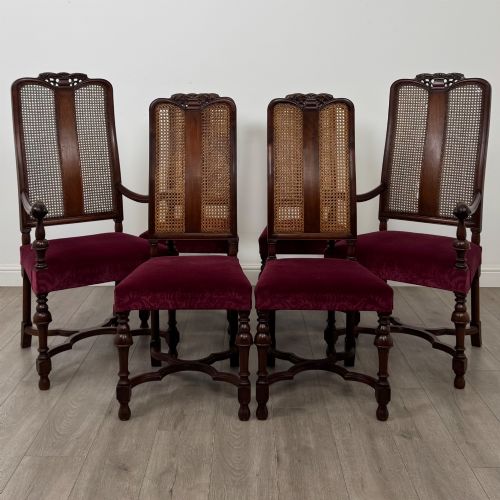
Textile upholstery utilises velvet, paired in specific instances with cane panels or brass details. Traditional padding and drop-in seat construction secured the fabric across open armchairs, wingbacks, and salon suites.
Materials recorded across these listings include mahogany, walnut, oak, rosewood, and giltwood alongside velvet and cane.
What varies in quality
The definition and depth of the timber carving set individual frames apart, separating mechanical uniformity from crisp, hand-chiselled detail. Superior pieces exhibit harmonious proportions where the woodwork and the textile upholstery complement one another without bulk.
The selection of timber grain and the integrity of the underlying frame construction dictate longevity. Original finishes and surfaces that have aged with honest use hold greater character than heavily restored examples.
The Carved Velvet Armchairs Glossary
- Bergère
- An enclosed upholstered armchair with wooden framing exposed around the sides and back, originating in France. This form often incorporates cane panels alongside upholstered cushions.
- Fauteuil
- An open-arm armchair with an exposed wooden frame, typically carved and gilded or painted. The arms feature padded elbow rests.
- Giltwood
- Timber treated with gold leaf or gilt preparation to create a lustrous decorative surface. It appears frequently on French and revival salon furniture.
- Monopodia
- Furniture supports shaped as animal paws or legs, often associated with neoclassical designs after Thomas Hope. They anchor heavier library and armchair frames.
- Wingback
- An armchair with high back and flanking side panels designed to shield the sitter from draughts. These seats utilise deep upholstery and wooden supports.
Carved Velvet Armchairs: Frequently Asked Questions
How do I clean velvet upholstery?
Velvet requires gentle brushing with the grain to maintain the pile and remove surface dust. Professional cleaning is recommended for deeper marks to protect the fabric.
Harsh chemical solvents and excessive moisture damage both the pile and the underlying timber frame. Regular light maintenance preserves the soft texture of the textile.
Are these chairs comfortable for daily use?
Many models offer deep padding and supportive armrests designed for extended periods of sitting in studies or living spaces. Wingbacks and library chairs provide particular ergonomic support.
Older padding methods differ from modern foam fillings, offering a firmer sit. Suspension and internal webbing condition dictate the physical feel of each individual seat.
How do I identify a revival style?
Revival pieces appropriate historical motifs from periods like Louis XV, Queen Anne, or the Regency era while utilising later nineteenth or twentieth-century construction methods. Timber seasoning and joinery techniques often reveal the actual date of manufacture.
Comparison with documented period pieces helps clarify whether a chair is an original-era creation or a later stylistic interpretation.
Can I mix these chairs with modern decor?
Rich timber tones and textured velvet fabrics provide strong focal points that contrast effectively against minimalist or contemporary interiors. Their sculptural frames act as standalone statement pieces.
Placing an antique armchair in a neutral room highlights the craftsmanship of the carving. Scale and proportion remain the primary considerations when combining eras.