


Buttoned Velvet Parlour Chairs
Buttoned velvet parlour chairs bring deep buttoning and rich textures to reception rooms, offering comfortable seating with distinct period character.
Buttoned Velvet Parlour Chairs
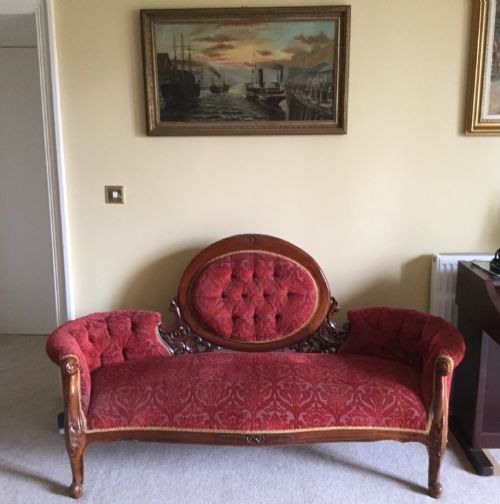
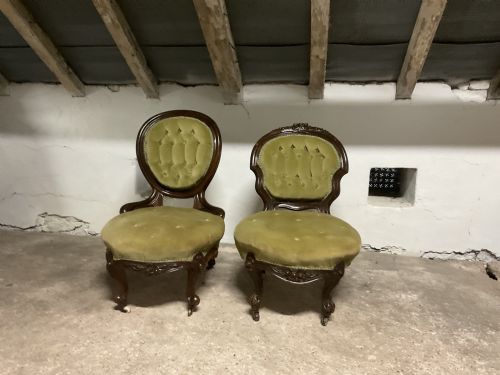
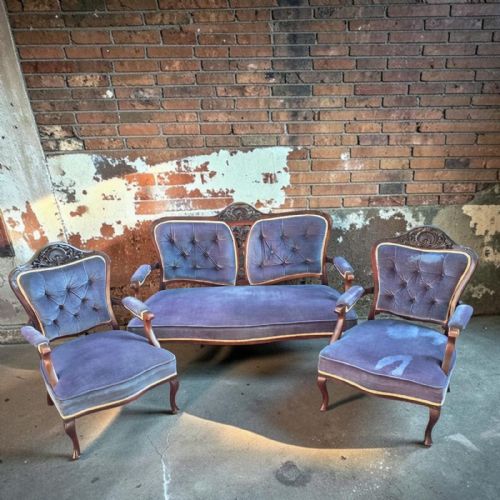
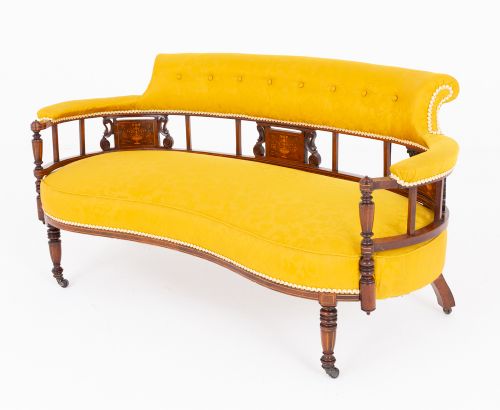
Buttoned velvet parlour chairs encompass a range of seating forms including nursing chairs, open armchairs, and matching ladies and gentlemen's suites designed for nineteenth century reception rooms. These pieces frequently emerge from the Victorian and Edwardian periods, displaying carved wooden frames alongside buttoned upholstery.
Buyers browsing buttoned velvet parlour chairs encounter various configurations, from single walnut salon chairs to larger multi piece suites involving settees and matching armchairs. The forms often reflect Revival or Aesthetic tastes, balancing decorative woodwork with comfortable padded seating.
Many examples date from the mid to late nineteenth century, spanning walnut, mahogany, and ebonised frames paired with deep pile textiles. The selection on this page shows how these seating forms survive in diverse regional styles and parlour suite groupings.
Materials and Construction
Makers built these frames using dense hardwoods like walnut, mahogany, and rosewood, often shaping the timber with elaborate carved details or inlaid decoration. Selected frames also received ebonised finishes to mimic exotic hardwoods.
Upholsters applied deep buttoning techniques over sprung bases, securing the velvet or brocade covers to create structured tufting. Brass elements occasionally appeared in castors or decorative hardware supporting the wooden legs.
Some gentlemen's chairs were built wider than ladies chairs to accommodate nineteenth century waistcoats.
Distinctions in Quality
Higher quality examples display crisply carved woodwork with substantial frames in walnut or rosewood, whereas simpler pieces utilise plainer mahogany or basic turnings. The depth and precision of the frame ornamentation set superior salon suites apart.
The integrity of the internal springing and the regularity of the buttoning dictate the finish of the upholstery. Pieces retaining harmonious proportions between carved frames and deep pile velvet demonstrate superior workshop standards.
Jas James Shoolbred
The Buttoned Velvet Parlour Chairs Glossary
- Deep buttoning
- An upholstery technique where stitches pull the fabric tight against the stuffing, secured by buttons in a diamond pattern. This method creates characteristic tufted indentations across the backrest.
- Salon suite
- A matched set of seating furniture, typically comprising a settee and several armchairs or nursing chairs designed for a formal drawing room. These suites share identical woodcarving, upholstery fabric, and stylistic motifs.
- Nursing low chair
- A low seated armchair traditionally used in bedrooms or nurseries for comfortable infant feeding and dressing. The reduced height allows the sitter to remain close to the floor.
- Aesthetic Movement
- A late nineteenth century design style that emphasised artistic visual qualities over traditional moral narratives. Furniture from this movement often featured ebonised wood surfaces and stylized geometric or floral decoration.
Buttoned Velvet Parlour Chairs: Frequently Asked Questions
Where did these chairs stand?
These chairs originally occupied formal Victorian parlours, drawing rooms, and bedrooms where guests were received. They served both as decorative focal points and as functional seating for social gatherings.
Today, they adapt readily to contemporary living spaces as accent chairs or reading seats, adding historic texture to neutral interiors.
How do I identify a Victorian parlour chair?
Victorian parlour chairs typically feature carved hardwood frames made from walnut or mahogany, often combined with deep buttoned velvet upholstery. Look for stylistic cues such as curved wooden backs and turned legs.
Examining the construction methods underneath the seat reveals period joinery techniques that help confirm the nineteenth century origin.
What is a salon suite?
A salon suite consists of a matching set of seating furniture designed for a formal drawing room. These groupings usually include a settee accompanied by armchairs, ladies chairs, or gentleman's chairs sharing identical timber and fabric.
Finding a complete suite remains uncommon, as many sets became separated across different households over the decades.
Can I use these chairs daily?
These antique chairs function well in modern homes when placed in lower traffic areas where their historic frames face minimal strain. Many retain sturdy hardwood construction suitable for regular sitting.
Checking the stability of the joints and the condition of the internal webbing ensures the chair safely supports everyday use.