
Carved Vanity Stool
A carved vanity stool provides a low, upholstered seat designed for the bedroom or dressing room, combining functional comfort with period woodworking detail.
Carved Vanity Stool
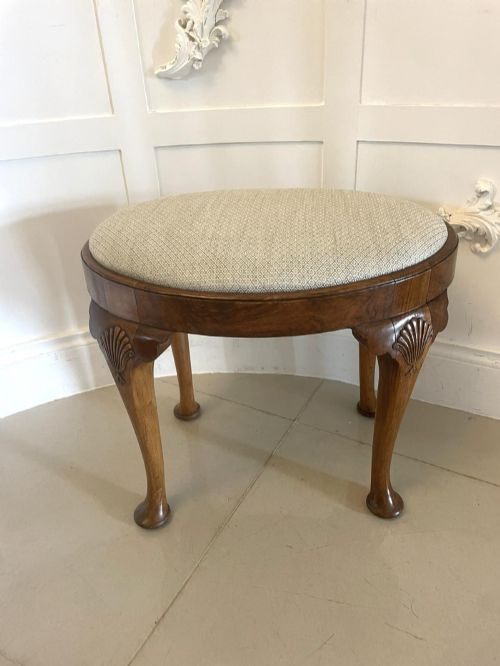
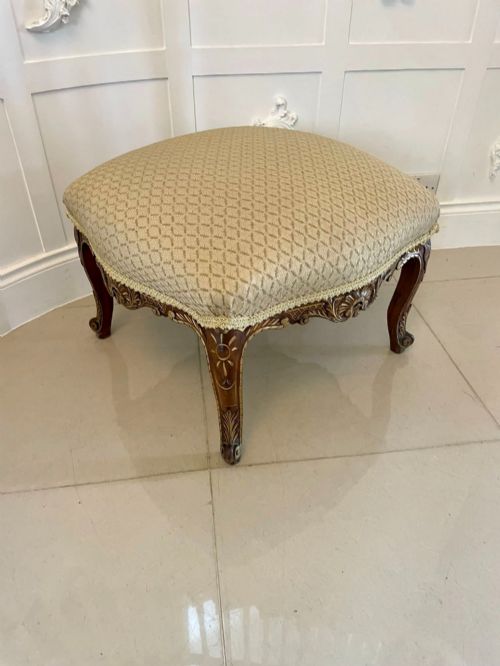
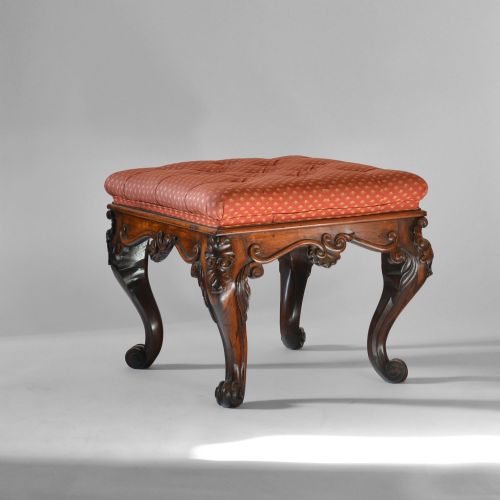
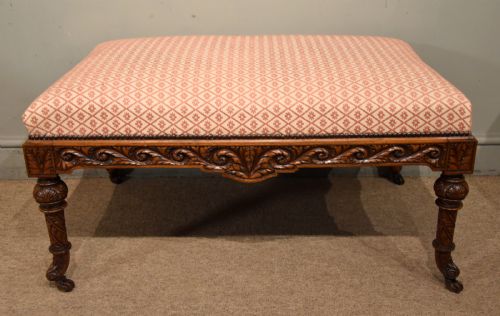
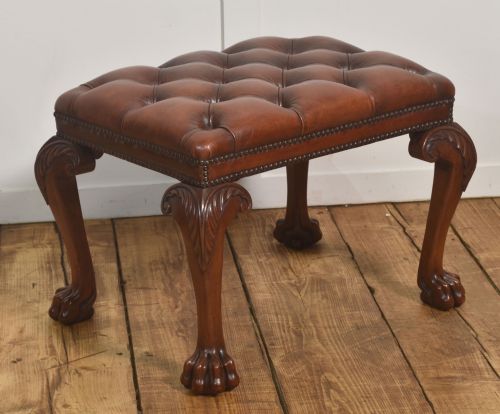
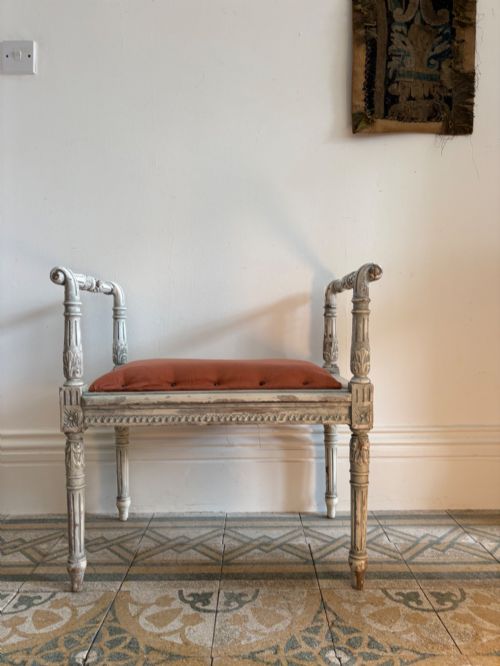
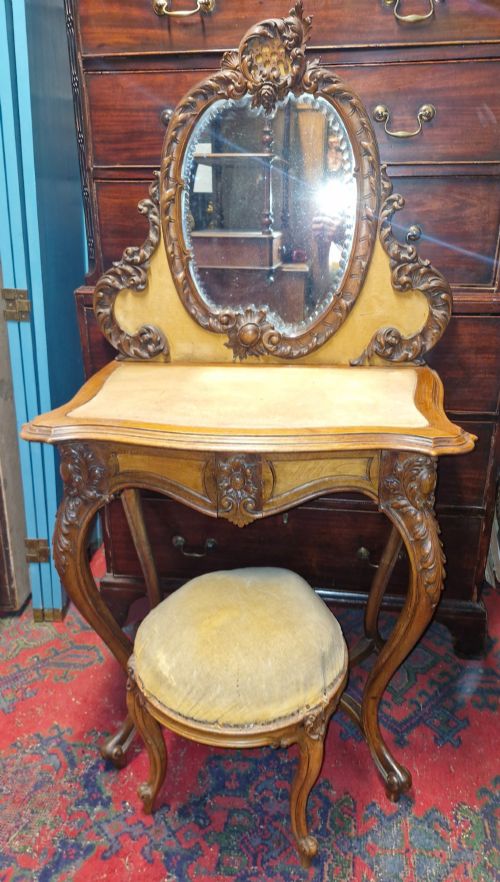
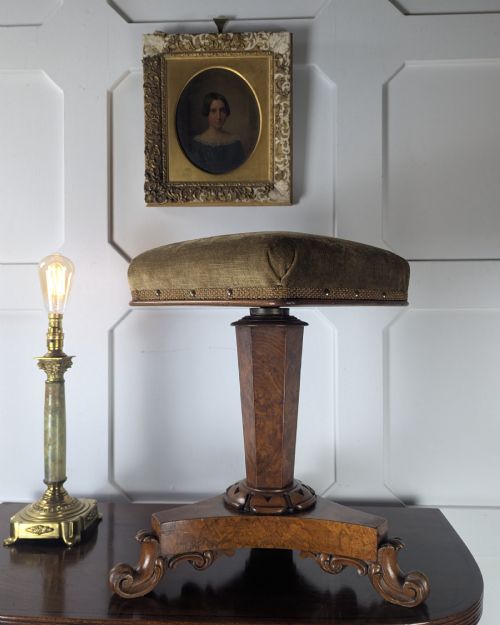
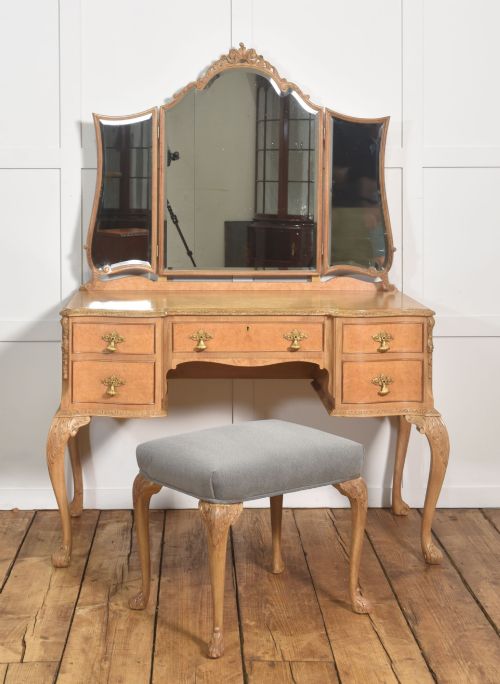
A carved vanity stool primarily appears across the nineteenth century and into the early twentieth century, taking the form of low dressing stools, piano stools, and small seats designed to sit beneath a dressing table. The selection spans the Victorian era alongside revival designs that draw on earlier periods.
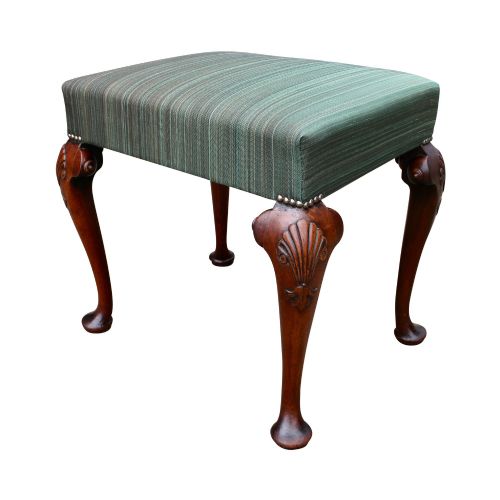
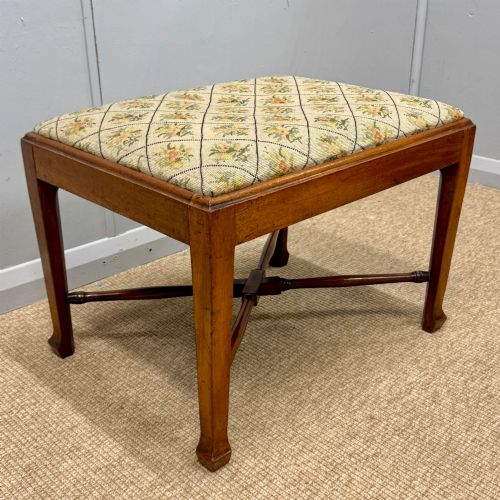
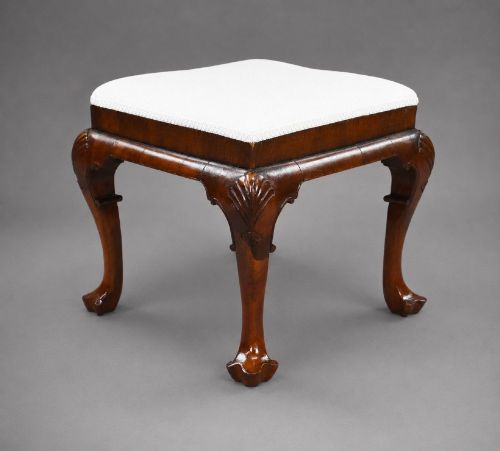
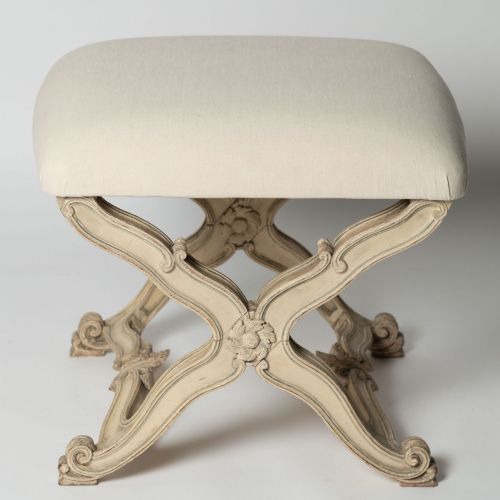
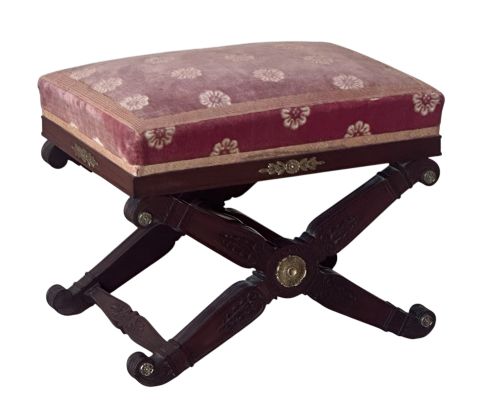
Makers shaped these pieces in styles including Queen Anne, Chippendale, and Rococo Revival, often incorporating cabriole legs, cross stretchgers, or X frames. Alongside standard dressing seats, variations include revolving piano mechanisms, sewing box stools, and dressing chairs with low backs.
Materials and construction methods
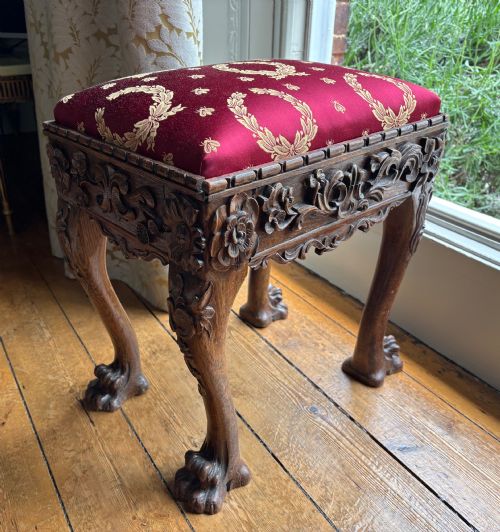
Woodwork relies heavily on dense hardwoods such as walnut, mahogany, and rosewood, occasionally supplemented by oak, goncalo alves, or painted finishes in white, gilt, or Continental tones. Carving appears on frames, legs, and stretchers to accentuate the chosen revival style.
Upholstery forms the upper component, utilising traditional fabrics like velvet, silk, textile, leather, and beadwork. Metal elements such as brass appear on adjustable mechanisms or decorative accents.
The listings show walnut and mahogany as the primary woods, spanning the Victorian period through to 1930 in various revival styles.
Distinctions in craftsmanship
Quality rests in the crispness of the hand carving on the wooden frame and the structural integrity of joints such as cabriole legs and cross stretchers. Finer examples display carefully selected timber grains, particularly in figured walnut and rosewood.
The standard of upholstery and the retention of period textiles or appropriate traditional re-upholstery distinguish superior pieces. Mechanism functionality, such as smooth adjustment on piano or revolving stools, marks a higher grade of manufacture.
The Carved Vanity Stool Glossary
- Cabriole leg
- A furniture leg that curves outward at the knee and tapers inward to an ankle, terminating in a foot. This shape defines many Queen Anne and Victorian revival pieces.
- Cross stretcher
- Wooden rails connecting the lower legs diagonally or in an X shape to provide stability. They often feature central carved bosses or turnings.
- X frame
- A structural base formed by two intersecting curved or straight members creating an X shape when viewed from the side. This form appears on classical and nineteenth-century stools.
- Rococo Revival
- A mid-nineteenth-century style characterised by asymmetrical scrolls, naturalistic flower carving, and curved outlines. It draws inspiration from eighteenth-century French design.
Carved Vanity Stool: Frequently Asked Questions
What is the difference between a vanity stool and a piano stool?
A vanity stool stands at a low height intended for a dressing table, whereas a piano stool often incorporates a revolving or adjustable mechanism to alter the seating height for a keyboard.
Both pieces utilise similar nineteenth-century timber frames, but their intended domestic functions dictate the presence of mechanical height adjustments.
How do I identify a Queen Anne style stool?
Queen Anne style stools typically feature smooth cabriole legs, pad or hoof feet, and uncluttered walnut frames that emphasise the natural grain of the wood.
Revival versions from the nineteenth and early twentieth centuries replicate these eighteenth-century domestic forms with characteristic machine or hand carving.
Are these stools suitable for daily use?
Solid hardwood construction in walnut, mahogany, or rosewood provides sturdy framing capable of supporting regular weight in a bedroom setting.
Buyers planning frequent use should inspect the internal upholstery webbing and ensure the frame joints remain tight and stable.
How do I know if the upholstery is original?
Original nineteenth-century upholstery employs period textiles like wool beadwork, velvet, or silk fixed with traditional tacks over horsehair or organic stuffing.
Many surviving pieces have undergone re-upholstery to preserve usability, maintaining the traditional silhouette while updating the fabric cover.