
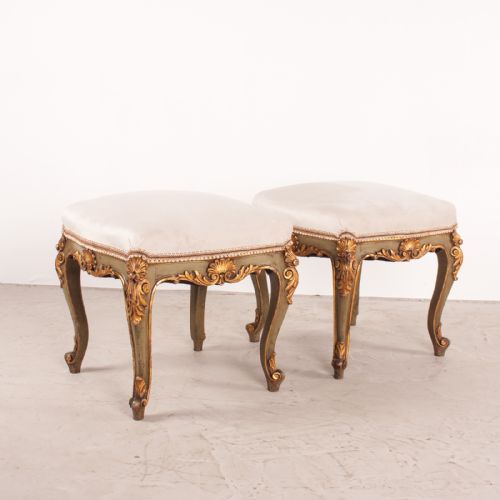


Carved Painted Low Stool
These carved painted low stool selections offer character and low seating, bringing period craft and painted surfaces straight to your floor.
Carved Painted Low Stool
When you search for a carved painted low stool, you encounter low seating forms that span the nineteenth century up to nineteen thirty. The selection includes continental pairs, Swedish originals, and Middle Eastern or Indian examples.
Most pieces on this page appear as low stools, footstools, or window seats in painted wood with various upholstery or needlework treatments. Styles range from Louis XV and French Régence to Gustavian and Italian Neoclassical.
You find simple timber forms alongside heavily decorated continental pairs featuring carved wood and gold leaf. These varied origins mean every low stool brings a distinct regional decorative tradition into a room.
How they were made
Maker construction relies on carved wood shaped into frames, legs, and seat supports using traditional joinery methods. Paint and gold leaf are then applied directly to the timber surfaces.
Many examples incorporate fabric, upholstery, textile, or needlework stitched onto the top surface for functional comfort. These textile additions often match the specific stylistic period of the wooden base.
An Indian wedding chair sits quietly among the Swedish and French stools, proving that small seats travel far.
What varies in quality
Quality shows in the depth and crispness of the carved wood details across the frame, separating simple turned legs from elaborate Rococo or Neoclassical ornamentation. The application and survival of the original paint or gold leaf layer also determine the visual strength of the piece.
The integrity of the underlying timber frame and the execution of the upholstery or needlework dictate the structural longevity. Finer examples retain their original surface patination without heavy modern intervention.
The Carved Painted Low Stool Glossary
- Gustavian
- A Swedish neoclassical style characterised by lighter painted finishes, restrained carving, and functional elegance. It emerged during the late eighteenth century and influenced Scandinavian design for generations.
- Régence
- A French transitional style bridging the Louis XIV and Louis XV periods, known for asymmetrical curves and early rococo motifs. Pieces in this style feature lively carved wooden contours.
- Needlework
- Stitched textile work using yarn or thread on canvas, frequently used for historical stool tops. Needlework introduces intricate patterns and colour texture to low seating.
- Gold leaf
- Gold beaten into extremely thin sheets and applied to wooden surfaces with size or adhesive. It provides a luminous metallic finish on decorative continental frames.
- Window seat
- An elongated stool or small bench designed to sit within the recess of a window. These pieces double as low tables or compact seating.
Carved Painted Low Stool: Frequently Asked Questions
How were low stools used historically?
Low stools served primarily as footstools, auxiliary seating near firesides, or resting places for feet while seated in high-backed chairs. Their compact height made them easy to move around formal rooms as needed.
Over time, certain forms like window seats also functioned as light coffee surfaces or informal resting spots within domestic interiors.
How do I identify a Swedish painted stool?
Swedish painted stools typically exhibit pale, restrained painted finishes reflecting Gustavian or nineteenth-century Scandinavian aesthetics. The woodwork prioritises clean lines, subtle carved details, and functional proportions.
Original painted surfaces often show natural wear that indicates age rather than modern repainting.
What is the difference between a footstool and a window seat?
Footstools are generally square or compact rectangular pieces built for resting feet at floor level. Window seats tend to be longer and narrower, designed specifically to fit the architectural span of a window bay.
Window seats often feature upholstered tops and more pronounced decorative frames suited for visible placement.
How do I care for painted wooden furniture?
Painted wooden furniture requires protection from direct sunlight and excessive humidity to prevent the paint or gold leaf from cracking. Dusting with a dry, soft cloth is sufficient for daily maintenance.
Avoid harsh chemical cleaning products that can strip historic painted finishes or damage delicate surface patination.