
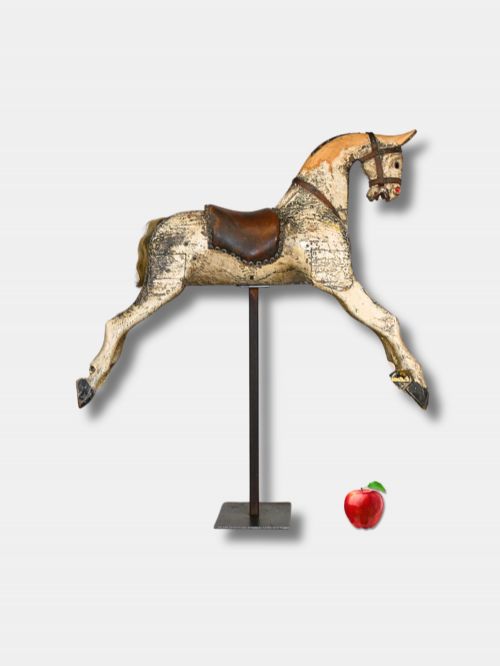
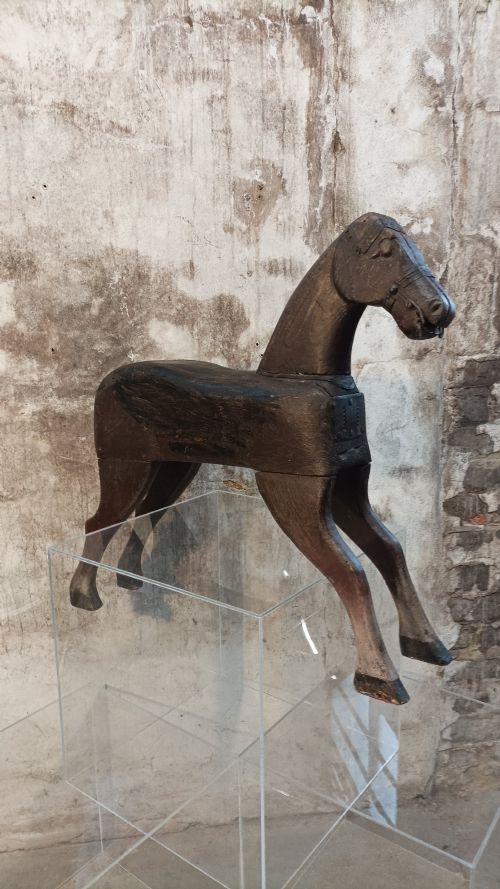
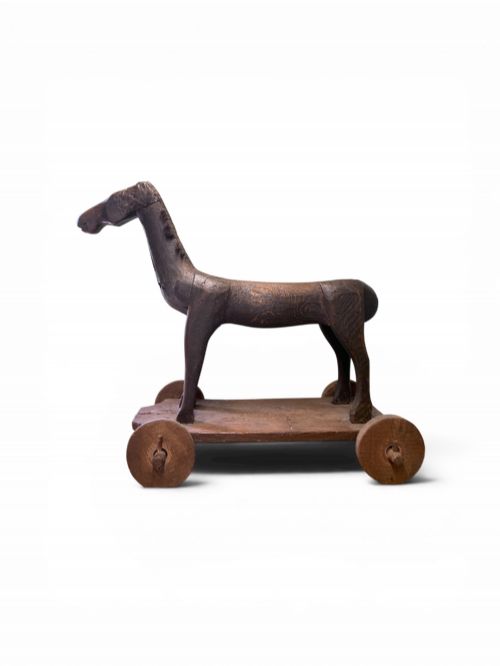
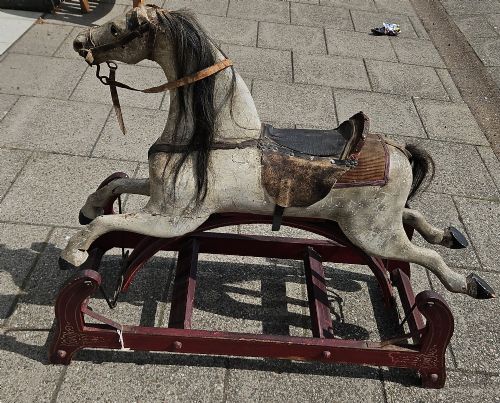
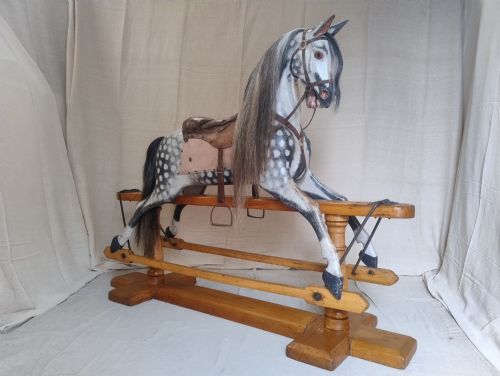


Carved Toy Horse
A carved toy horse brings the distinct charm of nineteenth and early twentieth century playrooms straight into a modern interior.
Carved Toy Horse
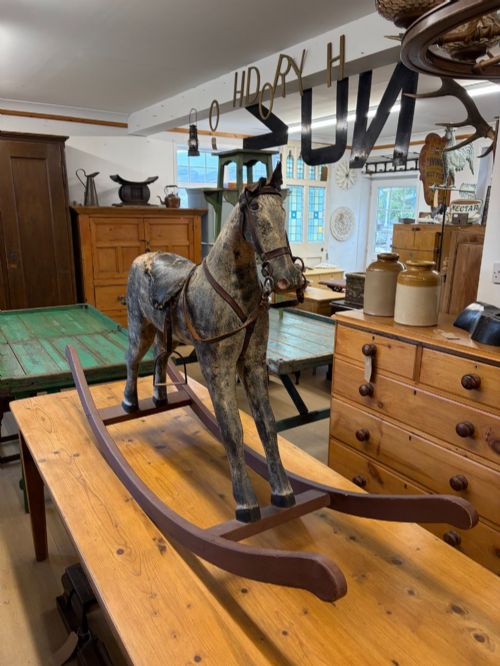
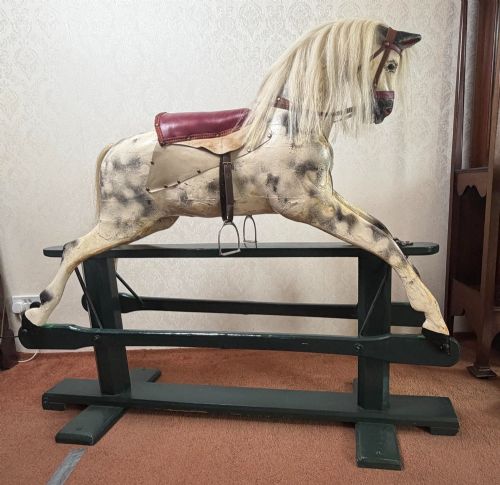
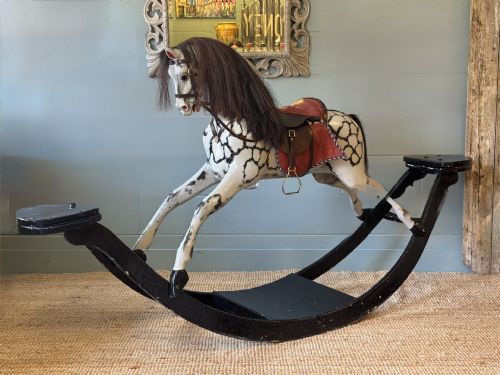
A carved toy horse encompasses everything from large rocking horses on wooden stands to smaller folk art sculptures and naive wooden models. Buyers searching for a carved toy horse typically encounter sturdy Victorian nursery favourites alongside rustic figures carved by anonymous hands.
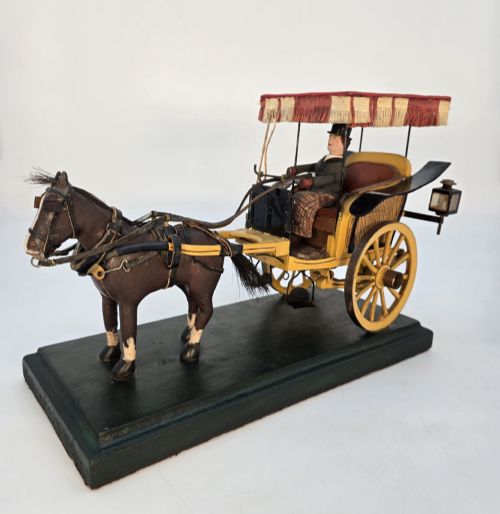
The selection ranges across the nineteenth century, the Edwardian era, and the interwar period, featuring British, American, French, and Spanish origins. Rocking horses dominate the group, alongside decorative objects and standalone wooden horse sculptures.
How they were made
Wood serves as the primary medium, utilising pine and carved wood shaped into robust bodies and mounted on original rockers or stands. Makers incorporated leather for tack, horsehair for manes and tails, and iron or metal for structural reinforcement and brackets.
Surfaces were frequently finished with paint, often retaining original coats displaying characteristic wear from childhood use. Certain pieces reflect scratch built folk art construction methods utilising simple household tools and accessible materials.
Listings feature carved toy horse examples spanning the Victorian period, the Edwardian era, and the 1930s, constructed from pine, leather, and horsehair.
What varies in quality
Quality rests in the sculptural confidence of the carving, distinguishing naive primitive expressions from sophisticated workshop production. Pieces retaining their original paint and horsehair show superior historical integrity compared to those stripped or heavily restored.
Proportion and scale dictate distinction, particularly among large rocking horses and detailed models complete with carriages or drivers. The presence of maker attribution elevates specific examples above anonymous vernacular work.
G and J Lines·F H Ayres·Collinson·Lines Bros Sportiboy
The Carved Toy Horse Glossary
- Folk art
- Artistic work created within a traditional culture by self-taught makers. These objects rely on naive charm rather than formal academic training.
- Rocking horse
- A toy horse mounted on curved wooden rockers or a safety stand. Children ride astride these toys while generating a rocking motion.
- Pine
- A common softwood used extensively for toy bodies and structural rockers. It provides a lightweight yet durable base for carving and paint.
- Horsehair
- Natural hair harvested from the mane or tail of horses used for upholstery and toy decoration. It provides a tactile finish on antique models.
- Original paint
- The initial surface coating applied during manufacture, unmasked by later overpainting. Collectors prize this layer for its authentic patina.
Carved Toy Horse: Frequently Asked Questions
How do I date a carved toy horse?
Dating relies on construction methods, timber types, and the remaining surface paint. Stylistic details such as the shape of the rocker and the method of joining limbs also offer clues.
Pieces originating in the nineteenth century often display hand-carved tool marks and primitive proportions, whereas twentieth-century examples from established makers show standardised workshop assembly.
Are these horses sturdy enough for children?
Many of these pieces functioned as robust children's toys and retain sturdy wooden frames. However, antique structural joints and historic painted surfaces require careful handling.
Buyers intending regular use by children often select pieces specified in stable condition, while delicate folk art models suit display purposes better.
What does original paint mean on these toys?
Original paint refers to the primary decorative coating applied when the horse was first made. This surface often bears the marks of play and age.
Surfaces retaining their initial finish without modern overpainting hold greater interest for collectors who value untouched historical character.
How should I display a wooden toy horse?
Wooden toy horses work well as standalone focal points in living spaces, hallways, or nurseries. Their sculptural presence complements both traditional and modern interiors.
Placing them away from direct sunlight and steady heat sources protects the old wood, leather tack, and horsehair from drying out.