
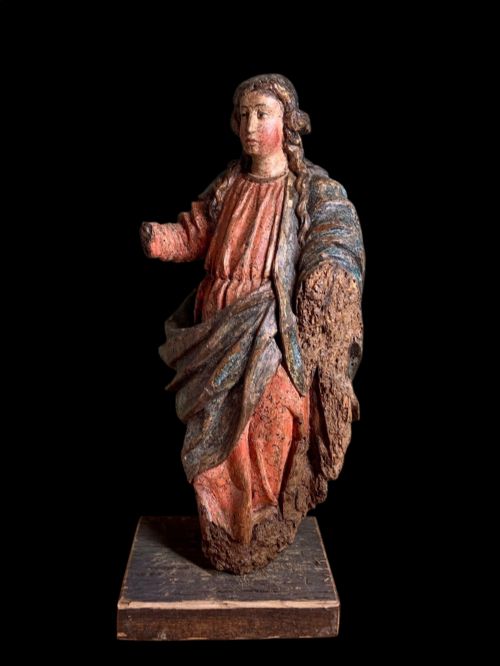


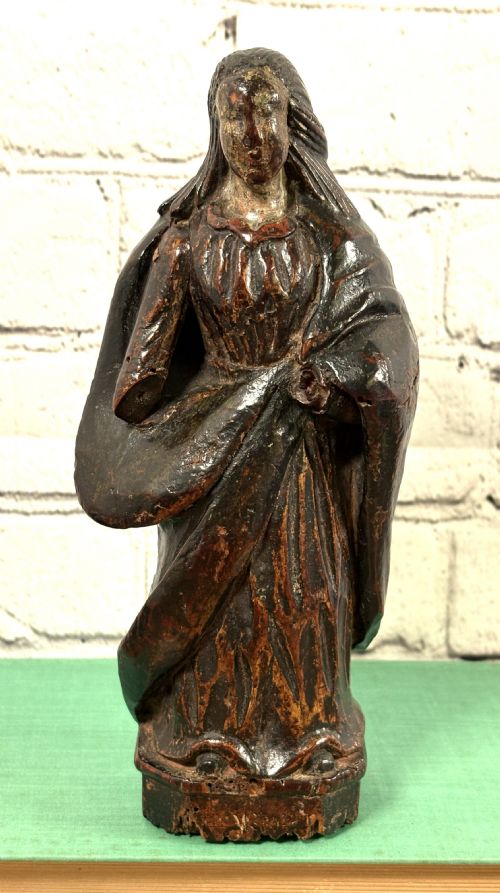


Carved Timber Saint Statue
A carved timber saint statue brings centuries of devotion, dramatic drapery and rich ecclesiastical history directly into a modern interior.
Carved Timber Saint Statue
A carved timber saint statue represents holy figures, apostles and religious patrons originating from European churches, domestic shrines and monastic foundations. When you search for a carved timber saint statue, you encounter devotional objects ranging from pre-sixteenth century medieval fragments to Baroque and nineteenth-century Gothic Revival interpretations.
The pieces on this page span several centuries, with particular strength in sixteenth-century oak carvings and eighteenth-century polychrome figures. Common subjects include the Virgin Mary, Saint John, Saint Nicholas and various bishops or apostles, often carved in the round or as architectural reliefs.
Most examples hail from continental workshops in France, Italy, Germany and Flanders, reflecting regional stylistic shifts from late medieval rigidity to dynamic Baroque movement. Collectors find everything from monumental church figures to intimate domestic devotional carvings.
Materials and construction methods
Carved timber saint statue makers utilised locally available hardwoods including oak, limewood, applewood and general carved wood, selecting timber for its grain and stability. Oak provides dense, durable support for heavy medieval and Gothic figures, while limewood permits the intricate, fine undercut details characteristic of sixteenth-century Flemish and Italian work.
Many surfaces received a preparation layer of gesso before painters applied polychrome paint and gold leaf to render lifelike flesh tones, rich garments and halo gilding. Over centuries, these painted and gilded finishes have aged, often revealing the warm wood grain beneath worn pigment.
Listings feature timbers ranging from dense medieval oak to fine seventeenth-century limewood and applewood.
Distinguishing quality in wood carvings
Quality rests primarily on the depth and confidence of the carver's chisel work, particularly in the rendering of facial expression and the natural fall of drapery folds. Superior pieces display anatomical plausibility and expressive vitality, whereas lesser carvings rely on stiff, formulaic repetition.
The preservation of original surface treatments also dictates standing, as untouched sixteenth-century polychromy or genuine gold leaf carries greater historical integrity than later overpainting. Fragmentary pieces with masterwork carving frequently outrank complete statues that suffer from crude execution or heavy modern restoration.
Franz Keller
The Carved Timber Saint Statue Glossary
- Polychrome
- Painted in several colours. This finish was traditionally applied over a gesso ground on timber sculptures to simulate lifelike garments and flesh.
- Gesso
- A plaster mixture used as a smooth base for paint and gold leaf on wooden surfaces. It allows pigments to adhere evenly to the carved timber substrate.
- Gold leaf
- Gold beaten into extremely thin sheets and applied to a prepared surface for gilding. It highlights halos and ecclesiastical vestments on devotional statues.
- Gothic Revival
- An architectural and artistic style popular in the nineteenth century that revived medieval forms. Pieces from this period imitate earlier Gothic sculpture conventions.
- Anna Selbdritt
- An iconographic subject showing Saint Anne with the Virgin Mary and the Christ Child. This grouping appears frequently in late medieval wood carvings.
Carved Timber Saint Statue: Frequently Asked Questions
How were these statues originally used?
Devotional figures stood in churches, monastic chapels and domestic oratories to aid prayer, mark feast days and honour specific patron saints. Worshippers lit candles before them and sometimes carried them in religious processions.
Over time, many migrated from sacred settings into private collections as architectural salvage or antiquities. Today, collectors display them as sculptural works of art that anchor a room.
How do I date an old wood carving?
Dating relies on tool marks, wood species, style of drapery and the presence of original gesso and paint layers. Pre-sixteenth-century pieces often feature heavier adze or chisel marks and dense oak, while later periods introduced softer limewood and finer detailing.
Comparative analysis with documented church sculptures helps narrow down the century of creation. Examining the back of the figure often reveals construction methods specific to particular eras.
Should I clean or restore the paint?
Original finishes, even when flaking or worn, hold significant historical and visual value. Aggressive cleaning or repainting destroys the authentic patina accumulated over centuries.
Consult a professional conservator specialising in polychrome wood before attempting any intervention. Light dusting with a dry, soft brush is generally all an antique surface requires.
How do I style a saint statue at home?
These sculptures pair well with clean, neutral architectural backdrops that allow the organic texture of aged timber and worn pigment to stand out. Placing a figure on a simple console table or mount gives it proper museum-like presence.
Keep them away from direct sunlight, heating vents and damp walls to protect the dry wood and delicate paint layers from cracking.